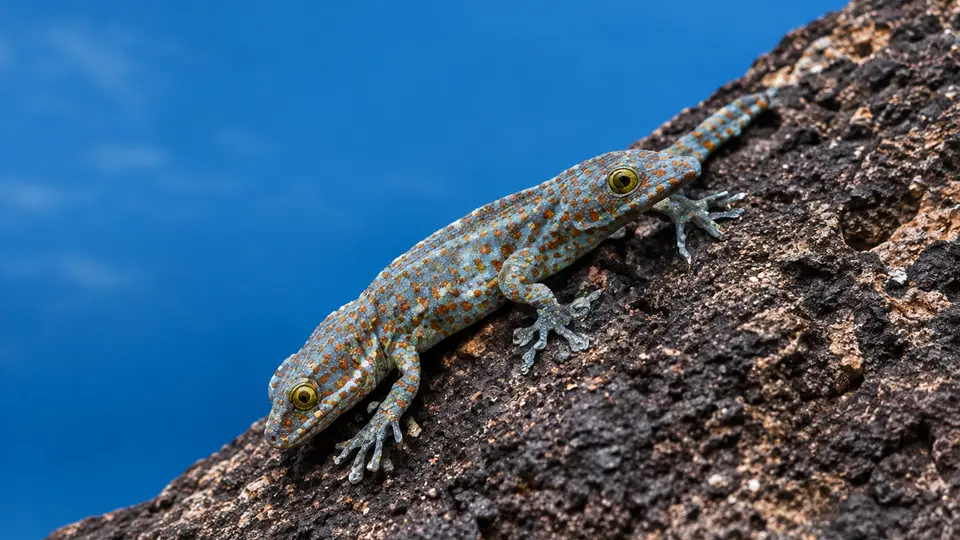
Oceanic gecko in its natural habitat, AI illustration

Oceanic gecko: where and when to see them

Gehyra oceanica

Oceanic gecko at a glance

The oceanic gecko is a relatively large, nocturnal gecko found across many tropical Pacific islands. Its broad toe pads allow it to climb trunks, leaves and buildings, making it a familiar component of some island landscapes. Historical human transport probably helped shape its extensive distribution, although native and introduced boundaries are not always straightforward. Despite its common name, it is a terrestrial reptile, not an animal that lives in the sea.

Behaviour & reproduction

Size
8-10 cm snout-to-vent length
Weight
Not reliably established
Lifespan
Not reliably established
Status
Least Concern

After dark, oceanic geckos emerge from sheltered daytime retreats to hunt on trunks, branches and walls. Individuals may gather near lights where insects concentrate, although natural vegetation also provides abundant feeding opportunities. They communicate with calls and can defend favored spaces from other geckos. During daylight they hide beneath loose bark, in crevices or among plant material, where disturbance can expose them to predators and cause tail loss. They are primarily nocturnal, becoming active shortly after sunset and remaining so for several hours, before retreating to their shelters before dawn. Males establish and defend territories, often using vocalizations and displays to deter rivals.

Top wildlife locations

Polynesia wildlife habitat

Polynesia

Coastal gardens, wooded village margins and exterior walls can provide accessible viewing on islands where the species occurs. Inland excursions are not necessarily required, but island-level identification and distribution need local confirmation.

Adventure cruises in Polynesia
Destinations describe the species' habitat, not guaranteed cruise stops. Some animals require an optional inland excursion or are found in restricted reserves.

Fun facts about the Oceanic gecko

  • Its toe pads use microscopic structures rather than suction.
  • It can shed its tail as a defense against predators.
  • Its pale eggs have hard, calcified shells.
  • Ocean travel by people has probably helped it reach additional islands.

Best time to see the Oceanic gecko

Warm tropical conditions permit activity through much of the year. Calm, mild evenings are more useful than a broad seasonal label, while heavy rain and strong wind can hinder observation. Polynesia covers many islands, so no single travel calendar applies throughout. Prime viewing occurs during the warmest, driest months when insect activity is highest and geckos are more active. While not strictly seasonal, periods of prolonged cool or wet weather can reduce their visibility.

Oceanic gecko: season matrix by destination

Travel and observation windows vary by region. Highlighted months are an orientation for planning, not confirmed sightings or a guarantee of access.

Polynesia

The destination spans different island climates, and no single supported observation window applies; local evening weather and confirmed occurrence are more informative.

JanFebMarAprMayJunJulAugSepOctNovDec
Cruise ships in Polynesia

Where the Oceanic gecko lives

Habitats include lowland forest, coastal woodland, coconut groves, gardens and buildings on tropical Pacific islands. Trees and structures with secure cracks or bark shelters are useful. Local occurrence varies among islands, and not every gecko around coastal accommodation belongs to this species. They are particularly common on atolls and low-lying islands, often preferring areas with human activity. These geckos readily colonize new islands, sometimes arriving via rafting on debris or human-aided transport.

What the Oceanic gecko eats

Oceanic geckos eat insects and other small arthropods captured on vegetation or built surfaces. They may also take soft fruit or sugary plant resources opportunistically. Artificial lighting can concentrate prey, but these geckos do not depend exclusively on insects attracted to lamps. Their diet plays a role in local island ecosystems by controlling insect populations. They are also known to consume nectar from flowers, supplementing their insectivorous diet.

Species at a glance

Common name
Oceanic gecko
Scientific name
Gehyra oceanica
Animal group
Reptiles
Size
8-10 cm snout-to-vent length
Weight
Not reliably established
Lifespan
Not reliably established
Status
Least Concern
Identification
Compared with many smaller house geckos, it has a robust body and broad toes with undivided adhesive lamellae, although reliable separation from related Gehyra may require expert examination. Key identification features include a uniform grey to brownish coloration, sometimes with faint darker markings, and their relatively large size compared to other common Pacific gecko species. The undivided lamellae on their broad toes are a reliable characteristic for the genus Gehyra.

Oceanic gecko: frequently asked questions

Where can I see the Oceanic gecko?
Polynesia. Look along accessible trees or exterior walls after dusk without entering private property. Use a dim light briefly, never handle the gecko, and avoid pulling bark from daytime shelters. Scanning tree trunks, especially coconut palms, and the exterior walls of resort buildings with a flashlight after sunset often yields sightings. Look for their distinctive eye shine reflecting back the light.
When is the best time to see the Oceanic gecko?
Warm tropical conditions permit activity through much of the year. Calm, mild evenings are more useful than a broad seasonal label, while heavy rain and strong wind can hinder observation. Polynesia covers many islands, so no single travel calendar applies throughout. Prime viewing occurs during the warmest, driest months when insect activity is highest and geckos are more active. While not strictly seasonal, periods of prolonged cool or wet weather can reduce their visibility.
How big does the Oceanic gecko get?
8-10 cm snout-to-vent length. Adult weight: Not reliably established. Size varies with age, sex and population.
How should I behave around the Oceanic gecko?
Look along accessible trees or exterior walls after dusk without entering private property. Use a dim light briefly, never handle the gecko, and avoid pulling bark from daytime shelters. Scanning tree trunks, especially coconut palms, and the exterior walls of resort buildings with a flashlight after sunset often yields sightings. Look for their distinctive eye shine reflecting back the light.
What does the Oceanic gecko eat?
Oceanic geckos eat insects and other small arthropods captured on vegetation or built surfaces. They may also take soft fruit or sugary plant resources opportunistically. Artificial lighting can concentrate prey, but these geckos do not depend exclusively on insects attracted to lamps. Their diet plays a role in local island ecosystems by controlling insect populations. They are also known to consume nectar from flowers, supplementing their insectivorous diet.
Are wildlife sightings guaranteed on an adventure cruise?
No. Animals move freely and routes, weather, access restrictions and local conditions influence every outing. Confirm the actual itinerary and shore program before booking.

Compare wildlife in the same destinations

Explore other reptiles recorded in these destinations. Similar surroundings do not mean the animals share the same habits or viewing season.

Species comparison by animal group and destination
Oceanic geckoOceanic geckoGreen Sea TurtleGreen Sea TurtleHawksbill Sea TurtleHawksbill Sea Turtle
Animal groupReptilesAnimal groupReptilesAnimal groupReptiles
DestinationsPolynesiaDestinationsCosta Rica, Florida, Galapagos, Mexico, Cape Verde, Egypt, Greece, Seychelles, Turkey, Indonesia, Maldives, Thailand, Vietnam, Australia, Fiji, PolynesiaDestinationsEgypt, Seychelles, Indonesia, Maldives, Thailand, Vietnam, Fiji, Polynesia
All wildlife destinations
Plan your trip

Find your next wildlife adventure

Compare destinations, shore programs and dates with the animals and habitats you would love to see.

  • Naturalist-led shore excursions
  • Responsible wildlife watching
  • Small expedition ships

Newsletter

Take Blue Rides with you

Adventure cruise offers, last-minute deals and trip inspiration.

Free, unsubscribe anytime. Details: Privacy Policy

Partner with Blue Rides

Affiliate Program

Recommend adventure cruises and earn commission on every confirmed booking.

Share. Track. Earn.

Your footage, our stage

Send us your videos or pictures.

Captured beautiful landscapes or wildlife? Share your videos and pictures with us, we may feature them on Blue Rides.