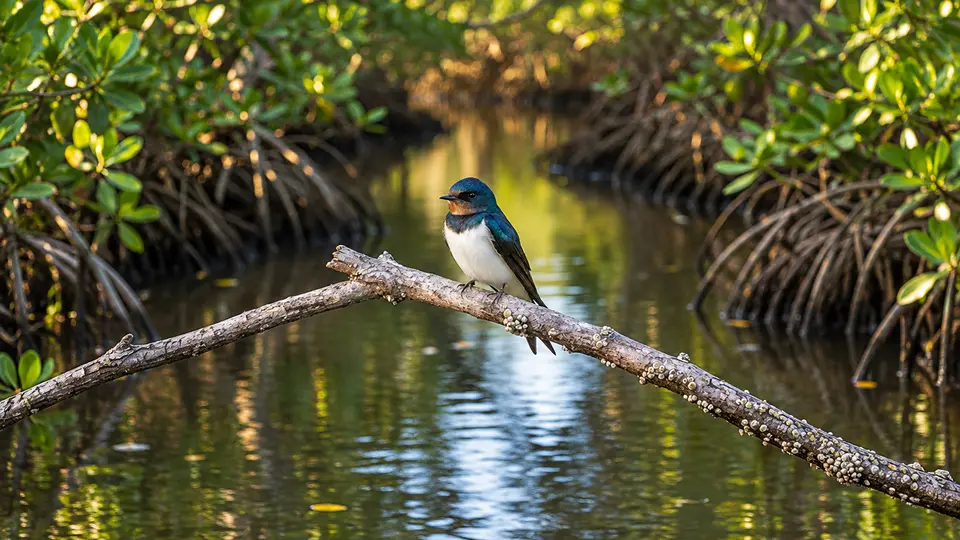
Mangrove Swallow in its natural habitat, AI illustration

Mangrove Swallow: where and when to see them

Tachycineta albilinea

Mangrove Swallow at a glance

The mangrove swallow is a small, glossy aerial insect hunter of tropical Middle America. Its blue-green upperparts, clean white underside and conspicuous white rump make it particularly attractive in good coastal light. Despite its name, it is not confined to mangroves: rivers, lagoons and other open waters also support it. In Costa Rica, it is associated especially with lowland waterways and wooded wetland edges.

Behaviour & reproduction

Size
11–13 cm long
Weight
14–20 g
Lifespan
Not reliably established
Status
Least Concern

Mangrove swallows sweep low over water, turning rapidly to catch flying insects and sometimes skimming the surface to drink. They often rest on exposed branches, wires or waterside structures between feeding bouts. Pairs defend nesting cavities, including abandoned woodpecker holes and suitable artificial spaces. Outside immediate nest defense, several birds may feed together where insects concentrate, occasionally mixing with other swallow species above wetlands or rivers. Pairs are monogamous and fiercely territorial around their chosen nest cavity, which they may line with feathers. Outside the breeding season, they often form small, loose flocks, particularly at favored roosting sites in the evening.

Top wildlife locations

Costa Rica wildlife habitat

Costa Rica

Mangrove boardwalks, estuary overlooks and lowland riverbanks offer plausible viewing habitat. Some freshwater sites require an inland excursion; access and visibility vary, and a waterside visit does not ensure swallows will be present.

Adventure cruises in Costa Rica
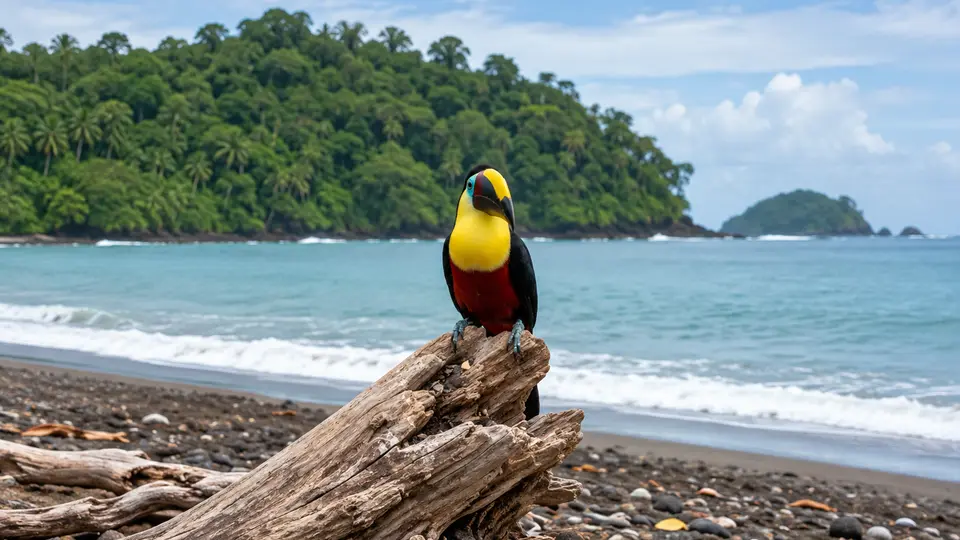
Destinations describe the species' habitat, not guaranteed cruise stops. Some animals require an optional inland excursion or are found in restricted reserves.

Fun facts about the Mangrove Swallow

  • The genus name Tachycineta refers to rapid movement.
  • It depends on existing cavities rather than excavating its own nest hole.
  • The glossy upperparts change apparent color with the viewing angle.
  • It can drink by briefly touching its bill to the water during flight.

Best time to see the Mangrove Swallow

Resident birds can occur throughout the year in Costa Rica. December through April generally offers easier travel on the Pacific side and clearer viewing conditions. Caribbean rainfall patterns differ, and local weather and insect activity matter more than a nationwide seasonal rule. While present year-round, peak insect activity during the transition from dry to wet seasons can offer particularly active feeding displays. Local guides can often pinpoint reliable viewing locations based on recent sightings and weather patterns.

Mangrove Swallow: season matrix by destination

Travel and observation windows vary by region. Highlighted months are an orientation for planning, not confirmed sightings or a guarantee of access.

Costa Rica

A practical Pacific-side dry-season travel window for a resident species, not a confirmed sighting or breeding calendar; Caribbean conditions differ.

JanFebMarAprMayJunJulAugSepOctNovDec
Cruise ships in Costa Rica

Where the Mangrove Swallow lives

Typical habitat combines open feeding airspace with nearby nesting cavities. Mangrove channels, coastal lagoons, estuaries and lowland rivers are important, but freshwater marshes and lakes can also be used. Birds often remain close to water rather than ranging widely over dry uplands. Nesting sites are typically in tree cavities or artificial structures located directly over or very close to water. These swallows are highly dependent on the sheltered, interconnected waterways and abundant insect life found in their namesake mangrove ecosystems.

What the Mangrove Swallow eats

Flying insects form the diet, including flies, beetles and other small insects caught in flight. Feeding height and flight paths change with insect availability. Swarms above water or along sheltered vegetation edges can attract repeated passes by the same birds. They are aerial insectivores, primarily consuming soft-bodied insects captured during agile flight. Individuals often forage alone or in small groups, exhibiting remarkable maneuverability to snatch prey from the air.

Species at a glance

Common name
Mangrove Swallow
Scientific name
Tachycineta albilinea
Animal group
Birds
Size
11–13 cm long
Weight
14–20 g
Lifespan
Not reliably established
Status
Least Concern
Identification
Its white rump and narrow white forehead separate it from the similar tree swallow, which has a dark rump and lacks that pale forehead. Note the glossy blue-green upperparts contrasting sharply with the pure white underparts and bright white rump. Its medium size, often seen alone or in pairs, helps distinguish it from larger swarms of other swallow species.

Mangrove Swallow: frequently asked questions

Where can I see the Mangrove Swallow?
Costa Rica. Watch from stable river overlooks, boardwalks or coastal paths, keeping clear of nesting holes and fragile mangrove roots. Use binoculars to check the white rump, and avoid leaning over unprotected banks or approaching wildlife at the water’s edge. From a boat, keep a respectful distance, using the vessel's stability for clearer binocular views of their swift movements. Look for them perching on snags or dead branches that extend over the water, providing excellent photographic opportunities.
When is the best time to see the Mangrove Swallow?
Resident birds can occur throughout the year in Costa Rica. December through April generally offers easier travel on the Pacific side and clearer viewing conditions. Caribbean rainfall patterns differ, and local weather and insect activity matter more than a nationwide seasonal rule. While present year-round, peak insect activity during the transition from dry to wet seasons can offer particularly active feeding displays. Local guides can often pinpoint reliable viewing locations based on recent sightings and weather patterns.
How big does the Mangrove Swallow get?
11–13 cm long. Adult weight: 14–20 g. Size varies with age, sex and population.
How should I behave around the Mangrove Swallow?
Watch from stable river overlooks, boardwalks or coastal paths, keeping clear of nesting holes and fragile mangrove roots. Use binoculars to check the white rump, and avoid leaning over unprotected banks or approaching wildlife at the water’s edge. From a boat, keep a respectful distance, using the vessel's stability for clearer binocular views of their swift movements. Look for them perching on snags or dead branches that extend over the water, providing excellent photographic opportunities.
What does the Mangrove Swallow eat?
Flying insects form the diet, including flies, beetles and other small insects caught in flight. Feeding height and flight paths change with insect availability. Swarms above water or along sheltered vegetation edges can attract repeated passes by the same birds. They are aerial insectivores, primarily consuming soft-bodied insects captured during agile flight. Individuals often forage alone or in small groups, exhibiting remarkable maneuverability to snatch prey from the air.
Are wildlife sightings guaranteed on an adventure cruise?
No. Animals move freely and routes, weather, access restrictions and local conditions influence every outing. Confirm the actual itinerary and shore program before booking.

Compare wildlife in the same destinations

Explore other birds recorded in these destinations. Similar surroundings do not mean the animals share the same habits or viewing season.

Species comparison by animal group and destination
Mangrove SwallowMangrove SwallowBlack-mandibled ToucanBlack-mandibled ToucanBlue-footed BoobyBlue-footed Booby
Animal groupBirdsAnimal groupBirdsAnimal groupBirds
DestinationsCosta RicaDestinationsCosta RicaDestinationsCosta Rica, Galapagos, Mexico
All wildlife destinations
Plan your trip

Find your next wildlife adventure

Compare destinations, shore programs and dates with the animals and habitats you would love to see.

  • Naturalist-led shore excursions
  • Responsible wildlife watching
  • Small expedition ships

Newsletter

Take Blue Rides with you

Adventure cruise offers, last-minute deals and trip inspiration.

Free, unsubscribe anytime. Details: Privacy Policy

Partner with Blue Rides

Affiliate Program

Recommend adventure cruises and earn commission on every confirmed booking.

Share. Track. Earn.

Your footage, our stage

Send us your videos or pictures.

Captured beautiful landscapes or wildlife? Share your videos and pictures with us, we may feature them on Blue Rides.