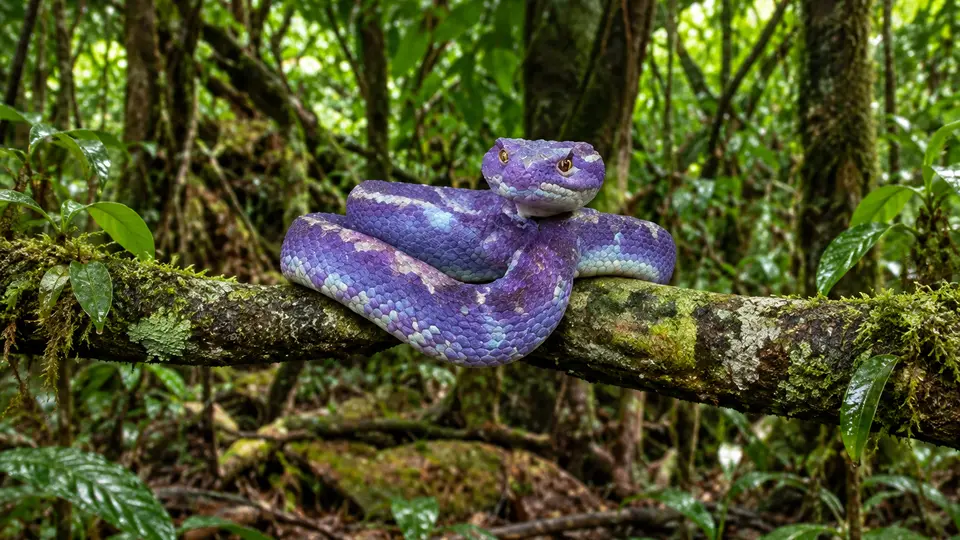
Mangrove pit viper in its natural habitatAI-modified

Mangrove pit viperTrimeresurus purpureomaculatusWhere and when to see them

Mangrove pit viper at a glance

The mangrove pit viper is a venomous, largely arboreal snake associated with tidal forests and other humid coastal vegetation in Southeast Asia. Its rough scales and mottled brown, grey or purplish coloration blend remarkably well with shaded branches and muddy surroundings. Females generally grow larger than males. Despite its coastal association, it is not a marine snake, and its distribution should not be extended automatically to every country containing suitable mangroves.

Behaviour & reproduction

Size
60–100 cm (24–39 in) total length
Weight
Not reliably established
Lifespan
Not reliably established
Status
Least Concern

Usually most active after dark, this viper spends long periods coiled on low branches or among roots, waiting for prey to approach. Heat-sensitive facial pits help it detect warm-bodied animals in poor light. During daylight it may remain almost motionless, making accidental close approaches possible. It generally relies on concealment rather than pursuit, but can strike rapidly when disturbed. Females give birth to live young rather than laying eggs. This species is primarily nocturnal, hunting during the night and spending much of the day concealed and inactive. Its highly developed hemotoxic venom helps to immobilize prey quickly, facilitating consumption without prolonged struggle.

Top wildlife locations

Thailand wildlife habitatAI-modified

Thailand

Authorized mangrove boardwalks along Thailand’s Andaman coast provide plausible habitat views from shore. The snake is cryptic and encounters are uncommon; guided access is preferable, and no branches or roots should be handled.

Vietnam wildlife habitatAI-modified

Vietnam

Vietnam has mangrove boardwalk habitats, but this species is not reliably established there in standard range accounts. Do not treat a coastal mangrove visit as a credible species-targeted excursion without verified local records.

Destinations describe the species' habitat, not guaranteed cruise stops. Some animals require an optional inland excursion or are found in restricted reserves.

Fun facts about the Mangrove pit viper

  • Its facial pits detect infrared radiation from warm objects.
  • The tail helps anchor the snake among branches.
  • Females bear live young.
  • Individuals can differ greatly in coloration, including grey, brown and purplish forms.

Best time to see the Mangrove pit viper

There is no established tourist viewing season for this secretive snake. In southern Thailand, relatively dry months can make authorized mangrove paths easier to use, but activity depends on local moisture and temperature. Daytime access does not necessarily coincide with its nocturnal activity. Local guides might have insights into recent sightings or seasonal patterns of activity, but these are often highly localized and not broadly predictable. Heavy rainfall can reduce visibility and make some trails impassable, regardless of the snake's activity.

Mangrove pit viper: season matrix by destination

Travel and observation windows vary by region. Highlighted months are an orientation for planning, not confirmed sightings or a guarantee of access.

Thailand

These are broadly practical drier-season months for Andaman coastal access, not a documented peak in viper sightings or reproduction.

JanFebMarAprMayJunJulAugSepOctNovDec
Cruise ships in Thailand

Vietnam

A Vietnam observation window is unsupported because the species’ occurrence there is uncertain; coastal travel weather alone cannot establish one.

JanFebMarAprMayJunJulAugSepOctNovDec
Cruise ships in Vietnam

Where the Mangrove pit viper lives

Typical habitat includes mangrove forest, tidal creek margins, coastal swamp and adjoining lowland vegetation. Individuals often occupy branches above mud or shallow channels. Sheltered, humid cover is more important than an exposed shoreline, so ordinary beach walks are unlikely to reveal this snake. Though primarily coastal, isolated inland populations have been documented along major rivers in parts of its range, indicating some adaptability beyond saline environments. It is often found in the lower strata of vegetation, typically within a few meters of the ground or water surface.

What the Mangrove pit viper eats

Small vertebrates form its diet, including frogs, lizards and small mammals. Prey is captured with a venomous strike, often from an ambush position. The balance of prey types varies locally, and broad claims that it specializes exclusively on rodents are misleading. Its diet can include a significant proportion of fish and crustaceans, particularly in areas with abundant aquatic prey. The viper employs a sit and wait strategy, often positioning itself near water bodies to ambush passing prey.

Species at a glance

Common name
Mangrove pit viper
Scientific name
Trimeresurus purpureomaculatus
Animal group
Reptiles
Size
60–100 cm (24–39 in) total length
Weight
Not reliably established
Lifespan
Not reliably established
Status
Least Concern
Identification
Strongly keeled scales, a broad triangular head and usually dark, mottled coloration distinguish it from many bright-green regional pit vipers, although expert identification remains advisable. The presence of two large, dark temporal stripes is a key feature aiding its identification, often extending from behind the eye towards the neck. Young individuals may exhibit a more vibrant reddish or purplish hue, which typically darkens with age.

Mangrove pit viper: frequently asked questions

Where can I see the Mangrove pit viper?
Thailand, Vietnam. Stay on maintained mangrove paths and inspect handrails and branches before approaching them. Never handle, corner or reposition a viper for photographs. Keep several metres away; any suspected bite requires urgent medical care. Always maintain a respectful distance and avoid making sudden movements if a snake is spotted. Flash photography should be avoided at night, as it can startle the animal and potentially cause stress.
When is the best time to see the Mangrove pit viper?
There is no established tourist viewing season for this secretive snake. In southern Thailand, relatively dry months can make authorized mangrove paths easier to use, but activity depends on local moisture and temperature. Daytime access does not necessarily coincide with its nocturnal activity. Local guides might have insights into recent sightings or seasonal patterns of activity, but these are often highly localized and not broadly predictable. Heavy rainfall can reduce visibility and make some trails impassable, regardless of the snake's activity.
How big does the Mangrove pit viper get?
60–100 cm (24–39 in) total length. Adult weight: Not reliably established. Size varies with age, sex and population.
How should I behave around the Mangrove pit viper?
Stay on maintained mangrove paths and inspect handrails and branches before approaching them. Never handle, corner or reposition a viper for photographs. Keep several metres away; any suspected bite requires urgent medical care. Always maintain a respectful distance and avoid making sudden movements if a snake is spotted. Flash photography should be avoided at night, as it can startle the animal and potentially cause stress.
What does the Mangrove pit viper eat?
Small vertebrates form its diet, including frogs, lizards and small mammals. Prey is captured with a venomous strike, often from an ambush position. The balance of prey types varies locally, and broad claims that it specializes exclusively on rodents are misleading. Its diet can include a significant proportion of fish and crustaceans, particularly in areas with abundant aquatic prey. The viper employs a sit and wait strategy, often positioning itself near water bodies to ambush passing prey.
Are wildlife sightings guaranteed on an adventure cruise?
No. Animals move freely and routes, weather, access restrictions and local conditions influence every outing. Confirm the actual itinerary and shore program before booking.

Compare wildlife in the same destinations

Explore other reptiles recorded in these destinations. Similar surroundings do not mean the animals share the same habits or viewing season.

Species comparison by animal group and destination
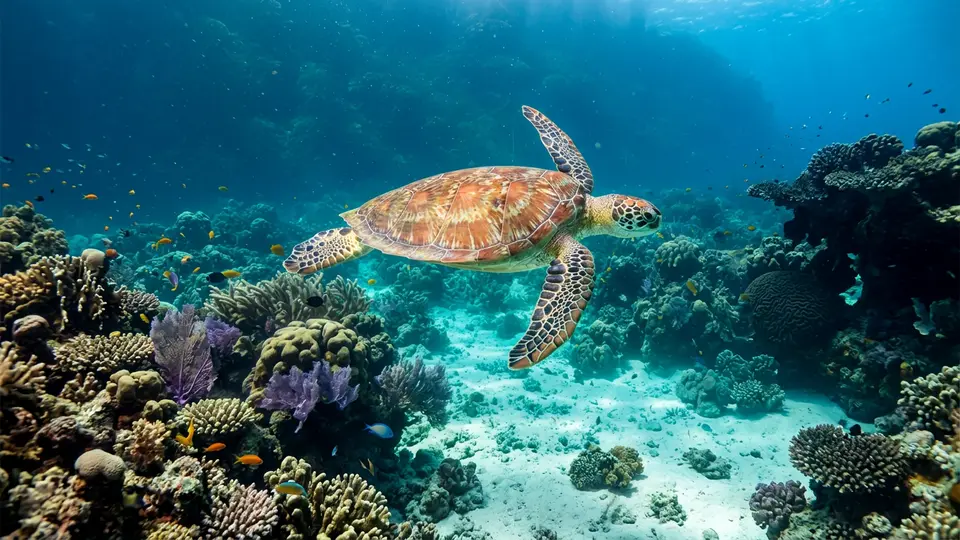
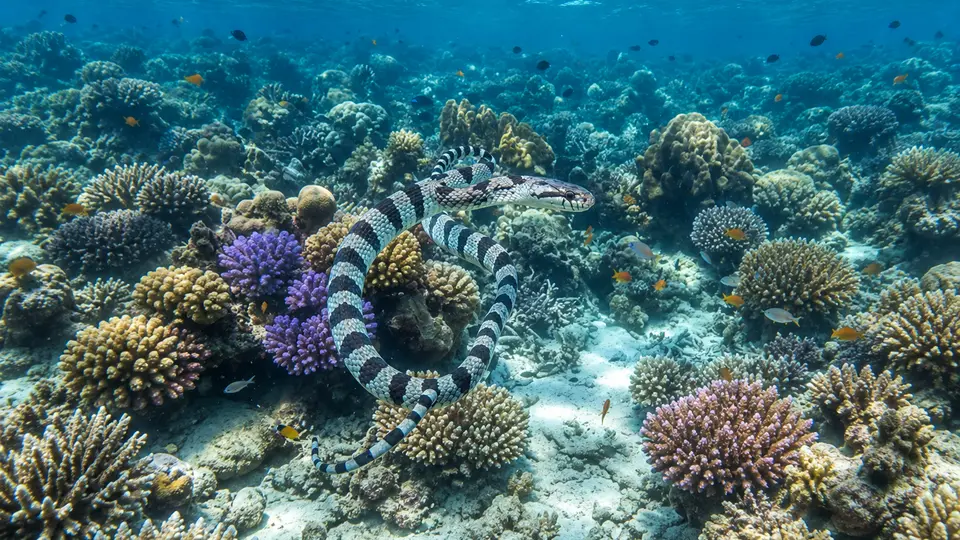
Mangrove pit viperAI-modifiedMangrove pit viperBanded sea kraitAI-modifiedBanded sea kraitGreen Sea TurtleAI-modifiedGreen Sea Turtle
Animal groupReptilesAnimal groupReptilesAnimal groupReptiles
DestinationsThailand, VietnamDestinationsIndonesia, VietnamDestinationsCosta Rica, Florida, Galapagos, Mexico, Cape Verde, Egypt, Greece, Seychelles, Turkey, Indonesia, Maldives, Thailand, Vietnam, Australia, Fiji, Polynesia
Scientific nameTrimeresurus purpureomaculatusScientific nameScientific name
All wildlife destinations
AI-modified
Plan your trip

Find your next wildlife adventure

Compare destinations, shore programs and dates with the animals and habitats you would love to see.

  • Naturalist-led shore excursions
  • Responsible wildlife watching
  • Small expedition ships