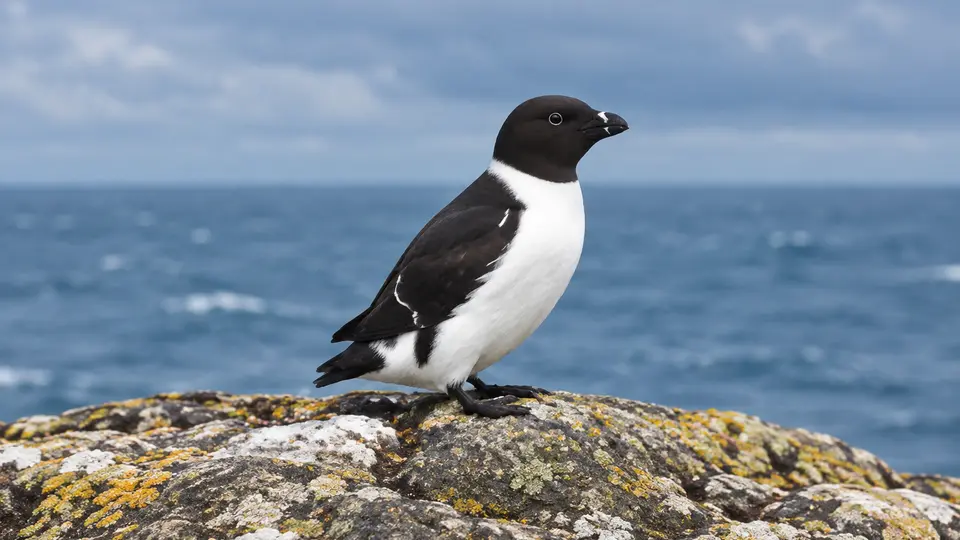
Little Auk in its natural habitat, AI illustration
Size19-23 cm longLifespanNot reliably establishedStatusLeast Concern

Little Auk: where and when to see them

Alle alle

Little Auk at a glance

The little auk is a compact Arctic seabird that converts abundant marine plankton into food for vast breeding colonies. Known as the dovekie in North America, it has a short bill, rapid wingbeats and striking black-and-white breeding plumage. Colonies occupy rocky slopes close to productive cold waters. Although still numerous globally, the species is sensitive to changes in the plankton communities and sea conditions on which its feeding depends.

Behaviour & reproduction

Size
19-23 cm long
Weight
140-200 g
Lifespan
Not reliably established
Status
Least Concern

Breeding birds gather in noisy groups on boulder slopes and circle colonies in fast-moving flocks. A pair raises one chick in a sheltered rock crevice, with both adults bringing concentrated loads of tiny prey. At sea, little auks use their wings to propel themselves while feeding. Once the chick is ready to leave the colony, the male typically accompanies it toward the sea and continues parental care. The elaborate aerial displays over colonies, involving thousands of birds flying in synchronized patterns, are a remarkable spectacle. Their calls are a distinctive, high-pitched chirping or trilling, contributing to the characteristic din of an Arctic seabird colony. During incubation, adults take turns, with changeovers often occurring with much fanfare and vocalization.

Top wildlife locations

Norway wildlife habitat

Norway

Svalbard's coastal scree slopes offer the clearest breeding context, with views from approved shore routes or offshore decks. Mainland Norway is not a dependable colony destination; Arctic access and polar-bear precautions are essential.

Adventure cruises in Norway
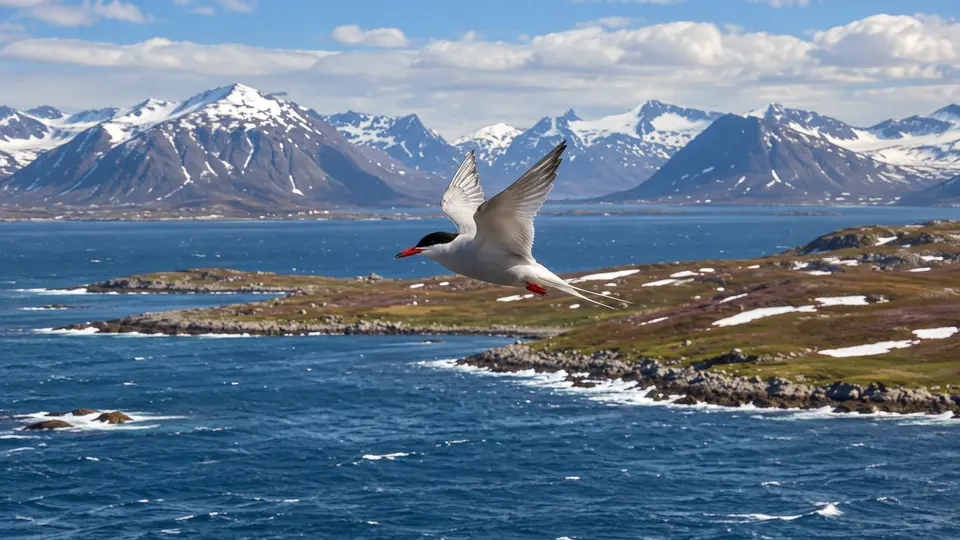
Arctic wildlife habitat

Arctic

Rocky coastal talus beneath suitable High-Arctic colonies can support shore observation where access is authorized. Many colonies are remote or inaccessible, and expedition routes must account for wildlife restrictions, weather and polar-bear safety.

Adventure cruises in Arctic

Destinations describe the species' habitat, not guaranteed cruise stops. Some animals require an optional inland excursion or are found in restricted reserves.

Fun facts about the Little Auk

  • The North American name for the species is dovekie.
  • Each pair normally raises only one chick per breeding attempt.
  • A throat pouch carries many small prey items back to the nest.
  • Nutrient-rich droppings fertilize tundra vegetation below large colonies.

Best time to see the Little Auk

June to August offers the main Arctic colony-viewing window, with timing dependent on latitude and snow conditions. In Norway, this chiefly means Svalbard rather than mainland coasts. Visits require local access checks because breeding slopes can be fragile, steep or restricted. In more southerly Arctic regions, such as parts of Norway excluding Svalbard, the breeding season can begin earlier, in May. Viewing from ship decks often requires patience and good optics, as the birds at sea can be dispersed and distant. Due to their small size and rapid flight, spotting them from a moving vessel can be challenging, though large feeding flocks are more conspicuous.

Little Auk: season matrix by destination

Travel and observation windows vary by region. Highlighted months are an orientation for planning, not confirmed sightings or a guarantee of access.

Norway

This window reflects Svalbard summer access and colony attendance, not widespread mainland Norwegian breeding or guaranteed landings.

JanFebMarAprMayJunJulAugSepOctNovDec
Cruise ships in Norway

Arctic

Summer offers the most plausible colony access, but the Arctic is extensive and breeding timing, ice and permissions vary greatly by locality.

JanFebMarAprMayJunJulAugSepOctNovDec
Cruise ships in Arctic

Where the Little Auk lives

High-Arctic rocky islands and coastal mountain slopes provide breeding habitat, particularly where deep crevices protect nests. Feeding takes place in cold marine waters rich in zooplankton. Outside breeding, birds disperse offshore across northern seas and are less accessible from land. Little auks breed in vast numbers, forming some of the densest seabird colonies in the world, often numbering in the millions. These colonies are typically found on north-facing slopes, which retain snow longer, helping to regulate colony temperatures. Their reliance on specific island habitats makes them vulnerable to habitat degradation and disturbance.

What the Little Auk eats

Large, energy-rich copepods are especially important during breeding, with other crustaceans and small marine animals also eaten. Adults transport numerous tiny prey items to the chick in a specialized throat pouch, making productive plankton patches essential to efficient provisioning. Their feeding distribution closely tracks the availability of these specific copepod species, which thrive in cold, ice-associated waters. Climate change impacts on Arctic ice extent and ocean circulation could therefore significantly alter their food web and foraging success. Unlike some other auks, they primarily forage close to the surface, performing shallow dives to capture their prey.

Species at a glance

Common name
Little Auk
Scientific name
Alle alle
Animal group
Birds
Size
19-23 cm long
Weight
140-200 g
Lifespan
Not reliably established
Status
Least Concern
Identification
Its tiny, chunky body, very short bill and black throat in breeding plumage distinguish it from larger guillemots and razorbills. Beyond the black throat, non-breeding birds exhibit a white throat and cheeks, which can sometimes be seen in late summer or early spring. At sea, their rapid, whirring flight and tendency to fly in dense, often low-flying flocks can aid identification. The extremely short, conical bill is a key feature distinguishing them from other small Arctic alcids.

Little Auk: frequently asked questions

Where can I see the Little Auk?
Norway, Arctic. Watch colonies from established routes without walking over nest crevices or loose scree. In polar-bear country, follow local safety requirements and qualified guidance; use binoculars rather than approaching birds carrying food. When viewing colonies, maintain a respectful distance to avoid causing stress to breeding birds, particularly those incubating or brooding. From a distance, look for tell-tale clouds of birds circling above the scree slopes or rafts of birds on the water near the colony. Always adhere to guidelines provided by your cruise operator and local authorities to ensure minimal disturbance.
When is the best time to see the Little Auk?
June to August offers the main Arctic colony-viewing window, with timing dependent on latitude and snow conditions. In Norway, this chiefly means Svalbard rather than mainland coasts. Visits require local access checks because breeding slopes can be fragile, steep or restricted. In more southerly Arctic regions, such as parts of Norway excluding Svalbard, the breeding season can begin earlier, in May. Viewing from ship decks often requires patience and good optics, as the birds at sea can be dispersed and distant. Due to their small size and rapid flight, spotting them from a moving vessel can be challenging, though large feeding flocks are more conspicuous.
How big does the Little Auk get?
19-23 cm long. Adult weight: 140-200 g. Size varies with age, sex and population.
How should I behave around the Little Auk?
Watch colonies from established routes without walking over nest crevices or loose scree. In polar-bear country, follow local safety requirements and qualified guidance; use binoculars rather than approaching birds carrying food. When viewing colonies, maintain a respectful distance to avoid causing stress to breeding birds, particularly those incubating or brooding. From a distance, look for tell-tale clouds of birds circling above the scree slopes or rafts of birds on the water near the colony. Always adhere to guidelines provided by your cruise operator and local authorities to ensure minimal disturbance.
What does the Little Auk eat?
Large, energy-rich copepods are especially important during breeding, with other crustaceans and small marine animals also eaten. Adults transport numerous tiny prey items to the chick in a specialized throat pouch, making productive plankton patches essential to efficient provisioning. Their feeding distribution closely tracks the availability of these specific copepod species, which thrive in cold, ice-associated waters. Climate change impacts on Arctic ice extent and ocean circulation could therefore significantly alter their food web and foraging success. Unlike some other auks, they primarily forage close to the surface, performing shallow dives to capture their prey.
Are wildlife sightings guaranteed on an adventure cruise?
No. Animals move freely and routes, weather, access restrictions and local conditions influence every outing. Confirm the actual itinerary and shore programme before booking.

Compare wildlife in the same destinations

Explore other birds recorded in these destinations. Similar surroundings do not mean the animals share the same habits or viewing season.

Species comparison by animal group and destination
Little AukLittle AukArctic TernArctic TernAtlantic PuffinAtlantic Puffin
Animal groupBirdsAnimal groupBirdsAnimal groupBirds
DestinationsNorway, ArcticDestinationsAlaska, Norway, ArcticDestinationsNew England, Norway, Scotland, Arctic
All wildlife destinations
Plan your trip

Find your next wildlife adventure

Compare destinations, shore programmes and dates with the animals and habitats you would love to see.

  • Naturalist-led shore excursions
  • Responsible wildlife watching
  • Small expedition ships

Newsletter

Take Blue Rides with you

Adventure cruise offers, last-minute deals and trip inspiration.

Free, unsubscribe anytime. Details: Privacy Policy

Partner with Blue Rides

Affiliate Program

Recommend adventure cruises and earn commission on every confirmed booking.

Share. Track. Earn.
