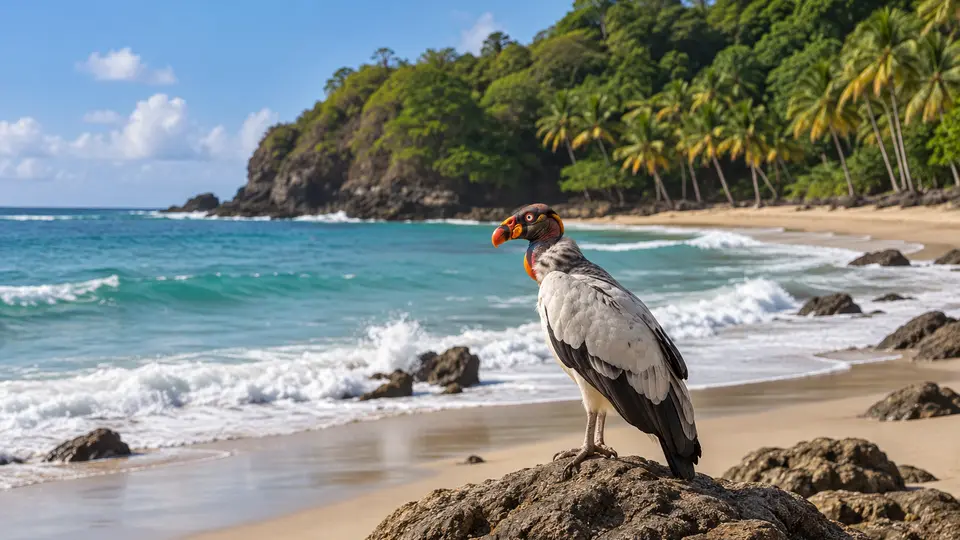
King Vulture in its natural habitat, AI illustration
Size67-81 cm long; 1.7-2 m wingspanLifespanNot reliably establishedStatusLeast Concern

King Vulture: where and when to see them

Sarcoramphus papa

King Vulture at a glance

The king vulture is a large tropical American scavenger with a mostly white adult body, black flight feathers and a vividly coloured bare head. In Costa Rica it is associated with extensive forest landscapes and is much less routinely seen than black or turkey vultures. It helps recycle nutrients by consuming carcasses. Although its global category is relatively reassuring, forest loss and persecution can reduce its presence locally.

Behaviour & reproduction

Size
67-81 cm long; 1.7-2 m wingspan
Weight
2.7-4.5 kg
Lifespan
Not reliably established
Status
Least Concern

King vultures spend long periods soaring on rising warm air, searching broad areas with little wing flapping. They may descend where other scavengers gather and use their powerful bill to open tough carcass tissue. Usually seen alone, in pairs or in small groups, they can congregate at substantial food sources. Nesting occurs in secluded cavities or sheltered sites, and the pair normally raises a single chick with prolonged parental attention. Their soaring flight is highly efficient, allowing them to cover vast distances with minimal energy expenditure, leveraging air currents. King vultures are part of a guild of scavengers and often arrive at a carcass after smaller vultures have already begun feeding. They are also known for a relatively long lifespan in the wild, often exceeding 20 years.

Top wildlife locations

Costa Rica wildlife habitat

Costa Rica

Extensive coastal forest and nearby wooded ridges offer possible views of soaring birds. A guided inland forest excursion often improves habitat access, but the species remains uncommon and is not expected at ordinary beach stops.

Adventure cruises in Costa Rica
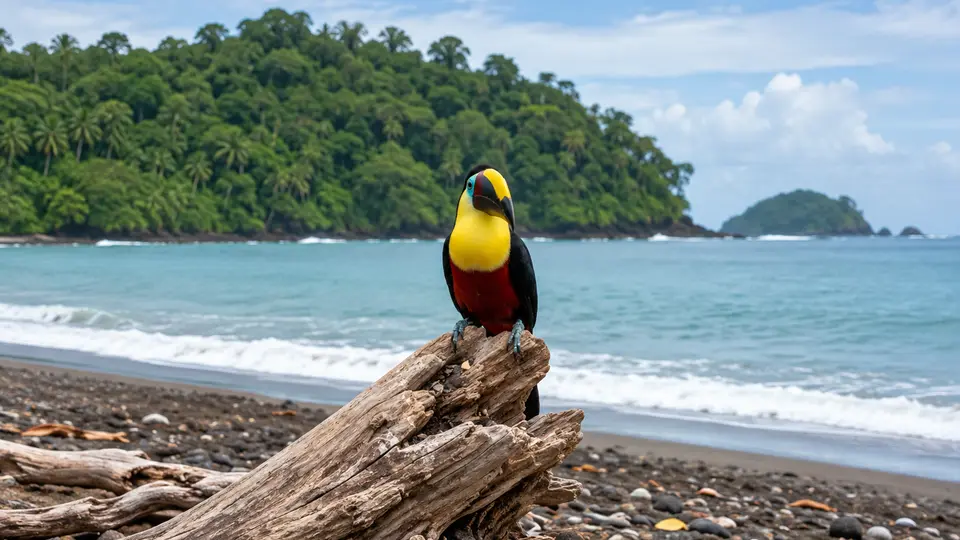
Destinations describe the species' habitat, not guaranteed cruise stops. Some animals require an optional inland excursion or are found in restricted reserves.

Fun facts about the King Vulture

  • Adults have a fleshy orange growth above the bill.
  • Young birds are mostly dark and acquire white adult plumage gradually.
  • A breeding pair usually produces only one egg.
  • Its powerful bill can provide other scavengers access to tough-skinned carcasses.

Best time to see the King Vulture

The species is resident in Costa Rica, with no dependable migration-based viewing season. December to April often makes Pacific-side forest excursions easier. Late-morning thermal development can help observers detect soaring birds, but Caribbean rainfall patterns differ and weather can prevent soaring even during nominally drier months. During the drier months from December to April, the absence of thick cloud cover can improve visibility for spotting high-soaring raptors. Conversely, the rainy season may see more vultures perched, waiting for suitable conditions to take flight. Local guides often track specific thermals and flight paths for reliable sightings throughout the year.

King Vulture: season matrix by destination

Travel and observation windows vary by region. Highlighted months are an orientation for planning, not confirmed sightings or a guarantee of access.

Costa Rica

This is mainly a Pacific-side access window; the species is resident, and Caribbean conditions and daily thermal development differ.

JanFebMarAprMayJunJulAugSepOctNovDec
Cruise ships in Costa Rica

Where the King Vulture lives

It favors tropical lowland and foothill forest, particularly extensive tracts with relatively limited disturbance. Forest edges and clearings can improve visibility without being its sole habitat. Coastal forest reserves may offer opportunities, but heavily developed shorelines and treeless beaches are generally unsuitable. They are typically found in primary rainforests, particularly favoring areas with a dense canopy but also utilizing gallery forests along rivers. While mainly a lowland species, they can sometimes be seen soaring over foothills up to 1,500 meters (4,900 feet) in elevation. Their presence often indicates a healthy, undisturbed forest ecosystem.

What the King Vulture eats

Carrion is the principal food, obtained from carcasses of wild and domestic animals. Its strong bill can tear resistant skin and expose tissues that smaller scavengers may struggle to reach. It does not depend on household refuse in the manner of some more urban-tolerant vultures. Despite their size, they are often outcompeted by more numerous species like Black Vultures at smaller carcasses, often waiting for others to open the carrion. They possess an excellent sense of smell, aiding them in locating food from high altitudes. Their diet also occasionally includes beached fish or stranded aquatic animals in coastal regions.

Species at a glance

Common name
King Vulture
Scientific name
Sarcoramphus papa
Animal group
Birds
Size
67-81 cm long; 1.7-2 m wingspan
Weight
2.7-4.5 kg
Lifespan
Not reliably established
Status
Least Concern
Identification
An adult king vulture's white body and contrasting black flight feathers separate it from Costa Rica's predominantly dark black and turkey vultures. Beyond the striking white and black, adult king vultures have a distinctive bald head with vibrant shades of red, orange, and blue. Juveniles, on the other hand, are mostly dark brown or black with a grayish head, gradually developing the adult plumage over several years. Their broad wings and short tail create a powerful, regal silhouette in flight.

King Vulture: frequently asked questions

Where can I see the King Vulture?
Costa Rica. Scan above forested ridges from established viewpoints as the day warms. Do not approach carcasses, use bait or investigate suspected nests. Keep clear of cliff edges, and avoid disturbing other scavengers that may reveal its presence. Consider scanning the skies over extensive forest clearings or along major river courses where the canopy opens up. Early morning, shortly after sunrise, can also be a good time to spot them perched as they wait for thermals to develop. Always maintain a respectful distance to avoid causing any stress to the wildlife.
When is the best time to see the King Vulture?
The species is resident in Costa Rica, with no dependable migration-based viewing season. December to April often makes Pacific-side forest excursions easier. Late-morning thermal development can help observers detect soaring birds, but Caribbean rainfall patterns differ and weather can prevent soaring even during nominally drier months. During the drier months from December to April, the absence of thick cloud cover can improve visibility for spotting high-soaring raptors. Conversely, the rainy season may see more vultures perched, waiting for suitable conditions to take flight. Local guides often track specific thermals and flight paths for reliable sightings throughout the year.
How big does the King Vulture get?
67-81 cm long; 1.7-2 m wingspan. Adult weight: 2.7-4.5 kg. Size varies with age, sex and population.
How should I behave around the King Vulture?
Scan above forested ridges from established viewpoints as the day warms. Do not approach carcasses, use bait or investigate suspected nests. Keep clear of cliff edges, and avoid disturbing other scavengers that may reveal its presence. Consider scanning the skies over extensive forest clearings or along major river courses where the canopy opens up. Early morning, shortly after sunrise, can also be a good time to spot them perched as they wait for thermals to develop. Always maintain a respectful distance to avoid causing any stress to the wildlife.
What does the King Vulture eat?
Carrion is the principal food, obtained from carcasses of wild and domestic animals. Its strong bill can tear resistant skin and expose tissues that smaller scavengers may struggle to reach. It does not depend on household refuse in the manner of some more urban-tolerant vultures. Despite their size, they are often outcompeted by more numerous species like Black Vultures at smaller carcasses, often waiting for others to open the carrion. They possess an excellent sense of smell, aiding them in locating food from high altitudes. Their diet also occasionally includes beached fish or stranded aquatic animals in coastal regions.
Are wildlife sightings guaranteed on an adventure cruise?
No. Animals move freely and routes, weather, access restrictions and local conditions influence every outing. Confirm the actual itinerary and shore programme before booking.

Compare wildlife in the same destinations

Explore other birds recorded in these destinations. Similar surroundings do not mean the animals share the same habits or viewing season.

Species comparison by animal group and destination
King VultureKing VultureBlack-mandibled ToucanBlack-mandibled ToucanBlue-footed BoobyBlue-footed Booby
Animal groupBirdsAnimal groupBirdsAnimal groupBirds
DestinationsCosta RicaDestinationsCosta RicaDestinationsCosta Rica, Galapagos, Mexico
All wildlife destinations
Plan your trip

Find your next wildlife adventure

Compare destinations, shore programmes and dates with the animals and habitats you would love to see.

  • Naturalist-led shore excursions
  • Responsible wildlife watching
  • Small expedition ships

Newsletter

Take Blue Rides with you

Adventure cruise offers, last-minute deals and trip inspiration.

Free, unsubscribe anytime. Details: Privacy Policy

Partner with Blue Rides

Affiliate Program

Recommend adventure cruises and earn commission on every confirmed booking.

Share. Track. Earn.