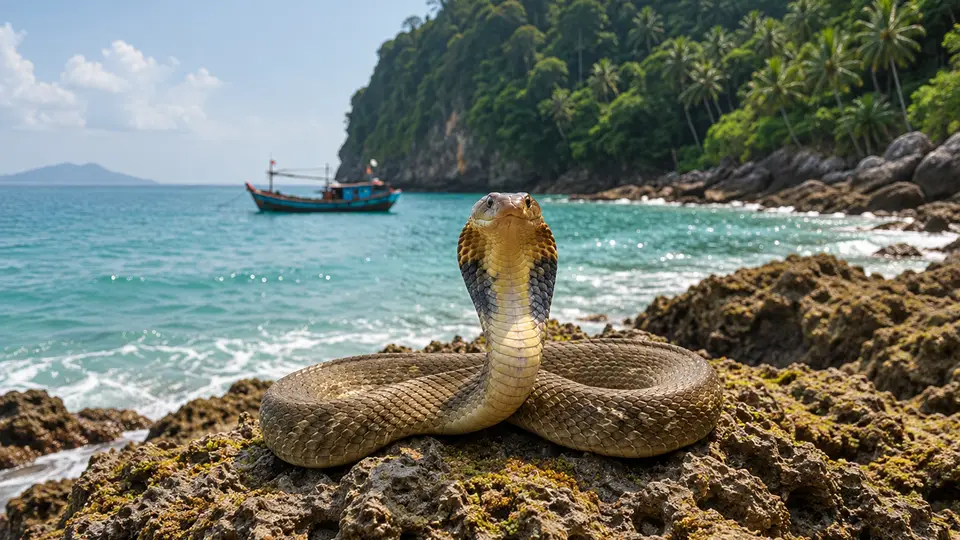
King cobra in its natural habitat, AI illustration
Size3-4 m longLifespanNot reliably establishedStatusCheck current assessment

King cobra: where and when to see them

Ophiophagus hannah

King cobra at a glance

The king cobra is a very large venomous snake whose Vietnamese populations belong to the northern king cobra lineage. Recent taxonomic work has divided the formerly broad king cobra complex, making older distribution and conservation summaries potentially misleading. Despite its name, it is not a member of the true cobra genus Naja. It is an elusive forest predator, threatened by habitat degradation, persecution and collection, rather than a routine coastal wildlife sight.

Behaviour & reproduction

Size
3-4 m long
Weight
Not reliably established
Lifespan
Not reliably established
Status
Check current assessment

King cobras actively search for prey, using chemical cues gathered by the tongue and analyzed by the vomeronasal organ. They usually avoid people when an escape route is available. A threatened individual may raise its forebody, spread a relatively narrow hood and give a low hiss. Females assemble vegetation into a nest mound and may guard it during incubation, an unusual level of nest construction and attendance among snakes. When constructing their nest, the female uses her coils to gather leaves and debris into a mound, providing insulation and protection for the eggs. This elaborate nest building and guarding behavior is a key distinguishing feature of the species, lasting through the incubation period which can be up to 70 days.

Top wildlife locations

Vietnam wildlife habitat

Vietnam

Forested stream margins and foothill trails are plausible land-based habitat, but an inland guided excursion is normally required. Wild encounters are rare; beaches and standard coastal stops should not be presented as viewing sites.

Adventure cruises in Vietnam
Destinations describe the species' habitat, not guaranteed cruise stops. Some animals require an optional inland excursion or are found in restricted reserves.

Fun facts about the King cobra

  • Its genus name Ophiophagus refers to snake eating.
  • Females build nest mounds from plant material.
  • It is the longest venomous snake.
  • Recent research split the former widespread king cobra complex into multiple species.

Best time to see the King cobra

There is no reliable visitor observation season for wild king cobras in Vietnam. Activity varies with temperature, rainfall and region, while encounters remain rare. Plan any forest walk around local weather and professional guidance, not an assumed snake season or a promise of finding one. Despite their formidable reputation, king cobras are shy and reclusive, making any encounter in the wild a rare and serendipitous event, regardless of the time of year. Local guides may have knowledge of recent sightings or territories, but a guarantee is never possible.

King cobra: season matrix by destination

Travel and observation windows vary by region. Highlighted months are an orientation for planning, not confirmed sightings or a guarantee of access.

Vietnam

Regional climate differences and sparse, unpredictable encounters do not support a dependable national shore-observation window.

JanFebMarAprMayJunJulAugSepOctNovDec
Cruise ships in Vietnam

Where the King cobra lives

In Vietnam, king cobras occur in forested landscapes, including foothills, bamboo-rich areas and vegetation near streams. They may enter agricultural edges adjoining forest. Suitable habitat usually requires an inland excursion, and an ordinary open beach or coastal promenade is not a realistic search setting. While primarily terrestrial, they can also climb trees and are strong swimmers, often found near water bodies like streams and rivers where their prey may also reside. The loss of old-growth forests and suitable nesting sites due to deforestation and agricultural expansion is a major threat to their habitat in the region.

What the King cobra eats

Other snakes form the core of the diet, including both venomous and nonvenomous species. Lizards are also taken on occasion. The snake locates prey through chemical and visual information, subdues it with venom and swallows it whole using highly mobile jaws. Their ophiophagous diet means they play a crucial role in regulating other snake populations within their ecosystem. Occasionally, rodents or birds may be consumed if other snake prey is scarce, though this is less common.

Species at a glance

Common name
King cobra
Scientific name
Ophiophagus hannah
Animal group
Reptiles
Size
3-4 m long
Weight
Not reliably established
Lifespan
Not reliably established
Status
Check current assessment
Identification
Compared with Vietnam's Naja cobras, the king cobra has a longer, more slender build, a relatively narrow hood and conspicuous enlarged scales behind the crown. Adult king cobras in Vietnam can reach impressive lengths, often exceeding 3 meters, making them significantly larger than most other venomous snakes in the area. Their dorsal coloration can vary from olive green to brown or black, often with faint banding or chevrons.

King cobra: frequently asked questions

Where can I see the King cobra?
Vietnam. If encountered, stop and retreat slowly, leaving a wide escape route. Never approach, handle or surround the snake, including for photographs. Avoid vegetation mounds that may be nests, and use an experienced local forest guide. Should an encounter occur, maintaining a significant distance is paramount, as their striking range can be surprisingly long. Keep pets on a leash and away from dense undergrowth when trekking in potential king cobra habitat.
When is the best time to see the King cobra?
There is no reliable visitor observation season for wild king cobras in Vietnam. Activity varies with temperature, rainfall and region, while encounters remain rare. Plan any forest walk around local weather and professional guidance, not an assumed snake season or a promise of finding one. Despite their formidable reputation, king cobras are shy and reclusive, making any encounter in the wild a rare and serendipitous event, regardless of the time of year. Local guides may have knowledge of recent sightings or territories, but a guarantee is never possible.
How big does the King cobra get?
3-4 m long. Adult weight: Not reliably established. Size varies with age, sex and population.
How should I behave around the King cobra?
If encountered, stop and retreat slowly, leaving a wide escape route. Never approach, handle or surround the snake, including for photographs. Avoid vegetation mounds that may be nests, and use an experienced local forest guide. Should an encounter occur, maintaining a significant distance is paramount, as their striking range can be surprisingly long. Keep pets on a leash and away from dense undergrowth when trekking in potential king cobra habitat.
What does the King cobra eat?
Other snakes form the core of the diet, including both venomous and nonvenomous species. Lizards are also taken on occasion. The snake locates prey through chemical and visual information, subdues it with venom and swallows it whole using highly mobile jaws. Their ophiophagous diet means they play a crucial role in regulating other snake populations within their ecosystem. Occasionally, rodents or birds may be consumed if other snake prey is scarce, though this is less common.
Are wildlife sightings guaranteed on an adventure cruise?
No. Animals move freely and routes, weather, access restrictions and local conditions influence every outing. Confirm the actual itinerary and shore programme before booking.

Compare wildlife in the same destinations

Explore other reptiles recorded in these destinations. Similar surroundings do not mean the animals share the same habits or viewing season.

Species comparison by animal group and destination
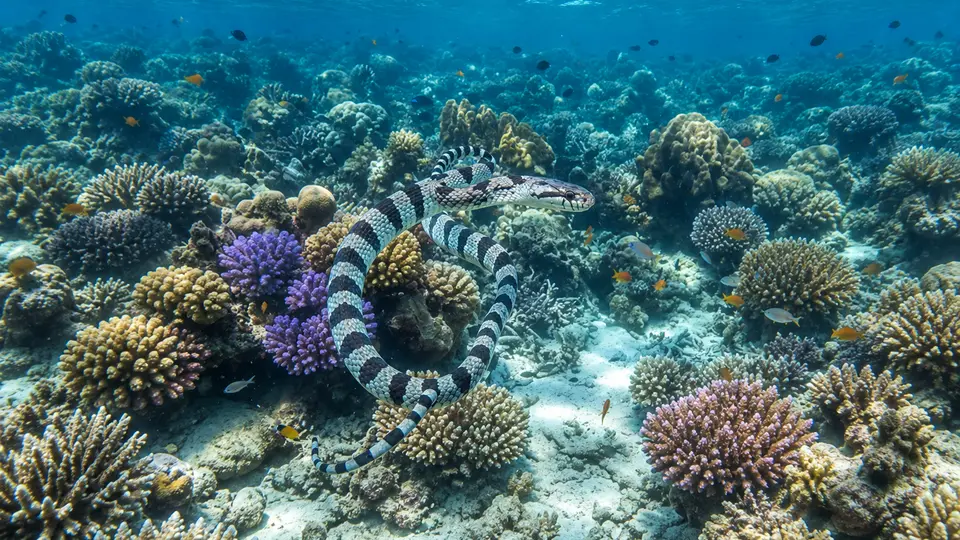
King cobraKing cobraBanded sea kraitBanded sea kraitGreen Sea TurtleGreen Sea Turtle
Animal groupReptilesAnimal groupReptilesAnimal groupReptiles
DestinationsVietnamDestinationsIndonesia, VietnamDestinationsCosta Rica, Florida, Galapagos, Mexico, Cape Verde, Egypt, Greece, Seychelles, Turkey, Indonesia, Maldives, Thailand, Vietnam, Australia, Fiji, Polynesia
All wildlife destinations
Plan your trip

Find your next wildlife adventure

Compare destinations, shore programmes and dates with the animals and habitats you would love to see.

  • Naturalist-led shore excursions
  • Responsible wildlife watching
  • Small expedition ships

Newsletter

Take Blue Rides with you

Adventure cruise offers, last-minute deals and trip inspiration.

Free, unsubscribe anytime. Details: Privacy Policy

Partner with Blue Rides

Affiliate Program

Recommend adventure cruises and earn commission on every confirmed booking.

Share. Track. Earn.