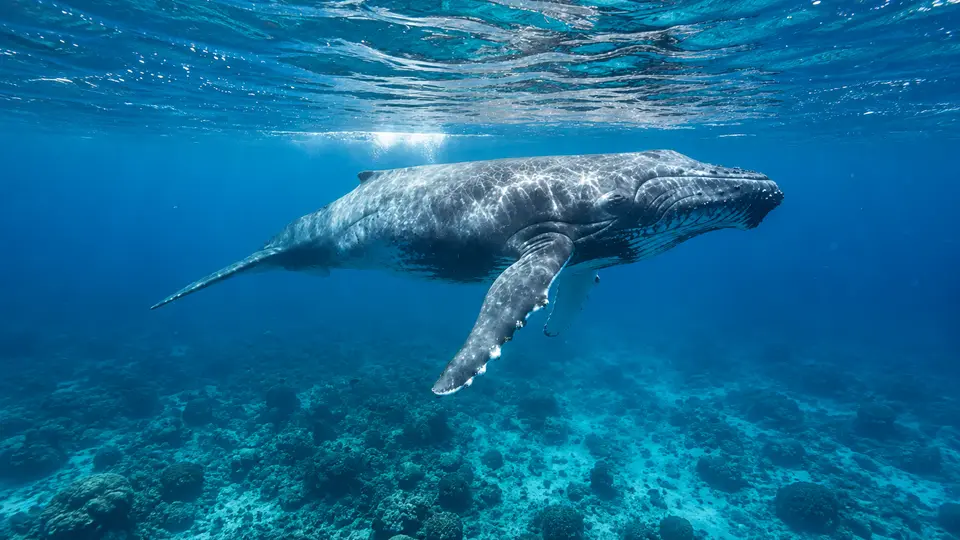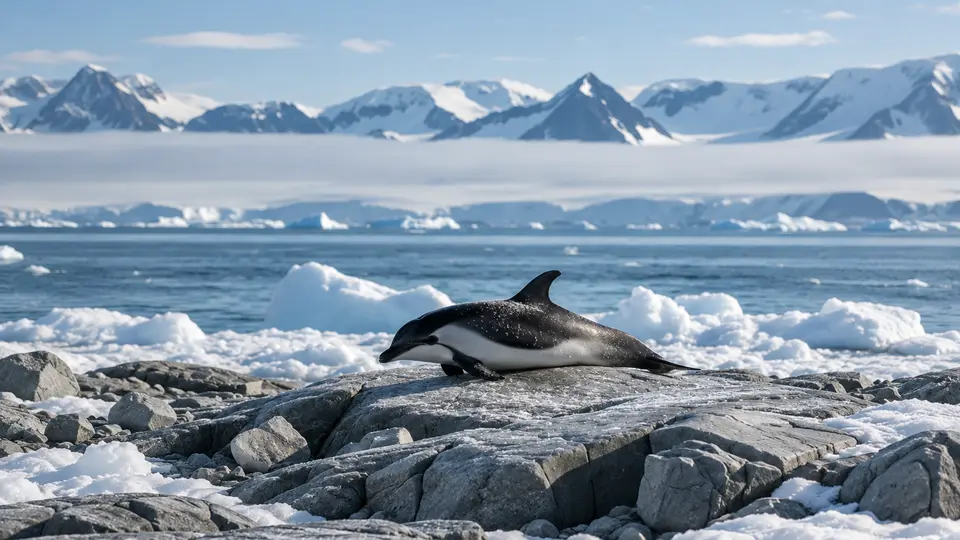
Hourglass Dolphin in its natural habitat, AI illustration
Size1.4-1.9 m longLifespanNot reliably establishedStatusLeast Concern

Hourglass Dolphin: where and when to see them

Lagenorhynchus cruciger

Hourglass Dolphin at a glance

The hourglass dolphin is a small, strikingly patterned dolphin of the Southern Ocean. White side patches linked by a narrow band create the hourglass effect against a mostly black body. It is an oceanic mammal, not a shoreline animal, and much of its biology remains poorly documented because its range is remote and weather often limits observation. Antarctic travellers may encounter it during ocean passages, but sightings are unpredictable and usually brief.

Behaviour & reproduction

Size
1.4-1.9 m long
Weight
70-100 kg
Lifespan
Not reliably established
Status
Least Concern

Hourglass dolphins usually travel in small groups, although larger aggregations are recorded. They can swim briskly at the surface, leap clear of the water and sometimes approach a vessel's bow wave. Such behaviour is voluntary and should not be encouraged by changes in course. Their breeding system, social relationships and daily routines remain incompletely known, so confident claims about family structure or regular seasonal gatherings are not justified. They are known for their energetic swimming and often associate with other cetaceans, including fin whales and sei whales. Their tendency to ride bow waves makes vessel encounters particularly memorable, though not guaranteed.

Top wildlife locations

Antarctica wildlife habitat

Antarctica

Offshore passages provide plausible distant deck observation, while shore sightings are rare and standard landings are not dependable viewing locations. Rough seas and brief surfacing can make identification difficult.

Adventure cruises in Antarctica
Destinations describe the species' habitat, not guaranteed cruise stops. Some animals require an optional inland excursion or are found in restricted reserves.

Fun facts about the Hourglass Dolphin

  • It is one of the few dolphins regularly recorded in Antarctic waters.
  • Its common name describes the pale flank pattern.
  • Most knowledge comes from sightings and relatively few examined specimens.
  • Its dorsal fin can look surprisingly tall for such a small dolphin.

Best time to see the Hourglass Dolphin

November through March provides the main practical observation window during Antarctic passenger travel, with longer daylight and more workable sea conditions. This is an access window rather than a proven peak in dolphin abundance, and it should not be described as a known breeding season. While present year-round, ice conditions make observation highly impractical outside the austral summer. The period from December to February often offers the most stable weather for open ocean viewing, though sightings remain opportunistic.

Hourglass Dolphin: season matrix by destination

Travel and observation windows vary by region. Highlighted months are an orientation for planning, not confirmed sightings or a guarantee of access.

Antarctica

These months reflect Antarctic travel access and daylight, not confirmed local presence, a migration peak or an established breeding season.

JanFebMarAprMayJunJulAugSepOctNovDec
Cruise ships in Antarctica

Where the Hourglass Dolphin lives

They inhabit cold offshore Southern Ocean waters, including subantarctic and Antarctic regions. Records extend across a broad circumpolar belt rather than being confined to the immediate Antarctic coastline. Deep-water passages provide more plausible viewing circumstances than beaches, sheltered harbours or standard landing areas. They are thought to prefer areas near the Antarctic Polar Front, indicating a preference for highly productive waters. Their distribution is primarily pelagic, far from continental shelves, making them challenging to study.

What the Hourglass Dolphin eats

Available evidence indicates a diet of fish and squid, but samples are limited and regional differences remain poorly understood. Surface feeding may occasionally be visible from a distant deck. A brief encounter cannot establish which prey a particular group is pursuing. Their diet likely includes mesopelagic fish and cephalopods, reflecting their offshore, deep-water environment. Predation by hourglass dolphins probably contributes to the oceanic food web in the Southern Ocean.

Species at a glance

Common name
Hourglass Dolphin
Scientific name
Lagenorhynchus cruciger
Animal group
Mammals
Size
1.4-1.9 m long
Weight
70-100 kg
Lifespan
Not reliably established
Status
Least Concern
Identification
The narrow white connection between large flank patches, robust body and prominent curved dorsal fin distinguish it from southern right whale dolphins, which lack a dorsal fin. The hourglass pattern, a distinct white band connecting a white belly patch to a white flank patch, is the key diagnostic feature for this species. Their sleek, black and white counter-shaded body is highly distinctive at sea.

Hourglass Dolphin: frequently asked questions

Where can I see the Hourglass Dolphin?
Antarctica. Observe from a secure deck position with binoculars, keeping clear of rails in rough seas. Do not request pursuit or interception; allow dolphins to choose their distance and accept that identification may remain uncertain. Focus observation efforts on areas with high marine productivity, such as convergence zones and upwellings. Patience is key; these dolphins are often encountered briefly and unexpectedly in vast expanses of ocean.
When is the best time to see the Hourglass Dolphin?
November through March provides the main practical observation window during Antarctic passenger travel, with longer daylight and more workable sea conditions. This is an access window rather than a proven peak in dolphin abundance, and it should not be described as a known breeding season. While present year-round, ice conditions make observation highly impractical outside the austral summer. The period from December to February often offers the most stable weather for open ocean viewing, though sightings remain opportunistic.
How big does the Hourglass Dolphin get?
1.4-1.9 m long. Adult weight: 70-100 kg. Size varies with age, sex and population.
How should I behave around the Hourglass Dolphin?
Observe from a secure deck position with binoculars, keeping clear of rails in rough seas. Do not request pursuit or interception; allow dolphins to choose their distance and accept that identification may remain uncertain. Focus observation efforts on areas with high marine productivity, such as convergence zones and upwellings. Patience is key; these dolphins are often encountered briefly and unexpectedly in vast expanses of ocean.
What does the Hourglass Dolphin eat?
Available evidence indicates a diet of fish and squid, but samples are limited and regional differences remain poorly understood. Surface feeding may occasionally be visible from a distant deck. A brief encounter cannot establish which prey a particular group is pursuing. Their diet likely includes mesopelagic fish and cephalopods, reflecting their offshore, deep-water environment. Predation by hourglass dolphins probably contributes to the oceanic food web in the Southern Ocean.
Are wildlife sightings guaranteed on an adventure cruise?
No. Animals move freely and routes, weather, access restrictions and local conditions influence every outing. Confirm the actual itinerary and shore programme before booking.

Compare wildlife in the same destinations

Explore other mammals recorded in these destinations. Similar surroundings do not mean the animals share the same habits or viewing season.

Species comparison by animal group and destination
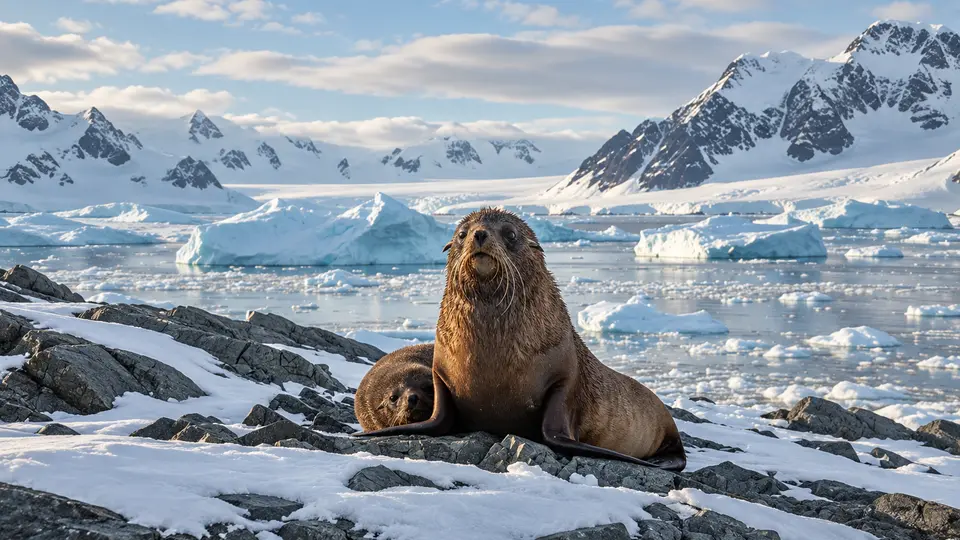
Hourglass DolphinHourglass DolphinAntarctic Fur SealAntarctic Fur SealBlue WhaleBlue Whale
Animal groupMammalsAnimal groupMammalsAnimal groupMammals
DestinationsAntarcticaDestinationsAntarcticaDestinationsMexico, Norway, Portugal, Antarctica, Arctic, Maldives, New Zealand
All wildlife destinations
Plan your trip

Find your next wildlife adventure

Compare destinations, shore programmes and dates with the animals and habitats you would love to see.

  • Naturalist-led shore excursions
  • Responsible wildlife watching
  • Small expedition ships

Newsletter

Take Blue Rides with you

Adventure cruise offers, last-minute deals and trip inspiration.

Free, unsubscribe anytime. Details: Privacy Policy

Partner with Blue Rides

Affiliate Program

Recommend adventure cruises and earn commission on every confirmed booking.

Share. Track. Earn.