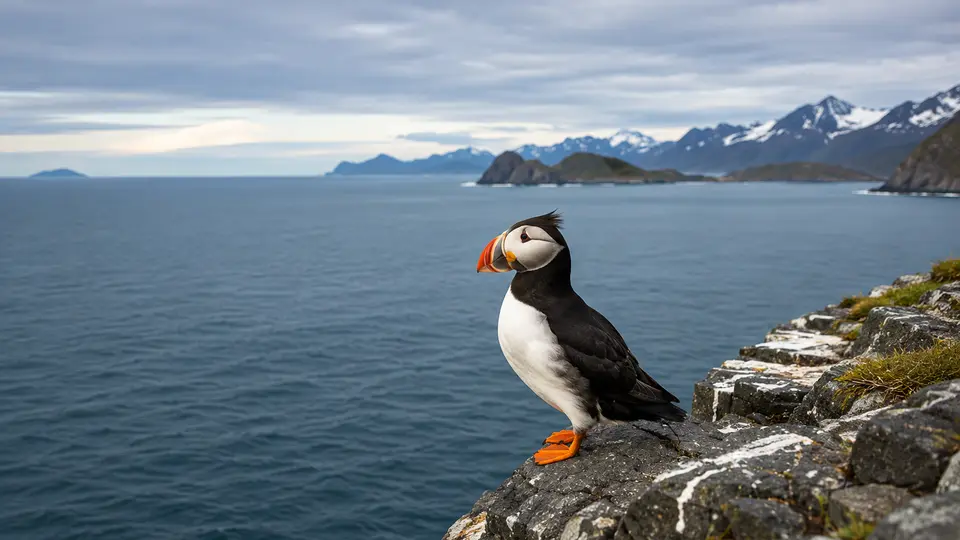
Horned Puffin in its natural habitat, AI illustration
Size32-38 cm longLifespanNot reliably establishedStatusLeast Concern

Horned Puffin: where and when to see them

Fratercula corniculata

Horned Puffin at a glance

The horned puffin is a North Pacific seabird that breeds on rocky islands and coastal cliffs, including parts of Alaska. Its name comes from the small dark projection above each eye during the breeding season. A bright bill and white face contrast with black upperparts, while the belly remains white. Most of its year is spent at sea, so coastal access to breeding habitat strongly shapes opportunities for distant observation.

Behaviour & reproduction

Size
32-38 cm long
Weight
450-650 g
Lifespan
Not reliably established
Status
Least Concern

Breeding birds return to colonies and occupy rock crevices, spaces among boulders or occasionally burrows. Pairs share incubation and feed a single chick with small fish carried crosswise in the bill. Flight is rapid and direct, supported by quick wingbeats. Outside breeding, birds disperse offshore and become much less conspicuous from land, while seasonal changes reduce the colourful bill and facial features familiar from summer photographs. Breeding birds return to colonies and occupy rock crevices, spaces among boulders or occasionally burrows. Pairs share incubation and feed a single chick with small fish carried crosswise in the bill. Flight is rapid and direct, supported by quick wingbeats. Outside breeding, birds disperse offshore and become much less conspicuous from land, while seasonal changes reduce the colourful bill and facial features familiar from summer photographs. They are generally solitary or found in small groups at sea, except during the concentrated breeding season. Their vocalizations at colonies include growls and grunts, used for communication between mates and territorial defense.

Top wildlife locations

Alaska wildlife habitat

Alaska

Rocky island colonies and sea cliffs offer plausible distant deck or shore views where public access exists. Many colonies are inaccessible, and not every coastal excursion passes suitable breeding habitat.

Adventure cruises in Alaska
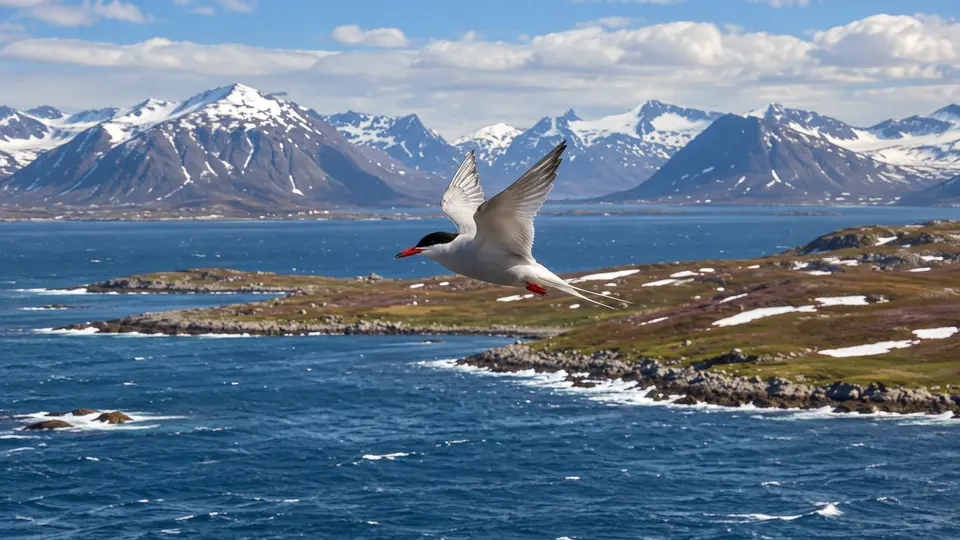
Destinations describe the species' habitat, not guaranteed cruise stops. Some animals require an optional inland excursion or are found in restricted reserves.

Fun facts about the Horned Puffin

  • Each breeding attempt normally involves one egg.
  • The eye horn is most conspicuous during breeding.
  • Parents can carry several small fish crosswise at once.
  • The colourful outer bill structures are reduced after breeding.

Best time to see the Horned Puffin

Late May through August offers the strongest general opportunity around Alaskan breeding colonies. Exact arrival, hatching and departure dates vary with latitude and conditions. Once birds leave colonies, shore observation becomes much less dependable because they spread across offshore waters. Late May through August offers the strongest general opportunity around Alaskan breeding colonies. Exact arrival, hatching and departure dates vary with latitude and conditions. Once birds leave colonies, shore observation becomes much less dependable because they spread across offshore waters. During the breeding season, birds are most concentrated and active around their nesting sites, making early mornings and late afternoons good times to observe activity. By early September, most adults and juveniles have departed colonies, returning to their pelagic wintering grounds.

Horned Puffin: season matrix by destination

Travel and observation windows vary by region. Highlighted months are an orientation for planning, not confirmed sightings or a guarantee of access.

Alaska

These months overlap colony attendance in much of Alaska, but local breeding schedules and access vary.

JanFebMarAprMayJunJulAugSepOctNovDec
Cruise ships in Alaska

Where the Horned Puffin lives

Breeding habitat includes rocky islands, sea cliffs and boulder slopes close to productive North Pacific waters. Secure crevices protect eggs and chicks from weather and predators. In winter, birds range offshore, often beyond practical observation distance from ordinary coastal viewpoints. Breeding habitat includes rocky islands, sea cliffs and boulder slopes close to productive North Pacific waters. Secure crevices protect eggs and chicks from weather and predators. In winter, birds range offshore, often beyond practical observation distance from ordinary coastal viewpoints. They prefer areas with deep, clear water near nesting sites, allowing for efficient foraging. These puffins typically nest in colonies, sometimes alongside other seabird species.

What the Horned Puffin eats

Small schooling fish, including sand lance, capelin and juvenile herring, are important foods. Adults also take squid and crustaceans. Chicks receive fish delivered by the parents, sometimes several in one bill-load, with local prey availability influencing breeding success. Small schooling fish, including sand lance, capelin and juvenile herring, are important foods. Adults also take squid and crustaceans. Chicks receive fish delivered by the parents, sometimes several in one bill-load, with local prey availability influencing breeding success. Foraging dives can reach depths of over 100 feet, showcasing their adaptation to marine hunting. They catch multiple small fish by pinning them against their spiny palate and tongue.

Species at a glance

Common name
Horned Puffin
Scientific name
Fratercula corniculata
Animal group
Birds
Size
32-38 cm long
Weight
450-650 g
Lifespan
Not reliably established
Status
Least Concern
Identification
The white belly and small black eye horn distinguish it from the dark-bodied tufted puffin, which develops long golden head plumes in breeding plumage. The white belly and small black eye horn distinguish it from the dark-bodied tufted puffin, which develops long golden head plumes in breeding plumage. The Horned Puffin's bill is also brightly colored orange and yellow during breeding season, contrasting with its dark back and white underparts. Immature birds lack the prominent bill plates and eye horn, appearing duller with a smaller, darker bill.

Horned Puffin: frequently asked questions

Where can I see the Horned Puffin?
Alaska. Use binoculars from established cliff viewpoints or a distant deck. Stay behind barriers, avoid unstable edges and never enter boulder crevices; concealed nests can be disturbed even when no adult is visible. Use binoculars from established cliff viewpoints or a distant deck. Stay behind barriers, avoid unstable edges and never enter boulder crevices; concealed nests can be disturbed even when no adult is visible. On cruise excursions, look for them flying swiftly over the water or bobbing on the surface in small groups. Their distinctive flight pattern, with rapid wingbeats, often draws attention even at a distance.
When is the best time to see the Horned Puffin?
Late May through August offers the strongest general opportunity around Alaskan breeding colonies. Exact arrival, hatching and departure dates vary with latitude and conditions. Once birds leave colonies, shore observation becomes much less dependable because they spread across offshore waters. Late May through August offers the strongest general opportunity around Alaskan breeding colonies. Exact arrival, hatching and departure dates vary with latitude and conditions. Once birds leave colonies, shore observation becomes much less dependable because they spread across offshore waters. During the breeding season, birds are most concentrated and active around their nesting sites, making early mornings and late afternoons good times to observe activity. By early September, most adults and juveniles have departed colonies, returning to their pelagic wintering grounds.
How big does the Horned Puffin get?
32-38 cm long. Adult weight: 450-650 g. Size varies with age, sex and population.
How should I behave around the Horned Puffin?
Use binoculars from established cliff viewpoints or a distant deck. Stay behind barriers, avoid unstable edges and never enter boulder crevices; concealed nests can be disturbed even when no adult is visible. Use binoculars from established cliff viewpoints or a distant deck. Stay behind barriers, avoid unstable edges and never enter boulder crevices; concealed nests can be disturbed even when no adult is visible. On cruise excursions, look for them flying swiftly over the water or bobbing on the surface in small groups. Their distinctive flight pattern, with rapid wingbeats, often draws attention even at a distance.
What does the Horned Puffin eat?
Small schooling fish, including sand lance, capelin and juvenile herring, are important foods. Adults also take squid and crustaceans. Chicks receive fish delivered by the parents, sometimes several in one bill-load, with local prey availability influencing breeding success. Small schooling fish, including sand lance, capelin and juvenile herring, are important foods. Adults also take squid and crustaceans. Chicks receive fish delivered by the parents, sometimes several in one bill-load, with local prey availability influencing breeding success. Foraging dives can reach depths of over 100 feet, showcasing their adaptation to marine hunting. They catch multiple small fish by pinning them against their spiny palate and tongue.
Are wildlife sightings guaranteed on an adventure cruise?
No. Animals move freely and routes, weather, access restrictions and local conditions influence every outing. Confirm the actual itinerary and shore programme before booking.

Compare wildlife in the same destinations

Explore other birds recorded in these destinations. Similar surroundings do not mean the animals share the same habits or viewing season.

Species comparison by animal group and destination
Horned PuffinHorned PuffinArctic TernArctic TernBald EagleBald Eagle
Animal groupBirdsAnimal groupBirdsAnimal groupBirds
DestinationsAlaskaDestinationsAlaska, Norway, ArcticDestinationsAlaska, Florida, New England
All wildlife destinations
Plan your trip

Find your next wildlife adventure

Compare destinations, shore programmes and dates with the animals and habitats you would love to see.

  • Naturalist-led shore excursions
  • Responsible wildlife watching
  • Small expedition ships

Newsletter

Take Blue Rides with you

Adventure cruise offers, last-minute deals and trip inspiration.

Free, unsubscribe anytime. Details: Privacy Policy

Partner with Blue Rides

Affiliate Program

Recommend adventure cruises and earn commission on every confirmed booking.

Share. Track. Earn.