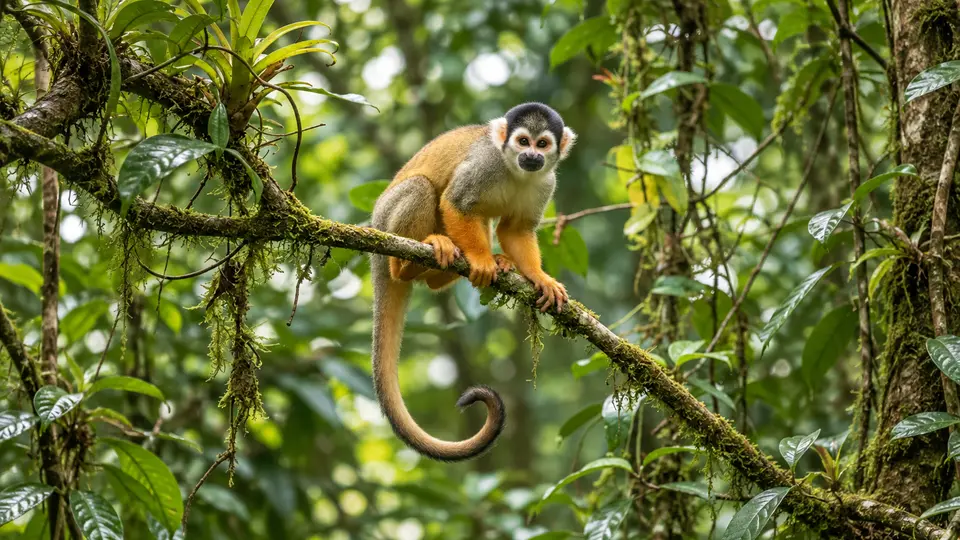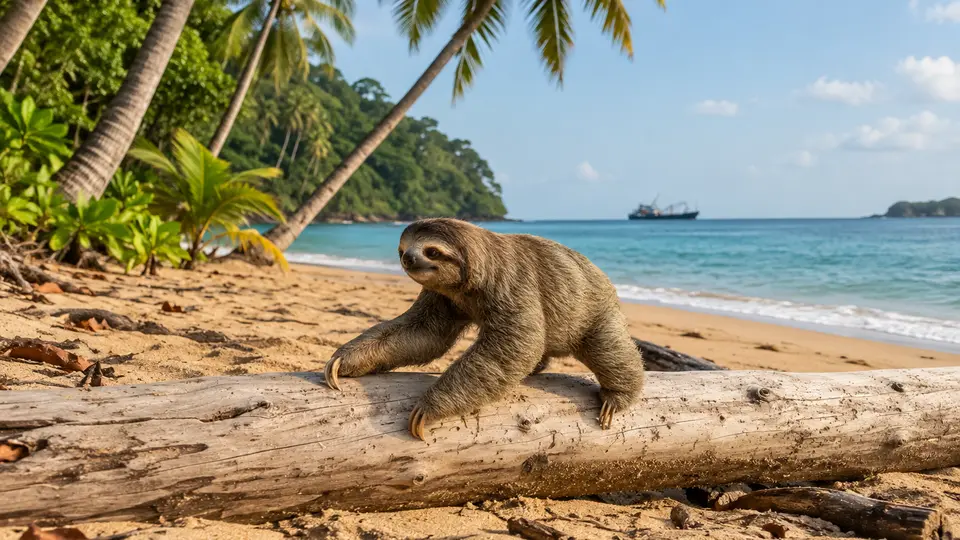
Hoffmann's Two-toed Sloth in its natural habitat, AI illustration

Hoffmann's Two-toed SlothCholoepus hoffmanniWhere and when to see them

Hoffmann's Two-toed Sloth at a glance

Hoffmann's two-toed sloth is an arboreal mammal of Central America and northwestern South America, including Costa Rica. Its shaggy coat, rounded muzzle and long curved claws suit a life suspended beneath branches. The name refers to the two clawed digits on each forelimb; each hind foot has three. Individuals can remain remarkably inconspicuous in the canopy, and a motionless bundle of fur may be easier to overlook than an active animal.

Behaviour & reproduction

Size
54-72 cm long
Weight
2.1-9 kg
Lifespan
Not reliably established
Status
Least Concern

Mostly nocturnal and usually solitary, this sloth spends long periods resting among branches before slowly travelling to feeding sites. It hangs using strong curved claws and changes position without the conspicuous leaps of monkeys. Mothers carry dependent young against the body for months. Although movement is generally economical, a frightened animal can defend itself forcefully with claws and teeth, so apparent slowness should never be mistaken for tameness. They possess a remarkable grip strength, allowing them to hang upside down for hours without expending much energy, even while sleeping or giving birth. Despite their arboreal lifestyle, they are surprisingly capable swimmers if they fall into water. Their slow metabolism means they defecate only once a week, typically descending to the ground to do so, a vulnerable but necessary act.

Top wildlife locations

Costa Rica wildlife habitat

Costa Rica

Forested coastal reserves and connected woodland near coastal towns offer plausible canopy viewing from trails. Some sites require an inland excursion, and animals are easily missed even where locally present.
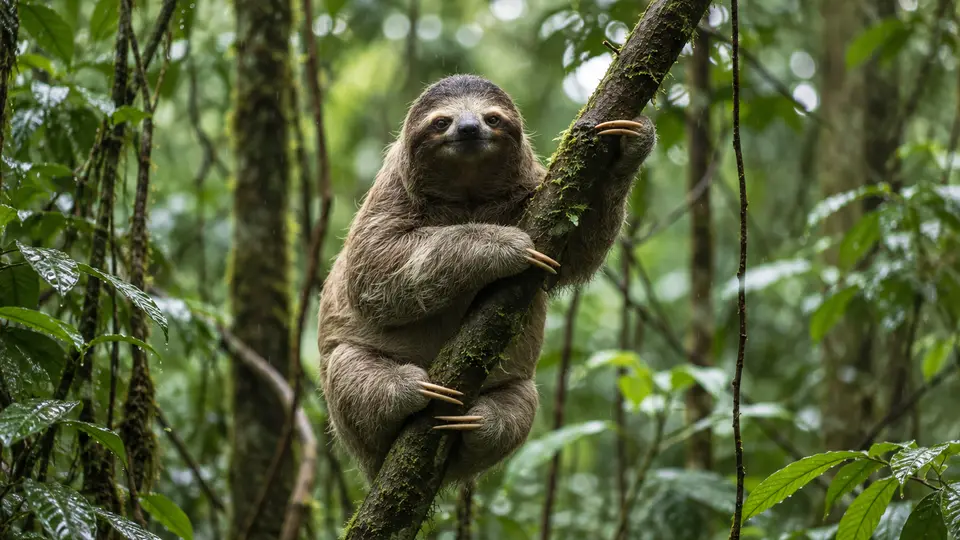
Destinations describe the species' habitat, not guaranteed cruise stops. Some animals require an optional inland excursion or are found in restricted reserves.

Fun facts about the Hoffmann's Two-toed Sloth

  • Both hind feet have three clawed digits despite the common name.
  • Its hair parts in a way that helps shed rain while hanging.
  • Algae can grow in the coat and contribute a greenish tint.
  • Two-toed and three-toed sloths belong to different living families.

Best time to see the Hoffmann's Two-toed Sloth

Observation is possible year-round in suitable Costa Rican forest. Drier months can make trails and canopy scanning easier on the Pacific side, while Caribbean rainfall patterns differ. There is no dependable seasonal gathering, and individual animals may remain hidden even in occupied habitat. During the nesting season of some bird species, sloths may be easier to spot as they move through the canopy potentially disturbing nests, although this is not a primary observation strategy. Early morning and late afternoon are often the best times for viewing when sloths might be more active in feeding or changing resting spots. Their natural camouflage makes them challenging to spot even in good conditions.

Hoffmann's Two-toed Sloth: season matrix by destination

Travel and observation windows vary by region. Highlighted months are an orientation for planning, not confirmed sightings or a guarantee of access.

Costa Rica

These months emphasize generally easier Pacific-side trail conditions; Caribbean weather differs and sloths are not seasonally restricted to this period.

JanFebMarAprMayJunJulAugSepOctNovDec
Cruise ships in Costa Rica

Where the Hoffmann's Two-toed Sloth lives

It uses tropical forest across a broad elevation range, including mature woodland, secondary growth and some connected tree cover near settlements. Lowland coastal forests in Costa Rica can be suitable. Canopy continuity matters because movement between isolated trees can expose animals to hazards. While Hoffmann's two-toed sloths primarily inhabit arboreal environments, they are known to descend to the ground to defecate or to move between widely spaced trees, making them vulnerable to predators. They prefer areas with dense canopy cover that provides both protection and a continuous pathway for movement. Their presence can indicate a healthy, connected forest ecosystem.

What the Hoffmann's Two-toed Sloth eats

Leaves form much of the diet, supplemented by shoots, flowers and fruits. A large, compartmentalized stomach supports slow microbial digestion of plant material. Wild food choice varies with available trees, and feeding sloths cultivated fruit can disrupt natural behaviour and nutrition. In addition to leaves, their diet can include buds and twigs, demonstrating adaptability to available plant resources within their home range. The specialized digestive system with a low metabolic rate allows them to subsist on nutrient-poor foliage. Unlike some herbivores, they do not appear to require external water sources, obtaining sufficient hydration from their food.

Species at a glance

Common name
Hoffmann's Two-toed Sloth
Scientific name
Choloepus hoffmanni
Animal group
Mammals
Size
54-72 cm long
Weight
2.1-9 kg
Lifespan
Not reliably established
Status
Least Concern
Identification
Two foreclaws, a prominent rounded muzzle and the absence of a dark eye mask distinguish it from Costa Rica's brown-throated three-toed sloth. Adult Hoffmann's two-toed sloths typically weigh between 4 to 8 kilograms and measure around 58 to 70 centimeters in length, making them significantly larger than three-toed sloths. Their fur often has a greenish tinge due to symbiotic algae growing on the hairs, which provides additional camouflage. The two large claws on each forelimb are a definitive feature, distinguishing them from the three smaller claws of their three-toed relatives.

Hoffmann's Two-toed Sloth: frequently asked questions

Where can I see the Hoffmann's Two-toed Sloth?
Costa Rica. Scan trees from established trails with binoculars, preferably with a knowledgeable local guide. Never touch, feed or shake branches to provoke movement; claws and teeth can cause injury, and forced interaction stresses sloths. Look for the characteristic clumps of fur on tree branches or the slow, deliberate movements that distinguish them from other arboreal mammals. Professional guides are adept at identifying their preferred resting spots and signs of their presence, significantly increasing viewing success. Patience is key, as sloths can remain motionless for extended periods, blending seamlessly with their environment.
When is the best time to see the Hoffmann's Two-toed Sloth?
Observation is possible year-round in suitable Costa Rican forest. Drier months can make trails and canopy scanning easier on the Pacific side, while Caribbean rainfall patterns differ. There is no dependable seasonal gathering, and individual animals may remain hidden even in occupied habitat. During the nesting season of some bird species, sloths may be easier to spot as they move through the canopy potentially disturbing nests, although this is not a primary observation strategy. Early morning and late afternoon are often the best times for viewing when sloths might be more active in feeding or changing resting spots. Their natural camouflage makes them challenging to spot even in good conditions.
How big does the Hoffmann's Two-toed Sloth get?
54-72 cm long. Adult weight: 2.1-9 kg. Size varies with age, sex and population.
How should I behave around the Hoffmann's Two-toed Sloth?
Scan trees from established trails with binoculars, preferably with a knowledgeable local guide. Never touch, feed or shake branches to provoke movement; claws and teeth can cause injury, and forced interaction stresses sloths. Look for the characteristic clumps of fur on tree branches or the slow, deliberate movements that distinguish them from other arboreal mammals. Professional guides are adept at identifying their preferred resting spots and signs of their presence, significantly increasing viewing success. Patience is key, as sloths can remain motionless for extended periods, blending seamlessly with their environment.
What does the Hoffmann's Two-toed Sloth eat?
Leaves form much of the diet, supplemented by shoots, flowers and fruits. A large, compartmentalized stomach supports slow microbial digestion of plant material. Wild food choice varies with available trees, and feeding sloths cultivated fruit can disrupt natural behaviour and nutrition. In addition to leaves, their diet can include buds and twigs, demonstrating adaptability to available plant resources within their home range. The specialized digestive system with a low metabolic rate allows them to subsist on nutrient-poor foliage. Unlike some herbivores, they do not appear to require external water sources, obtaining sufficient hydration from their food.
Are wildlife sightings guaranteed on an adventure cruise?
No. Animals move freely and routes, weather, access restrictions and local conditions influence every outing. Confirm the actual itinerary and shore program before booking.

Compare wildlife in the same destinations

Explore other mammals recorded in these destinations. Similar surroundings do not mean the animals share the same habits or viewing season.

Species comparison by animal group and destination
Hoffmann's Two-toed SlothHoffmann's Two-toed SlothBrown-throated SlothBrown-throated SlothCentral American Squirrel MonkeyCentral American Squirrel Monkey
Animal groupMammalsAnimal groupMammalsAnimal groupMammals
DestinationsCosta RicaDestinationsCosta RicaDestinationsCosta Rica
All wildlife destinations
Plan your trip

Find your next wildlife adventure

Compare destinations, shore programs and dates with the animals and habitats you would love to see.

  • Naturalist-led shore excursions
  • Responsible wildlife watching
  • Small expedition ships

Newsletter

Take Blue Rides with you

Adventure cruise offers, last-minute deals and trip inspiration.

Free, unsubscribe anytime. Details: Privacy Policy

Partner with Blue Rides

Affiliate Program

Recommend adventure cruises and earn commission on every confirmed booking.

Share. Track. Earn.

Your footage, our stage

Send us your videos or pictures.

Captured remarkable nature or wildlife on your journey? Share it with us, we may feature it on Blue Rides.