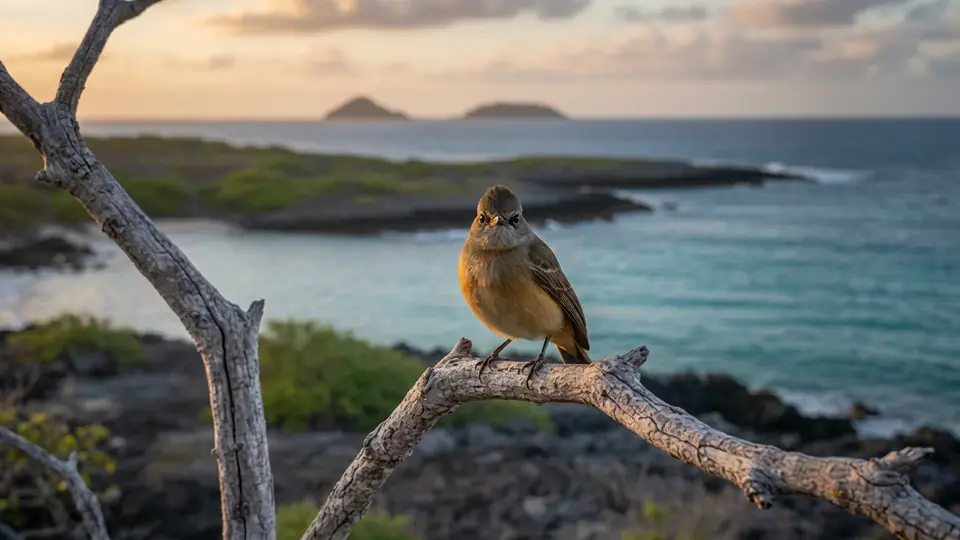
Galápagos Flycatcher in its natural habitat, AI illustration

Galápagos Flycatcher: where and when to see them

Myiarchus magnirostris

Galápagos Flycatcher at a glance

The Galápagos flycatcher is a small endemic member of the tyrant flycatcher family, recognizable by its gray-brown head, pale yellow belly and alert posture. It is widespread across the archipelago but easily overlooked among more conspicuous wildlife. Often called the large-billed flycatcher, it searches for insects from exposed perches. Its willingness to investigate unfamiliar objects reflects island curiosity, not domestication or a need for assistance from visitors.

Behaviour & reproduction

Size
15–16 cm long
Weight
12–18 g
Lifespan
Not reliably established
Status
Least Concern

A bird typically waits on a twig, fence or other lookout before making a short flight to seize an insect. It may return to the same perch or shift through nearby vegetation while calling. Pairs use cavities for nesting, including natural holes in trees and cactus. Curious individuals sometimes approach people or inspect equipment, but observers should remain passive and avoid turning this behavior into a feeding interaction. Pairs maintain territories year-round, which they defend against other flycatchers and sometimes other bird species. Their curious nature often leads them to investigate new objects or sounds, approaching observers without fear.

Top wildlife locations

Galapagos wildlife habitat

Galapagos

Dry scrub and cactus vegetation beside authorized coastal trails provide plausible habitat. Some birds also occupy uplands, but an inland excursion is not essential wherever suitable lowland vegetation occurs along permitted routes.

Adventure cruises in Galapagos
Destinations describe the species' habitat, not guaranteed cruise stops. Some animals require an optional inland excursion or are found in restricted reserves.

Fun facts about the Galápagos Flycatcher

  • It is the only native resident Myiarchus flycatcher in the Galápagos.
  • Its scientific epithet refers to its relatively large bill.
  • It nests in cavities rather than building an exposed cup nest.
  • Individuals sometimes inspect visitors' equipment without being attracted by food.

Best time to see the Galápagos Flycatcher

The species is resident and can be sought year-round along suitable visitor trails. Warm-season rainfall often increases insect availability and can support breeding, but timing varies between islands. Calm periods make its calls and short feeding flights easier to detect in scrub. Breeding activity peaks during the hot and wet season (January to May), when insect populations are most abundant, supporting successful chick rearing. However, their adaptability means they can initiate nesting at other times if conditions are favorable.

Galápagos Flycatcher: season matrix by destination

Travel and observation windows vary by region. Highlighted months are an orientation for planning, not confirmed sightings or a guarantee of access.

Galapagos

Resident year-round; insect activity, local vegetation and rainfall influence detectability more than a fixed travel season.

JanFebMarAprMayJunJulAugSepOctNovDec
Cruise ships in Galapagos

Where the Galápagos Flycatcher lives

This adaptable flycatcher occupies arid scrub, cactus woodland, transitional vegetation and some humid highland habitats. Scattered perches and insect-rich vegetation are more important than dense forest alone. Nesting depends on suitable cavities, which may occur in living plants or dead woody material. They are found throughout the archipelago, inhabiting most islands where suitable conditions exist, from sea level up to higher elevations. Human modified habitats such as cultivated areas or near settlements can also host the species, provided insect prey and nesting sites are available.

What the Galápagos Flycatcher eats

Insects and other small arthropods form the main diet. Prey is captured in short aerial sallies or picked from vegetation and other surfaces. Some small fruits are also eaten, but the species is primarily an insect hunter rather than a seed specialist. Foraging typically involves 'sallying' from a perch to catch insects in mid-air or 'gleaning' them from leaves, branches, and the ground. While primarily insectivorous, opportunistic feeding on small lizards has occasionally been documented.

Species at a glance

Common name
Galápagos Flycatcher
Scientific name
Myiarchus magnirostris
Animal group
Birds
Size
15–16 cm long
Weight
12–18 g
Lifespan
Not reliably established
Status
Least Concern
Identification
Its upright flycatcher stance, broad-based bill and pale yellow belly distinguish it from Galápagos finches with their more compact bodies and seed-cracking bills. Their relatively large bill, which is entirely black, is a key distinguishing feature among Galápagos land birds. The rufous wash on the tail feathers can be subtle but is a helpful field mark in good light.

Galápagos Flycatcher: frequently asked questions

Where can I see the Galápagos Flycatcher?
Galapagos. Pause beside scrub and watch exposed twigs for repeated short flights. Do not lure birds with food, playback or handled insects, and keep clear of any cavity receiving repeated visits from adults. Listen for their distinctive, often repeated, 'peep' or 'wheep' calls, which are a good indicator of their presence even when they are hidden in foliage. When observing, pay attention to their habit of flicking their tail up and down, a common flycatcher trait.
When is the best time to see the Galápagos Flycatcher?
The species is resident and can be sought year-round along suitable visitor trails. Warm-season rainfall often increases insect availability and can support breeding, but timing varies between islands. Calm periods make its calls and short feeding flights easier to detect in scrub. Breeding activity peaks during the hot and wet season (January to May), when insect populations are most abundant, supporting successful chick rearing. However, their adaptability means they can initiate nesting at other times if conditions are favorable.
How big does the Galápagos Flycatcher get?
15–16 cm long. Adult weight: 12–18 g. Size varies with age, sex and population.
How should I behave around the Galápagos Flycatcher?
Pause beside scrub and watch exposed twigs for repeated short flights. Do not lure birds with food, playback or handled insects, and keep clear of any cavity receiving repeated visits from adults. Listen for their distinctive, often repeated, 'peep' or 'wheep' calls, which are a good indicator of their presence even when they are hidden in foliage. When observing, pay attention to their habit of flicking their tail up and down, a common flycatcher trait.
What does the Galápagos Flycatcher eat?
Insects and other small arthropods form the main diet. Prey is captured in short aerial sallies or picked from vegetation and other surfaces. Some small fruits are also eaten, but the species is primarily an insect hunter rather than a seed specialist. Foraging typically involves 'sallying' from a perch to catch insects in mid-air or 'gleaning' them from leaves, branches, and the ground. While primarily insectivorous, opportunistic feeding on small lizards has occasionally been documented.
Are wildlife sightings guaranteed on an adventure cruise?
No. Animals move freely and routes, weather, access restrictions and local conditions influence every outing. Confirm the actual itinerary and shore program before booking.

Compare wildlife in the same destinations

Explore other birds recorded in these destinations. Similar surroundings do not mean the animals share the same habits or viewing season.

Species comparison by animal group and destination
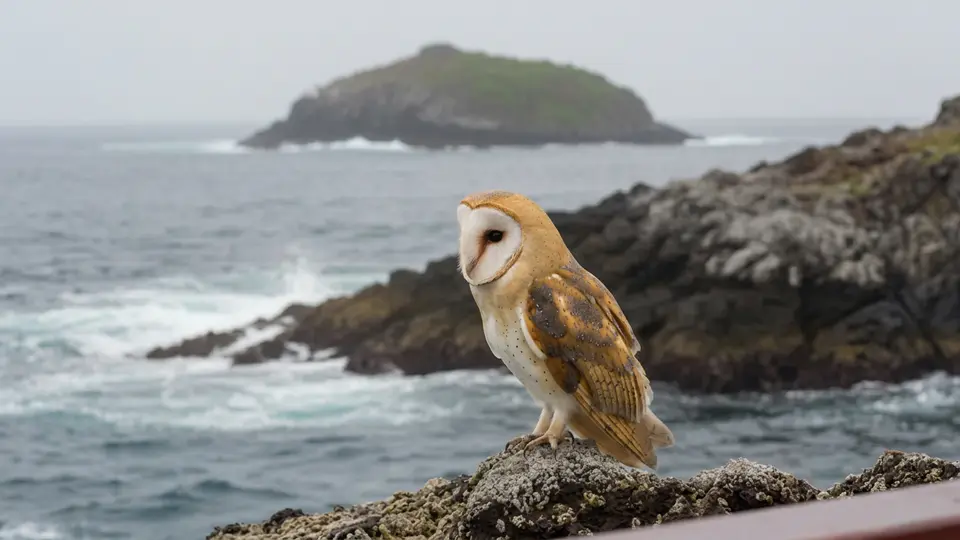
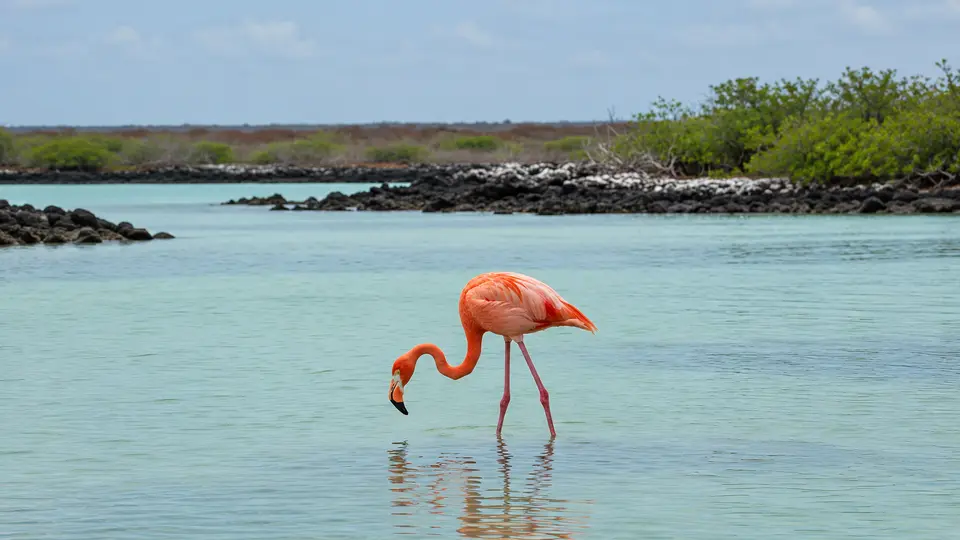
Galápagos FlycatcherGalápagos FlycatcherAmerican FlamingoAmerican FlamingoBarn OwlBarn Owl
Animal groupBirdsAnimal groupBirdsAnimal groupBirds
DestinationsGalapagosDestinationsGalapagos, MexicoDestinationsGalapagos
All wildlife destinations
Plan your trip

Find your next wildlife adventure

Compare destinations, shore programs and dates with the animals and habitats you would love to see.

  • Naturalist-led shore excursions
  • Responsible wildlife watching
  • Small expedition ships

Newsletter

Take Blue Rides with you

Adventure cruise offers, last-minute deals and trip inspiration.

Free, unsubscribe anytime. Details: Privacy Policy

Partner with Blue Rides

Affiliate Program

Recommend adventure cruises and earn commission on every confirmed booking.

Share. Track. Earn.

Your footage, our stage

Send us your videos or pictures.

Captured beautiful landscapes or wildlife? Share your videos and pictures with us, we may feature them on Blue Rides.