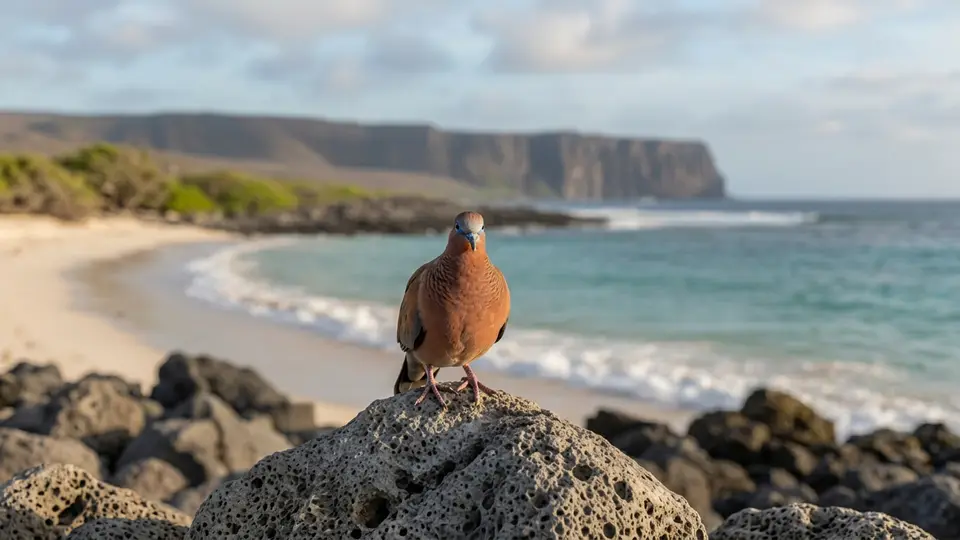
Galápagos Dove in its natural habitat, AI illustration

Galápagos Dove: where and when to see them

Zenaida galapagoensis

Galápagos Dove at a glance

The Galápagos dove is an endemic ground-feeding bird with warm brown plumage, patterned wings and a striking blue ring of bare skin around each eye. It occurs across much of the archipelago, especially in dry lowlands. Although often approachable, it remains vulnerable to introduced predators and other human pressures. Its strong association with cactus country reflects both the shelter and the seasonal food resources provided by these arid island landscapes.

Behaviour & reproduction

Size
18–23 cm long
Weight
67–92 g
Lifespan
Not reliably established
Status
Least Concern

Doves spend much of their time walking across open ground, picking up food with quick movements of the bill. They may feed alone, in pairs or in loose gatherings where resources are concentrated. Courtship includes bowing and calling, and nests are simple structures placed on the ground or low in vegetation. Breeding responds to favorable conditions, particularly rainfall and the resulting increase in food, rather than following one rigid archipelago-wide schedule. Doves spend much of their time walking across open ground, picking up food with quick movements of the bill. They may feed alone, in pairs or in loose gatherings where resources are concentrated. Courtship includes bowing and calling, and nests are simple structures placed on the ground or low in vegetation. Breeding responds to favorable conditions, particularly rainfall and the resulting increase in food, rather than following one rigid archipelago-wide schedule. These doves often dust-bathe in dry soil to maintain their plumage and remove parasites. Their flight is typically fast and direct, often low to the ground over short distances.

Top wildlife locations

Galapagos wildlife habitat

Galapagos

Authorized coastal trails through dry scrub and cactus habitat offer plausible viewing opportunities. No remote inland expedition is generally required, although occurrence and visibility differ between islands and individual visitor routes.

Adventure cruises in Galapagos
Destinations describe the species' habitat, not guaranteed cruise stops. Some animals require an optional inland excursion or are found in restricted reserves.

Fun facts about the Galápagos Dove

  • The blue ring around its eye is bare skin rather than blue feathers.
  • It belongs to the same genus as the mourning dove.
  • Like other doves, both parents produce crop milk for their chicks.
  • Its nests may sit directly on the ground.

Best time to see the Galápagos Dove

Resident birds can be observed throughout the year on suitable authorized island routes. The warmer, wetter period, usually December to May, can bring flowering, fresh vegetation and breeding activity. Exact timing varies among islands and years, so local conditions matter more than calendar dates. Resident birds can be observed throughout the year on suitable authorized island routes. The warmer, wetter period, usually December to May, can bring flowering, fresh vegetation and breeding activity. Exact timing varies among islands and years, so local conditions matter more than calendar dates. The increased food availability during the wet season supports successful breeding and chick rearing. Despite seasonal variations, their year-round presence makes them a reliable sighting.

Galápagos Dove: season matrix by destination

Travel and observation windows vary by region. Highlighted months are an orientation for planning, not confirmed sightings or a guarantee of access.

Galapagos

Year-round resident observation window; rainfall-driven flowering and nesting vary locally and are not guaranteed by travel month.

JanFebMarAprMayJunJulAugSepOctNovDec
Cruise ships in Galapagos

Where the Galápagos Dove lives

Dry scrub, cactus woodland and open rocky ground are characteristic habitats, particularly in coastal lowlands. Birds also enter other vegetation zones where food and cover are available. Nest placement close to the ground increases exposure to introduced cats, rats and disturbance. Dry scrub, cactus woodland and open rocky ground are characteristic habitats, particularly in coastal lowlands. Birds also enter other vegetation zones where food and cover are available. Nest placement close to the ground increases exposure to introduced cats, rats and disturbance. They are highly adaptable and can be found on most major islands within the archipelago, thriving in areas with sparse vegetation. While preferring lower elevations, they can occasionally be seen at higher altitudes if food sources are abundant.

What the Galápagos Dove eats

Seeds make up much of the diet, supplemented by cactus flowers, pulp and other plant material. Caterpillars and additional small invertebrates are also eaten when available. Seasonal rainfall and flowering influence which foods birds can find across dry island habitats. Seeds make up much of the diet, supplemented by cactus flowers, pulp and other plant material. Caterpillars and additional small invertebrates are also eaten when available. Seasonal rainfall and flowering influence which foods birds can find across dry island habitats. This opportunistic feeding allows them to survive the harsh dry season when other food sources become scarce. They have a strong bill adapted for cracking hard seeds found on the arid ground.

Species at a glance

Common name
Galápagos Dove
Scientific name
Zenaida galapagoensis
Animal group
Birds
Size
18–23 cm long
Weight
67–92 g
Lifespan
Not reliably established
Status
Least Concern
Identification
Its vivid blue eye-ring, reddish feet and black-and-white wing pattern distinguish it from the plainer doves occasionally recorded in the islands. Its vivid blue eye-ring, reddish feet and black-and-white wing pattern distinguish it from the plainer doves occasionally recorded in the islands. The specific black-and-white pattern on the wings consists of distinctive spots or streaks. Juveniles typically have duller plumage and a less vibrant eye-ring, which develops with maturity.

Galápagos Dove: frequently asked questions

Where can I see the Galápagos Dove?
Galapagos. Look ahead on dry trails for birds feeding under cactus and shrubs. Walk slowly, leave ground nests undisturbed and never offer food or water; approachable doves still need room to retreat. Look ahead on dry trails for birds feeding under cactus and shrubs. Walk slowly, leave ground nests undisturbed and never offer food or water; approachable doves still need room to retreat. These doves are generally unafraid of humans, making them relatively easy to observe up close. Keep a respectful distance, especially if you notice a pair exhibiting courtship or nesting behaviors.
When is the best time to see the Galápagos Dove?
Resident birds can be observed throughout the year on suitable authorized island routes. The warmer, wetter period, usually December to May, can bring flowering, fresh vegetation and breeding activity. Exact timing varies among islands and years, so local conditions matter more than calendar dates. Resident birds can be observed throughout the year on suitable authorized island routes. The warmer, wetter period, usually December to May, can bring flowering, fresh vegetation and breeding activity. Exact timing varies among islands and years, so local conditions matter more than calendar dates. The increased food availability during the wet season supports successful breeding and chick rearing. Despite seasonal variations, their year-round presence makes them a reliable sighting.
How big does the Galápagos Dove get?
18–23 cm long. Adult weight: 67–92 g. Size varies with age, sex and population.
How should I behave around the Galápagos Dove?
Look ahead on dry trails for birds feeding under cactus and shrubs. Walk slowly, leave ground nests undisturbed and never offer food or water; approachable doves still need room to retreat. Look ahead on dry trails for birds feeding under cactus and shrubs. Walk slowly, leave ground nests undisturbed and never offer food or water; approachable doves still need room to retreat. These doves are generally unafraid of humans, making them relatively easy to observe up close. Keep a respectful distance, especially if you notice a pair exhibiting courtship or nesting behaviors.
What does the Galápagos Dove eat?
Seeds make up much of the diet, supplemented by cactus flowers, pulp and other plant material. Caterpillars and additional small invertebrates are also eaten when available. Seasonal rainfall and flowering influence which foods birds can find across dry island habitats. Seeds make up much of the diet, supplemented by cactus flowers, pulp and other plant material. Caterpillars and additional small invertebrates are also eaten when available. Seasonal rainfall and flowering influence which foods birds can find across dry island habitats. This opportunistic feeding allows them to survive the harsh dry season when other food sources become scarce. They have a strong bill adapted for cracking hard seeds found on the arid ground.
Are wildlife sightings guaranteed on an adventure cruise?
No. Animals move freely and routes, weather, access restrictions and local conditions influence every outing. Confirm the actual itinerary and shore program before booking.

Compare wildlife in the same destinations

Explore other birds recorded in these destinations. Similar surroundings do not mean the animals share the same habits or viewing season.

Species comparison by animal group and destination
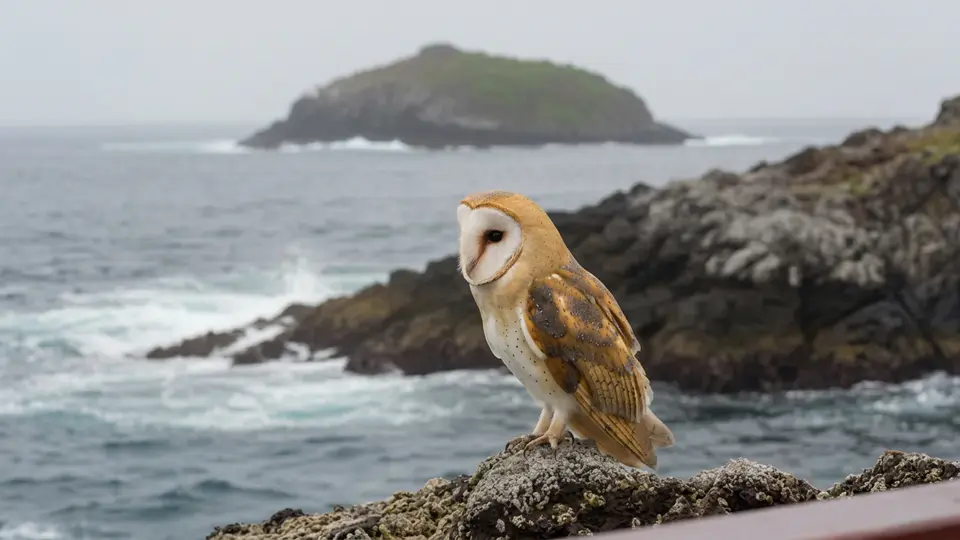
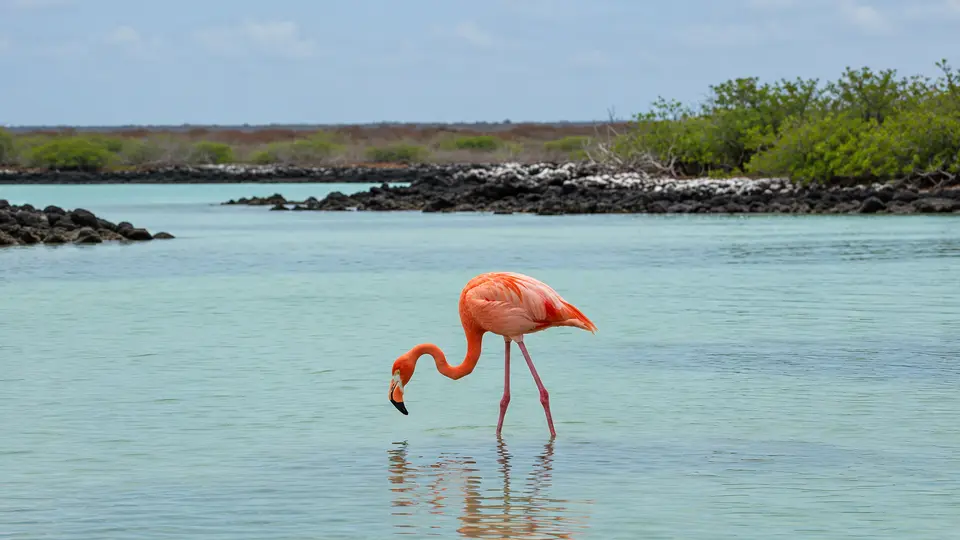
Galápagos DoveGalápagos DoveAmerican FlamingoAmerican FlamingoBarn OwlBarn Owl
Animal groupBirdsAnimal groupBirdsAnimal groupBirds
DestinationsGalapagosDestinationsGalapagos, MexicoDestinationsGalapagos
All wildlife destinations
Plan your trip

Find your next wildlife adventure

Compare destinations, shore programs and dates with the animals and habitats you would love to see.

  • Naturalist-led shore excursions
  • Responsible wildlife watching
  • Small expedition ships

Newsletter

Take Blue Rides with you

Adventure cruise offers, last-minute deals and trip inspiration.

Free, unsubscribe anytime. Details: Privacy Policy

Partner with Blue Rides

Affiliate Program

Recommend adventure cruises and earn commission on every confirmed booking.

Share. Track. Earn.

Your footage, our stage

Send us your videos or pictures.

Captured beautiful landscapes or wildlife? Share your videos and pictures with us, we may feature them on Blue Rides.