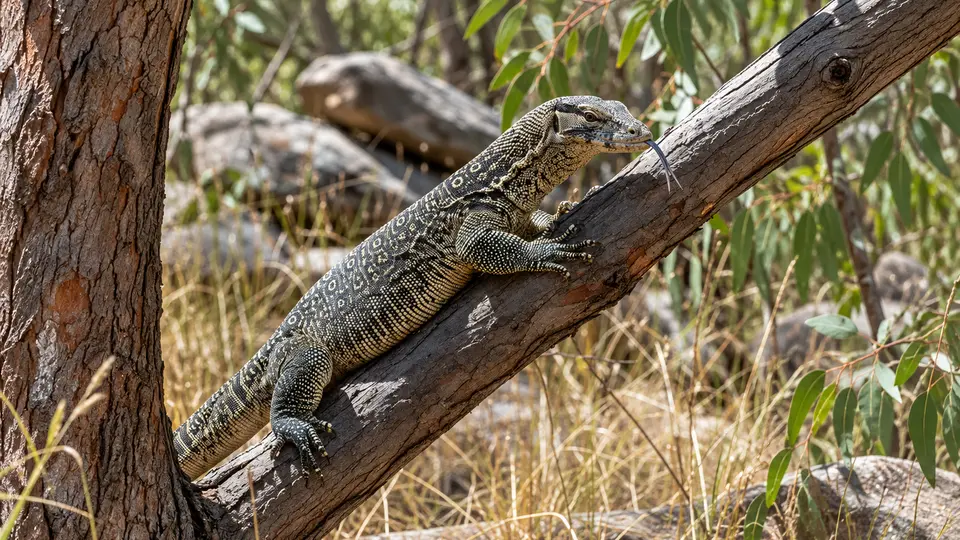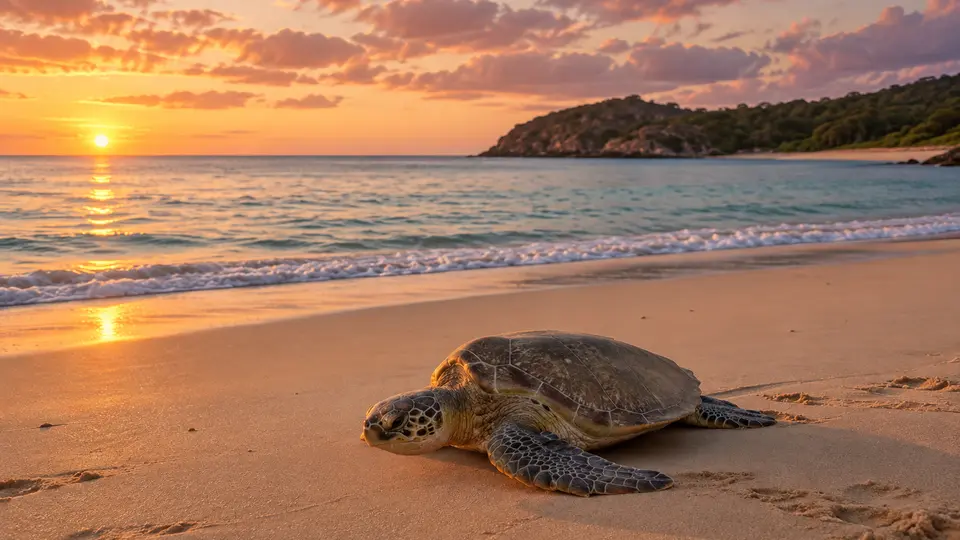
Flatback sea turtle in its natural habitat, AI illustration

Flatback sea turtle: where and when to see them

Natator depressus

Flatback sea turtle at a glance

The flatback sea turtle is a distinctive marine reptile whose nesting range is confined to Australia. Its relatively low, broad shell has upturned margins and a softer-looking surface than those of many other sea turtles. Unlike species with widely dispersing oceanic young, flatbacks remain associated with continental-shelf waters throughout their life cycle. Nesting beaches therefore connect closely with regional coastal seas, where development, fishing interactions and disturbance can affect survival.

Behaviour & reproduction

Size
80–95 cm carapace length
Weight
60–90 kg
Lifespan
Not reliably established
Status
Check current assessment

Females come ashore, usually at night, to excavate nests above the tide line and lay several clutches within a nesting season. Males remain at sea. Hatchlings emerge from the sand and move toward the water, relying partly on natural light cues. Adults can travel substantial distances between feeding and nesting areas, but do not follow the strongly oceanic juvenile pattern typical of several other sea turtles. Disturbance can interrupt nesting attempts. Females exhibit strong nesting site fidelity, often returning to the same beach or region to lay their eggs. The relatively short oceanic migration of flatbacks, compared to other species, suggests a life cycle closely tied to the continental shelf. Clutch sizes are generally smaller than those of other sea turtle species, but they can lay multiple clutches per season.

Top wildlife locations

Australia wildlife habitat

Australia

Managed mainland nesting beaches in Queensland provide shore-based opportunities, while many northern island rookeries are remote or restricted. Use authorised local programmes; a standard coastal landing does not provide permission to approach nesting turtles.

Adventure cruises in Australia
Destinations describe the species' habitat, not guaranteed cruise stops. Some animals require an optional inland excursion or are found in restricted reserves.

Fun facts about the Flatback sea turtle

  • All known nesting beaches are in Australia.
  • Flatbacks lack the prolonged oceanic juvenile phase typical of most sea turtles.
  • Their eggs and hatchlings are relatively large compared with those of other sea turtles.
  • They are the only living species in the genus Natator.

Best time to see the Flatback sea turtle

Nesting timing varies substantially across northern Australia. Some southern Queensland rookeries are active mainly from November to January, while tropical northern sites can follow different schedules or have extended seasons. Select a locally managed viewing programme rather than applying one national nesting calendar. Peak nesting season often aligns with warmer water temperatures, which can vary regionally. Early dry season in the Northern Territory and late wet season in Queensland are typical high activity periods. Research indicates nesting can occur year-round in some northern locations, but with defined peaks.

Flatback sea turtle: season matrix by destination

Travel and observation windows vary by region. Highlighted months are an orientation for planning, not confirmed sightings or a guarantee of access.

Australia

This window applies to selected southern Queensland nesting areas, not all Australia; northern rookeries have different schedules and require site-specific advice.

JanFebMarAprMayJunJulAugSepOctNovDec
Cruise ships in Australia

Where the Flatback sea turtle lives

Flatbacks occupy tropical and subtropical continental-shelf waters around northern Australia and nearby seas. Feeding areas include soft-bottom coastal environments, while nesting occurs on sandy Australian beaches and islands. Many rookeries are remote, culturally sensitive or accessible only through controlled arrangements. This species is endemic to the Australian continental shelf, rarely found outside its waters. They prefer turbid inshore waters over open ocean habitats. Juveniles also remain in these coastal environments, unlike the pelagic juvenile stage of many other sea turtles.

What the Flatback sea turtle eats

They feed mainly on soft-bodied marine animals, including sea cucumbers, jellyfish and sea pens, as well as other invertebrates. Prey is obtained in coastal shelf habitats. Their diet differs from the predominantly seagrass-based feeding typical of many adult green turtles. Their preference for soft-bodied prey means they play a distinct ecological role in coastal ecosystems. Flatbacks are opportunistic feeders, consuming a variety of organisms available in their shallow water foraging grounds. Their diet reflects adaptation to the specific invertebrate communities found in Australian shelf waters.

Species at a glance

Common name
Flatback sea turtle
Scientific name
Natator depressus
Animal group
Reptiles
Size
80–95 cm carapace length
Weight
60–90 kg
Lifespan
Not reliably established
Status
Check current assessment
Identification
The low, broad olive-grey shell with upturned edges and four pairs of costal scutes distinguishes flatbacks from the more domed green turtle and five-paired loggerhead. The flattened carapace gives them a distinctive profile, aiding identification even from a distance. Their smooth, waxy-feeling carapace, often covered in algal growth, also helps distinguish them. Unlike other sea turtles, they lack an epidermal keel along their back.

Flatback sea turtle: frequently asked questions

Where can I see the Flatback sea turtle?
Australia. Join an authorised beach programme and follow the guide’s distance and lighting rules. Stay behind nesting females, never touch turtles or hatchlings, and leave the route to the sea clear. Do not use flash or phone lights. Be mindful of cultural protocols at Indigenous-managed sites, which often have specific viewing guidelines. Always maintain a respectful distance to avoid causing stress or altering natural behavior. Support tours that prioritize the welfare of the turtles and adhere to strict ethical codes.
When is the best time to see the Flatback sea turtle?
Nesting timing varies substantially across northern Australia. Some southern Queensland rookeries are active mainly from November to January, while tropical northern sites can follow different schedules or have extended seasons. Select a locally managed viewing programme rather than applying one national nesting calendar. Peak nesting season often aligns with warmer water temperatures, which can vary regionally. Early dry season in the Northern Territory and late wet season in Queensland are typical high activity periods. Research indicates nesting can occur year-round in some northern locations, but with defined peaks.
How big does the Flatback sea turtle get?
80–95 cm carapace length. Adult weight: 60–90 kg. Size varies with age, sex and population.
How should I behave around the Flatback sea turtle?
Join an authorised beach programme and follow the guide’s distance and lighting rules. Stay behind nesting females, never touch turtles or hatchlings, and leave the route to the sea clear. Do not use flash or phone lights. Be mindful of cultural protocols at Indigenous-managed sites, which often have specific viewing guidelines. Always maintain a respectful distance to avoid causing stress or altering natural behavior. Support tours that prioritize the welfare of the turtles and adhere to strict ethical codes.
What does the Flatback sea turtle eat?
They feed mainly on soft-bodied marine animals, including sea cucumbers, jellyfish and sea pens, as well as other invertebrates. Prey is obtained in coastal shelf habitats. Their diet differs from the predominantly seagrass-based feeding typical of many adult green turtles. Their preference for soft-bodied prey means they play a distinct ecological role in coastal ecosystems. Flatbacks are opportunistic feeders, consuming a variety of organisms available in their shallow water foraging grounds. Their diet reflects adaptation to the specific invertebrate communities found in Australian shelf waters.
Are wildlife sightings guaranteed on an adventure cruise?
No. Animals move freely and routes, weather, access restrictions and local conditions influence every outing. Confirm the actual itinerary and shore programme before booking.

Compare wildlife in the same destinations

Explore other reptiles recorded in these destinations. Similar surroundings do not mean the animals share the same habits or viewing season.

Species comparison by animal group and destination
Flatback sea turtleFlatback sea turtleGreen Sea TurtleGreen Sea TurtleLace monitorLace monitor
Animal groupReptilesAnimal groupReptilesAnimal groupReptiles
DestinationsAustraliaDestinationsCosta Rica, Florida, Galapagos, Mexico, Cape Verde, Egypt, Greece, Seychelles, Turkey, Indonesia, Maldives, Thailand, Vietnam, Australia, Fiji, PolynesiaDestinationsAustralia
All wildlife destinations
Plan your trip

Find your next wildlife adventure

Compare destinations, shore programmes and dates with the animals and habitats you would love to see.

  • Naturalist-led shore excursions
  • Responsible wildlife watching
  • Small expedition ships

Newsletter

Take Blue Rides with you

Adventure cruise offers, last-minute deals and trip inspiration.

Free, unsubscribe anytime. Details: Privacy Policy

Partner with Blue Rides

Affiliate Program

Recommend adventure cruises and earn commission on every confirmed booking.

Share. Track. Earn.