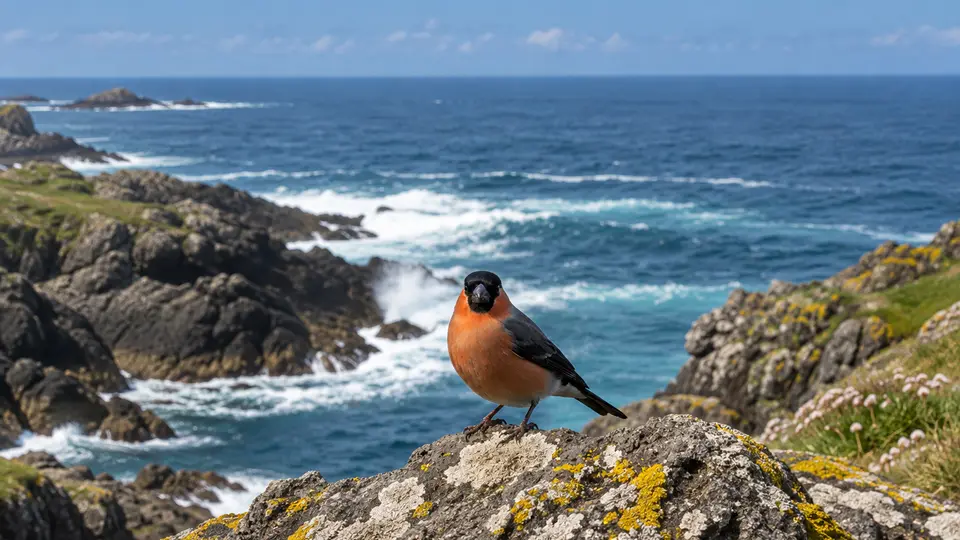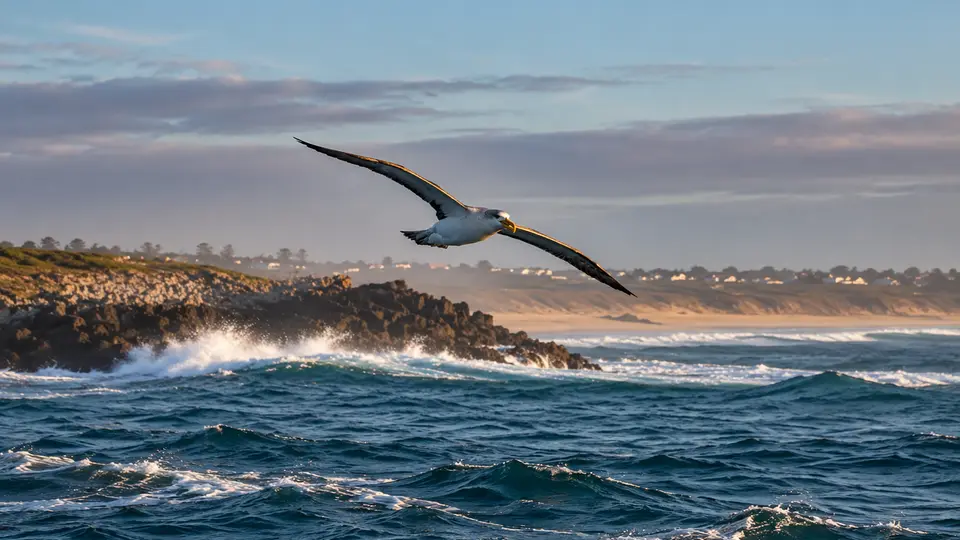
Cory's Shearwater in its natural habitat, AI illustration
Size45–56 cm longLifespanNot reliably establishedStatusLeast Concern

Cory's Shearwater: where and when to see them

Calonectris borealis

Cory's Shearwater at a glance

Cory's shearwater is a large Atlantic seabird closely associated with Portuguese island waters, including Madeira and the Azores. Long wings carry it in sweeping arcs above the waves, often with remarkably little flapping. It breeds in cavities and burrows on islands but ranges widely to feed and migrate. Modern taxonomy separates it from Scopoli's shearwater of the Mediterranean, so older accounts using Cory's shearwater broadly may describe more than one species.

Behaviour & reproduction

Size
45–56 cm long
Weight
600–1,000 g
Lifespan
Not reliably established
Status
Least Concern

These shearwaters exploit wind above the sea, alternating low glides with higher banking turns. They may gather in offshore rafts before approaching breeding colonies after dark. Pairs generally maintain long-term bonds and share incubation of a single egg, followed by repeated feeding trips for the chick. Their noisy nighttime colony calls contrast with their usually quiet behaviour at sea, where they may associate with other feeding seabirds. Courtship displays and pair bonding are primarily conducted at the breeding colonies, often involving mutual preening. While at sea, they are highly pelagic, spending most of their lives far from land except during the breeding season.

Top wildlife locations

Portugal wildlife habitat

Portugal

Headlands in Madeira, the Azores and parts of mainland Portugal provide plausible distant sea views. Colony cavities are sensitive and often inaccessible; sightings depend on offshore movements rather than shoreline presence.

Adventure cruises in Portugal
Destinations describe the species' habitat, not guaranteed cruise stops. Some animals require an optional inland excursion or are found in restricted reserves.

Fun facts about the Cory's Shearwater

  • Pairs normally lay just one egg per breeding attempt.
  • Its nasal tubes help support an excellent sense of smell.
  • Young birds can be grounded by artificial lights during their first flights.
  • Atlantic migrations can involve vast looping routes shaped by prevailing winds.

Best time to see the Cory's Shearwater

March to October broadly overlaps breeding-season presence around Portuguese Atlantic colonies. Late spring through early autumn usually offers practical coastal watching conditions, although passage varies by island and coastline. Winter movements take many birds farther south, reducing predictable observation near breeding areas. Peak numbers are observed during the post-breeding dispersal period, when juveniles and adults move through coastal waters before their southward migration. Early morning and late afternoon are often the most productive times for observing birds actively flying or rafting.

Cory's Shearwater: season matrix by destination

Travel and observation windows vary by region. Highlighted months are an orientation for planning, not confirmed sightings or a guarantee of access.

Portugal

This broad window overlaps regional breeding presence and coastal passage; timing and abundance differ substantially between mainland and island locations.

JanFebMarAprMayJunJulAugSepOctNovDec
Cruise ships in Portugal

Where the Cory's Shearwater lives

The species feeds over Atlantic shelf waters and the open ocean, often around productive fronts and island slopes. Breeding sites include rocky island crevices, burrows and sheltered cavities. Accessible headlands can overlook passing birds without requiring entry into sensitive colonies. The species shows a strong preference for oceanic islands and islets, providing isolation from terrestrial predators. These breeding colonies can host thousands of pairs, forming dense concentrations on suitable terrain.

What the Cory's Shearwater eats

Fish and squid are major foods, supplemented by crustaceans and sometimes fishery discards. Birds locate prey near the surface and may feed in groups where food concentrates. Adults transport partly digested meals and energy-rich stomach oil back to their single chick. They employ surface-seizing and shallow-plunging techniques to capture prey, often dipping their heads below the surface. Group feeding can involve dozens to hundreds of individuals, indicating cooperative foraging or attraction to abundant patches.

Species at a glance

Common name
Cory's Shearwater
Scientific name
Calonectris borealis
Animal group
Birds
Size
45–56 cm long
Weight
600–1,000 g
Lifespan
Not reliably established
Status
Least Concern
Identification
Its robust yellow bill and mostly dark outer underwing distinguish it from smaller shearwaters, while Scopoli's typically shows more white extending into the underside of the outer primaries. Their overall brownish-grey upperparts contrast with white underparts, creating a distinctive 'two-toned' appearance in flight. The relatively long wings, often held slightly angled, contribute to their characteristic effortless gliding flight.

Cory's Shearwater: frequently asked questions

Where can I see the Cory's Shearwater?
Portugal. Watch passing birds from established headland viewpoints or a stable deck, keeping clear of cliff edges. Avoid lighting, noise or visits at colony entrances, particularly after dark when returning adults are vulnerable to disturbance. Binoculars or a spotting scope are essential for detailed observation, as these birds typically remain some distance offshore. Look for 'shearwaters' close to the waves, appearing to cut through the water with stiff wings.
When is the best time to see the Cory's Shearwater?
March to October broadly overlaps breeding-season presence around Portuguese Atlantic colonies. Late spring through early autumn usually offers practical coastal watching conditions, although passage varies by island and coastline. Winter movements take many birds farther south, reducing predictable observation near breeding areas. Peak numbers are observed during the post-breeding dispersal period, when juveniles and adults move through coastal waters before their southward migration. Early morning and late afternoon are often the most productive times for observing birds actively flying or rafting.
How big does the Cory's Shearwater get?
45–56 cm long. Adult weight: 600–1,000 g. Size varies with age, sex and population.
How should I behave around the Cory's Shearwater?
Watch passing birds from established headland viewpoints or a stable deck, keeping clear of cliff edges. Avoid lighting, noise or visits at colony entrances, particularly after dark when returning adults are vulnerable to disturbance. Binoculars or a spotting scope are essential for detailed observation, as these birds typically remain some distance offshore. Look for 'shearwaters' close to the waves, appearing to cut through the water with stiff wings.
What does the Cory's Shearwater eat?
Fish and squid are major foods, supplemented by crustaceans and sometimes fishery discards. Birds locate prey near the surface and may feed in groups where food concentrates. Adults transport partly digested meals and energy-rich stomach oil back to their single chick. They employ surface-seizing and shallow-plunging techniques to capture prey, often dipping their heads below the surface. Group feeding can involve dozens to hundreds of individuals, indicating cooperative foraging or attraction to abundant patches.
Are wildlife sightings guaranteed on an adventure cruise?
No. Animals move freely and routes, weather, access restrictions and local conditions influence every outing. Confirm the actual itinerary and shore programme before booking.

Compare wildlife in the same destinations

Explore other birds recorded in these destinations. Similar surroundings do not mean the animals share the same habits or viewing season.

Species comparison by animal group and destination
Cory's ShearwaterCory's ShearwaterAudouin's GullAudouin's GullAzores BullfinchAzores Bullfinch
Animal groupBirdsAnimal groupBirdsAnimal groupBirds
DestinationsPortugalDestinationsCroatia, Greece, Portugal, TurkeyDestinationsPortugal
All wildlife destinations
Plan your trip

Find your next wildlife adventure

Compare destinations, shore programmes and dates with the animals and habitats you would love to see.

  • Naturalist-led shore excursions
  • Responsible wildlife watching
  • Small expedition ships

Newsletter

Take Blue Rides with you

Adventure cruise offers, last-minute deals and trip inspiration.

Free, unsubscribe anytime. Details: Privacy Policy

Partner with Blue Rides

Affiliate Program

Recommend adventure cruises and earn commission on every confirmed booking.

Share. Track. Earn.