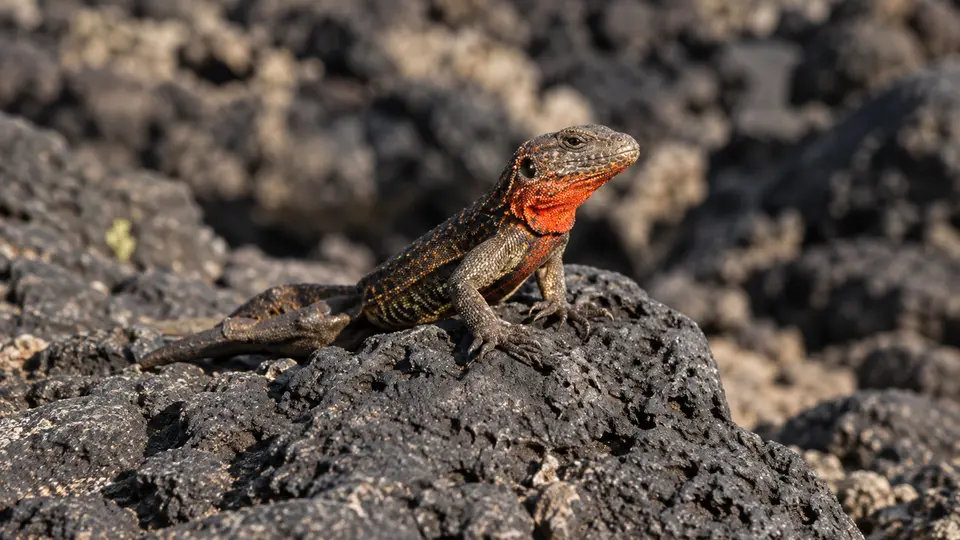
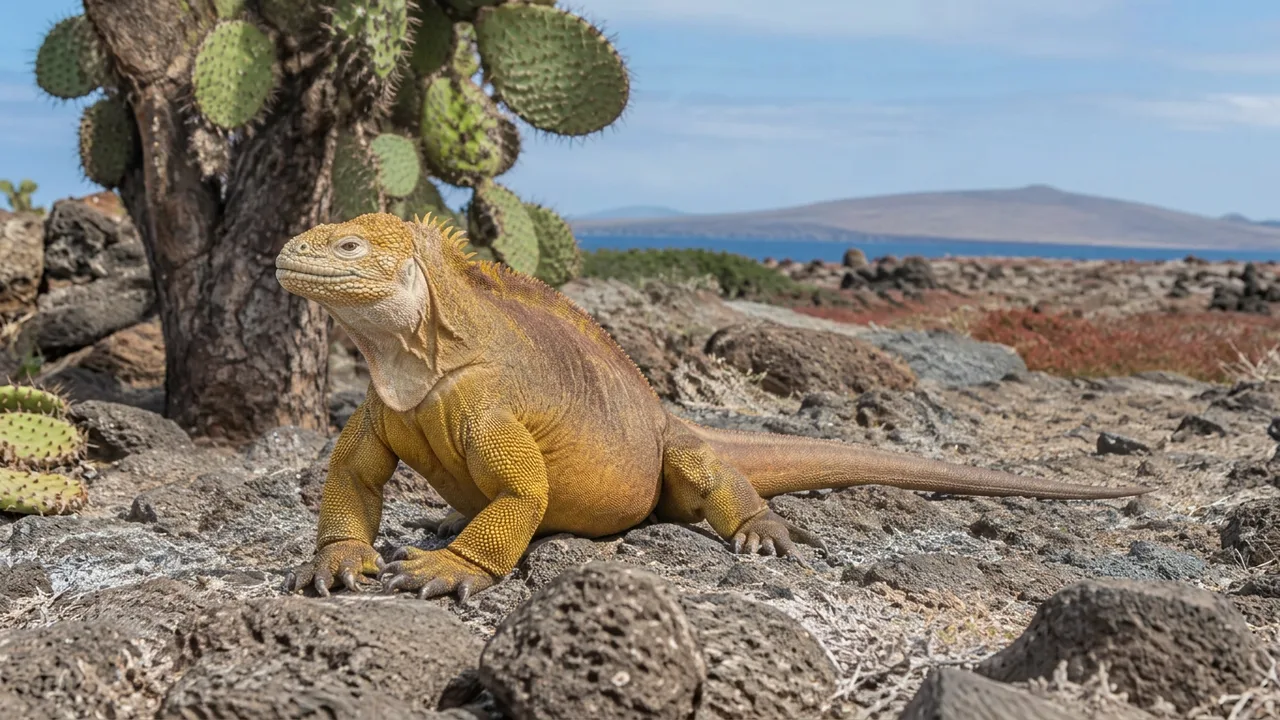
Santa Fe Land Iguana in its natural habitat, AI illustration

Santa Fe Land Iguana: where and when to see them

Conolophus pallidus

Santa Fe Land Iguana at a glance

The Santa Fe land iguana is found naturally only on Santa Fe Island in the Galápagos. Its pale yellow coloration suits the island's dry woodland and dusty volcanic ground, where giant prickly pears supply important food. Although related to the more widespread Galápagos land iguana, it is a separate species with a smaller geographic range. Protection of this single island and its vegetation is therefore central to the animal's long-term survival.

Behaviour & reproduction

Size
Approximately 90–110 cm total length
Weight
Not reliably established
Lifespan
Not reliably established
Status
Vulnerable

These iguanas spend much of the day warming in sunlight, resting in shade or moving slowly between feeding patches. They can gather beneath cactus trees when fallen pads, flowers or fruits are available. Males use posture and head movements during social encounters and may defend space around receptive females. Females excavate nests in suitable ground, leaving the eggs to develop without parental care after the nest has been covered. They are diurnal, spending their nights in burrows to escape temperature extremes. Males establish territories, using head-bobbing displays to communicate dominance to rivals. Females lay clutches of 2 to 7 eggs in underground nests, which can take several months to hatch.

Top wildlife locations

Galapagos wildlife habitat

Galapagos

Authorized Santa Fe coastal trails pass through dry scrub and cactus woodland used by this iguana. Guided shore visits offer plausible opportunities, but access follows park rules and sightings are not guaranteed.

Adventure cruises in Galapagos
Destinations describe the species' habitat, not guaranteed cruise stops. Some animals require an optional inland excursion or are found in restricted reserves.

Fun facts about the Santa Fe Land Iguana

  • Its natural wild distribution is limited to Santa Fe Island.
  • The name pallidus refers to its pale appearance.
  • It can eat cactus material despite the plant's formidable spines.
  • Eggs develop in excavated ground nests rather than receiving parental incubation.

Best time to see the Santa Fe Land Iguana

Santa Fe land iguanas can potentially be observed throughout the year on authorized visits. Daily temperature and shade influence visibility more directly than a narrow viewing season. The warmer wet months and cooler dry months change vegetation and activity, rather than guaranteeing encounters. Early mornings or late afternoons often present better viewing opportunities as iguanas are more active in cooler temperatures. Midday sun can cause them to seek shade, making them less conspicuous. Variability in El Niño and La Niña cycles can significantly impact vegetation and, consequently, iguana activity patterns.

Santa Fe Land Iguana: season matrix by destination

Travel and observation windows vary by region. Highlighted months are an orientation for planning, not confirmed sightings or a guarantee of access.

Galapagos

Year-round visits can be suitable when permitted and operationally accessible; this is an observation window, not a claim of year-round breeding.

JanFebMarAprMayJunJulAugSepOctNovDec
Cruise ships in Galapagos

Where the Santa Fe Land Iguana lives

Santa Fe's arid lowlands provide dry scrub, open woodland and volcanic ground interspersed with soil. Large Opuntia cacti are especially important. Iguanas may occur near authorized coastal trails, but their habitat extends beyond beaches into the island's dry interior. The population is endemic to Santa Fe Island, not found naturally anywhere else in the world. Their survival is intrinsically linked to the health of the Opuntia cactus forests. They show a preference for areas with loose soil suitable for burrowing.

What the Santa Fe Land Iguana eats

Leaves, flowers, fruits and cactus pads form the core of the diet. Fallen Opuntia material is particularly valuable because it supplies both nutrients and water. Like other land iguanas, individuals may occasionally consume animal material, but they are predominantly plant eaters. They possess a specialized digestive system adapted to process tough, fibrous plant material. While predominantly herbivorous, they may occasionally consume insects or carrion, especially during times of scarcity. Their dependence on cacti means they often consume spines along with the pads.

Species at a glance

Common name
Santa Fe Land Iguana
Scientific name
Conolophus pallidus
Animal group
Reptiles
Size
Approximately 90–110 cm total length
Weight
Not reliably established
Lifespan
Not reliably established
Status
Vulnerable
Identification
Its generally paler yellow body and more tapered snout distinguish the Santa Fe species from Conolophus subcristatus, with island location providing essential supporting evidence. Adult males are typically larger and more robust than females, often displaying more prominent dorsal spines. Their scales are relatively smooth compared to some other lizard species. Juveniles are often duller in coloration and less yellow than adults, with some having a brownish hue.

Santa Fe Land Iguana: frequently asked questions

Where can I see the Santa Fe Land Iguana?
Galapagos. Remain on the guide-led trail and give resting or feeding iguanas ample space. Never offer fruit or water, touch an animal or stand over a nesting area; watch foot placement where iguanas lie beside paths. Be mindful of your shadow; sudden movements or looming over an iguana can cause stress. Keep a safe distance of at least 2 meters (6 feet) to avoid disturbing their natural activities. Always listen to and follow your guide's instructions for the safety of both visitors and wildlife.
When is the best time to see the Santa Fe Land Iguana?
Santa Fe land iguanas can potentially be observed throughout the year on authorized visits. Daily temperature and shade influence visibility more directly than a narrow viewing season. The warmer wet months and cooler dry months change vegetation and activity, rather than guaranteeing encounters. Early mornings or late afternoons often present better viewing opportunities as iguanas are more active in cooler temperatures. Midday sun can cause them to seek shade, making them less conspicuous. Variability in El Niño and La Niña cycles can significantly impact vegetation and, consequently, iguana activity patterns.
How big does the Santa Fe Land Iguana get?
Approximately 90–110 cm total length. Adult weight: Not reliably established. Size varies with age, sex and population.
How should I behave around the Santa Fe Land Iguana?
Remain on the guide-led trail and give resting or feeding iguanas ample space. Never offer fruit or water, touch an animal or stand over a nesting area; watch foot placement where iguanas lie beside paths. Be mindful of your shadow; sudden movements or looming over an iguana can cause stress. Keep a safe distance of at least 2 meters (6 feet) to avoid disturbing their natural activities. Always listen to and follow your guide's instructions for the safety of both visitors and wildlife.
What does the Santa Fe Land Iguana eat?
Leaves, flowers, fruits and cactus pads form the core of the diet. Fallen Opuntia material is particularly valuable because it supplies both nutrients and water. Like other land iguanas, individuals may occasionally consume animal material, but they are predominantly plant eaters. They possess a specialized digestive system adapted to process tough, fibrous plant material. While predominantly herbivorous, they may occasionally consume insects or carrion, especially during times of scarcity. Their dependence on cacti means they often consume spines along with the pads.
Are wildlife sightings guaranteed on an adventure cruise?
No. Animals move freely and routes, weather, access restrictions and local conditions influence every outing. Confirm the actual itinerary and shore program before booking.

Compare wildlife in the same destinations

Explore other reptiles recorded in these destinations. Similar surroundings do not mean the animals share the same habits or viewing season.

Species comparison by animal group and destination
Santa Fe Land IguanaSanta Fe Land IguanaGalápagos Land IguanaGalápagos Land IguanaGalápagos Lava LizardGalápagos Lava Lizard
Animal groupReptilesAnimal groupReptilesAnimal groupReptiles
DestinationsGalapagosDestinationsGalapagosDestinationsGalapagos
All wildlife destinations
Plan your trip

Find your next wildlife adventure

Compare destinations, shore programs and dates with the animals and habitats you would love to see.

  • Naturalist-led shore excursions
  • Responsible wildlife watching
  • Small expedition ships

Newsletter

Take Blue Rides with you

Adventure cruise offers, last-minute deals and trip inspiration.

Free, unsubscribe anytime. Details: Privacy Policy

Partner with Blue Rides

Affiliate Program

Recommend adventure cruises and earn commission on every confirmed booking.

Share. Track. Earn.

Your footage, our stage

Send us your videos or pictures.

Captured beautiful landscapes or wildlife? Share your videos and pictures with us, we may feature them on Blue Rides.