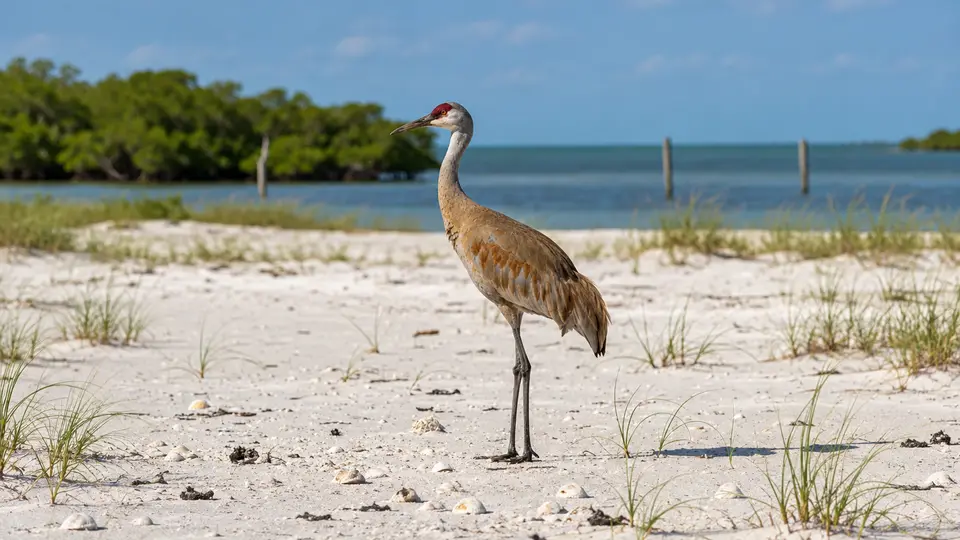
Sandhill Crane in its natural habitatAI-modified

Sandhill CraneAntigone canadensisWhere and when to see them

Sandhill Crane at a glance

The sandhill crane is a tall gray bird with a red crown patch and a far-carrying, rolling call. Its North American populations include both long-distance migrants and residents. Florida supports a nonmigratory subspecies, while additional cranes arrive seasonally from farther north. Pairs may forage near roads and neighborhoods, but their tolerance of people does not make them domestic animals. Wetland loss and vehicle collisions remain important local concerns.

Behaviour & reproduction

Size
80–120 cm (31.5–47.2 in) tall
Weight
3–6.5 kg (6.6–14.3 lb)
Lifespan
Not reliably established
Status
Least Concern

Sandhill cranes maintain pair bonds through coordinated calls, displays and dancing that includes bows, leaps and wing spreading. Pairs defend breeding territories, while nonbreeding birds and migrants can form larger groups. Adults lead their chicks through shallow wetlands and nearby feeding areas soon after hatching. Florida residents may remain in the same general landscape year-round, moving between nesting marshes, open foraging ground and safe nighttime roosts. Family groups, typically a pair and their chick or two, are commonly observed foraging together for several months after hatching. They form strong pair bonds that can last for many years, often returning to the same nesting territories annually.

Top wildlife locations

Florida wildlife habitatAI-modified

Florida

Freshwater marsh margins, wet prairies and nearby pastures provide dependable habitat rather than guaranteed birds. An inland excursion is often needed from coastal stops; use public trails and avoid roadside stopping hazards.
Destinations describe the species' habitat, not guaranteed cruise stops. Some animals require an optional inland excursion or are found in restricted reserves.

Fun facts about the Sandhill Crane

  • Florida has a resident subspecies, Antigone canadensis pratensis.
  • Chicks are commonly called colts.
  • Adults sometimes stain their feathers rusty brown by applying iron-rich mud.
  • A long, coiled windpipe helps produce their resonant calls.

Best time to see the Sandhill Crane

Florida's resident cranes can be seen throughout the year. Cooler months are comfortable for observation and may bring wintering migrants to suitable landscapes. Spring often includes territorial pairs and families, when extra distance is necessary around nesting marshes and chicks. The late winter and early spring months are particularly active, featuring elaborate courtship displays and the arrival of young chicks. During the summer rainy season, they often seek higher ground in pastures or fields when wetlands become inundated.

Sandhill Crane: season matrix by destination

Travel and observation windows vary by region. Highlighted months are an orientation for planning, not confirmed sightings or a guarantee of access.

Florida

Cooler months suit viewing and can include winter migrants; resident Florida cranes remain year-round, with breeding timing influenced by local conditions.

JanFebMarAprMayJunJulAugSepOctNovDec
Cruise ships in Florida

Where the Sandhill Crane lives

Florida cranes use freshwater marshes, wet prairies, shallow ponds and adjacent grasslands or pastures. Some forage on lawns and golf courses, but nesting still depends on suitable wetland conditions. Coastal visitors often need an inland excursion to reach representative crane habitat. In Florida, sandhill cranes exhibit some adaptability, colonizing disturbed agricultural landscapes and even suburban areas if suitable foraging and nesting sites remain nearby. However, their reliance on specific wetland characteristics for nesting makes them vulnerable to habitat degradation and development.

What the Sandhill Crane eats

Sandhill cranes are omnivores, eating seeds, roots, tubers, insects and other invertebrates. They also take small vertebrates when available and forage in agricultural fields. Long bills probe soil and soft wetland substrates, while surface foods are picked from grass or mud. In Florida's unique ecosystems, they frequently consume acorns, which are abundant in pine flatwoods and oak hammocks adjacent to wetlands. Their diet also includes a variety of aquatic invertebrates such as snails and crustaceans, which they efficiently extract from shallow water.

Species at a glance

Common name
Sandhill Crane
Scientific name
Antigone canadensis
Animal group
Birds
Size
80–120 cm (31.5–47.2 in) tall
Weight
3–6.5 kg (6.6–14.3 lb)
Lifespan
Not reliably established
Status
Least Concern
Identification
Unlike the much larger white adult whooping crane, adult sandhill crane is predominantly gray with a smaller red crown patch and no extensive white body plumage. Juvenile sandhill cranes are mottled brown and gray, lacking the prominent red cap of adults and are often seen accompanied by their parents. The deep, rattling bugle call, which carries long distances, is a distinct auditory clue for identification, especially when birds are obscured by vegetation.

Sandhill Crane: frequently asked questions

Where can I see the Sandhill Crane?
Florida. Watch from a parked vehicle where lawful or an established trail. Never feed cranes, block their route or approach chicks; protective adults have powerful bills, and roadside birds are vulnerable to traffic. When viewing from a vehicle or trail, maintain a quiet demeanor to avoid disturbing the birds, as sudden movements can cause them to flee. Use binoculars or a spotting scope for close-up views of their intricate plumage and behaviors without intrusion.
When is the best time to see the Sandhill Crane?
Florida's resident cranes can be seen throughout the year. Cooler months are comfortable for observation and may bring wintering migrants to suitable landscapes. Spring often includes territorial pairs and families, when extra distance is necessary around nesting marshes and chicks. The late winter and early spring months are particularly active, featuring elaborate courtship displays and the arrival of young chicks. During the summer rainy season, they often seek higher ground in pastures or fields when wetlands become inundated.
How big does the Sandhill Crane get?
80–120 cm (31.5–47.2 in) tall. Adult weight: 3–6.5 kg (6.6–14.3 lb). Size varies with age, sex and population.
How should I behave around the Sandhill Crane?
Watch from a parked vehicle where lawful or an established trail. Never feed cranes, block their route or approach chicks; protective adults have powerful bills, and roadside birds are vulnerable to traffic. When viewing from a vehicle or trail, maintain a quiet demeanor to avoid disturbing the birds, as sudden movements can cause them to flee. Use binoculars or a spotting scope for close-up views of their intricate plumage and behaviors without intrusion.
What does the Sandhill Crane eat?
Sandhill cranes are omnivores, eating seeds, roots, tubers, insects and other invertebrates. They also take small vertebrates when available and forage in agricultural fields. Long bills probe soil and soft wetland substrates, while surface foods are picked from grass or mud. In Florida's unique ecosystems, they frequently consume acorns, which are abundant in pine flatwoods and oak hammocks adjacent to wetlands. Their diet also includes a variety of aquatic invertebrates such as snails and crustaceans, which they efficiently extract from shallow water.
Are wildlife sightings guaranteed on an adventure cruise?
No. Animals move freely and routes, weather, access restrictions and local conditions influence every outing. Confirm the actual itinerary and shore program before booking.

Compare wildlife in the same destinations

Explore other birds recorded in these destinations. Similar surroundings do not mean the animals share the same habits or viewing season.

Species comparison by animal group and destination
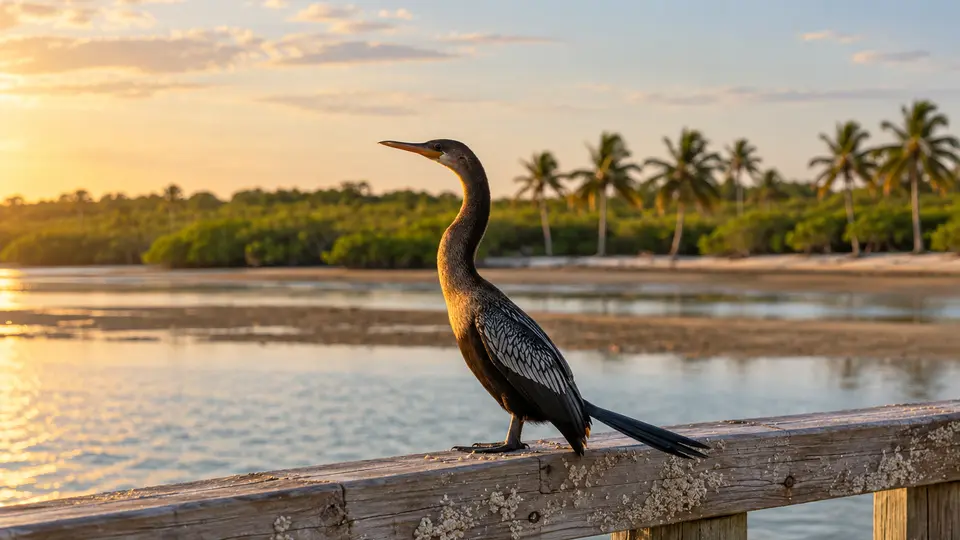
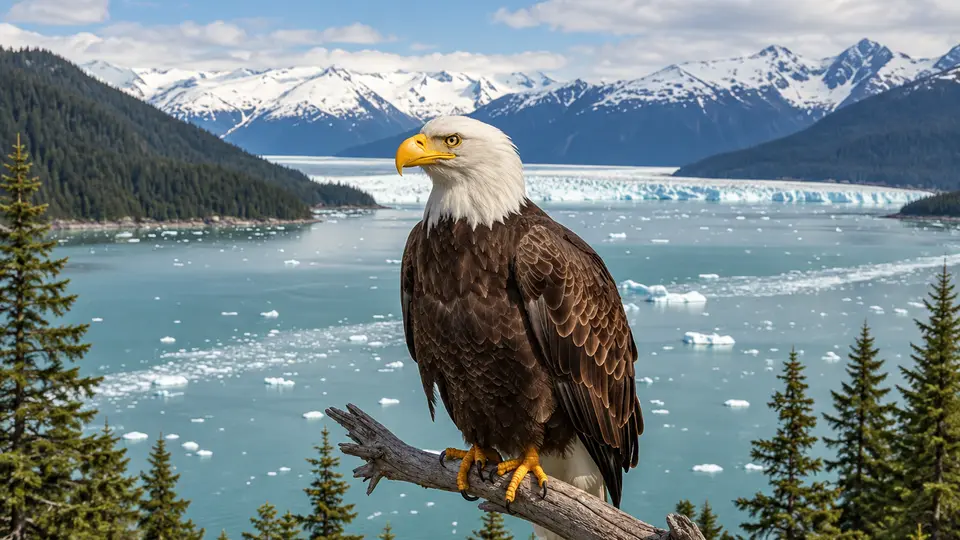
Sandhill CraneAI-modifiedSandhill CraneAnhingaAI-modifiedAnhingaBald EagleAI-modifiedBald Eagle
Animal groupBirdsAnimal groupBirdsAnimal groupBirds
DestinationsFloridaDestinationsFloridaDestinationsAlaska, Florida, New England
Scientific nameAntigone canadensisScientific nameScientific name
All wildlife destinations
AI-modified
Plan your trip

Find your next wildlife adventure

Compare destinations, shore programs and dates with the animals and habitats you would love to see.

  • Naturalist-led shore excursions
  • Responsible wildlife watching
  • Small expedition ships