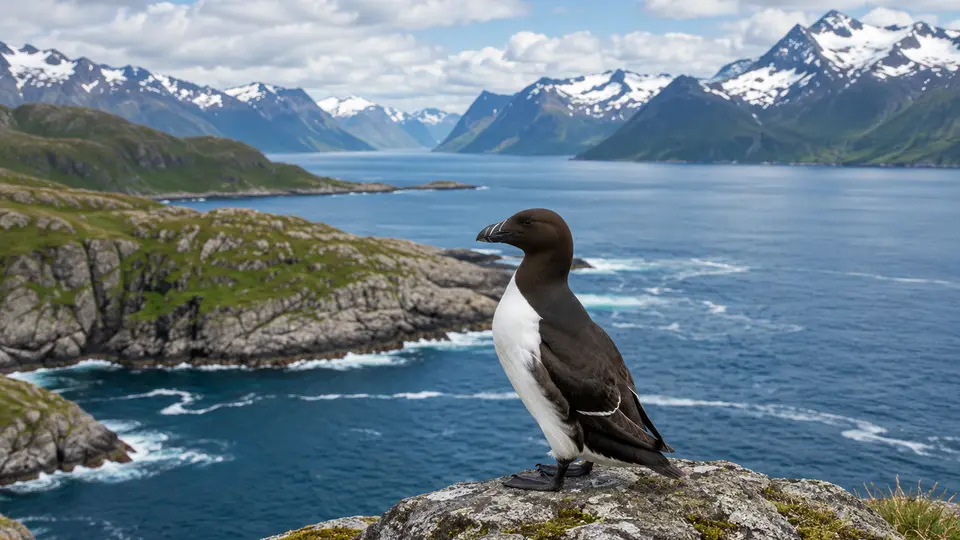
Common Guillemot in its natural habitat, AI illustration

Common Guillemot: where and when to see them

Uria aalge

Common Guillemot at a glance

The common guillemot is a densely colonial seabird of cool northern oceans, known as the common murre in North America. Its upright posture, dark upperparts and white belly can make a crowded breeding ledge resemble a miniature city. Unlike nest-building seabirds, it lays a single egg directly on rock. Large colonies are spectacular, but their fortunes depend on nearby fish supplies and can change sharply during marine heatwaves or food shortages.

Behaviour & reproduction

Size
38-43 cm long
Weight
0.8-1.2 kg
Lifespan
15-25 years
Status
Least Concern

Breeding adults occupy narrow cliff ledges in close contact with neighbours, recognising their mates and young amid intense noise and movement. Both parents incubate and bring fish to the chick. Before it can fly, the youngster leaves the ledge and reaches the sea, usually accompanied thereafter by its father. Outside the breeding season, guillemots disperse over marine feeding grounds and become much less concentrated near accessible cliffs. Pairs maintain strong site fidelity, often returning to the same ledge year after year. The 'wing-whirring' display is a common sight on ledges, involving rapid wing beats as a form of communication or territorial defense.

Top wildlife locations

Norway wildlife habitat

Norway

Occupied seabird cliffs and offshore stacks offer plausible views from authorised coastal viewpoints or distant decks. Many colonies are inaccessible from land, and breeding restrictions can exclude otherwise suitable-looking shores.

Adventure cruises in Norway
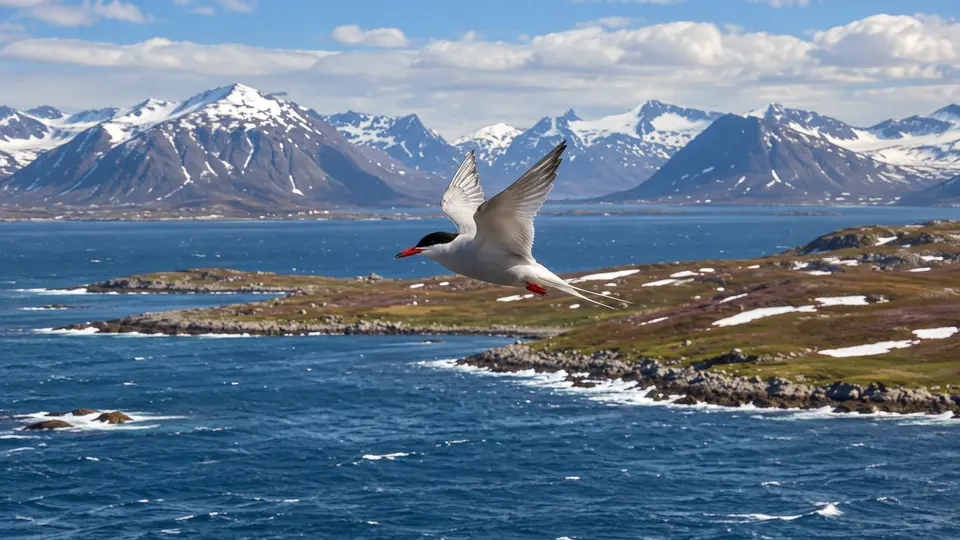
Scotland wildlife habitat

Scotland

Mainland seabird cliffs and accessible island viewpoints can overlook dense breeding ledges. Some stacks are inaccessible and require distant observation; use established paths rather than approaching cliff edges or nesting shelves.

Adventure cruises in Scotland

Destinations describe the species' habitat, not guaranteed cruise stops. Some animals require an optional inland excursion or are found in restricted reserves.

Fun facts about the Common Guillemot

  • Common guillemot and common murre are names for the same species.
  • It lays its egg directly on a ledge without building a nest.
  • The chick leaves the colony before it can fly.
  • Some Atlantic birds have a white eye-ring and line, called the bridled form.

Best time to see the Common Guillemot

Late spring and early summer offer the clearest coastal opportunities at occupied breeding colonies in Scotland and Norway. Exact timing becomes later toward the north and varies annually. After chicks depart, apparently suitable cliffs can empty quickly, while offshore birds remain difficult to observe from land. Prime viewing from cruise ships or shore is generally from May through July, coinciding with the busiest period of chick rearing. Even after the main departure, smaller numbers of prospecting or failed breeders may linger at colonies into August.

Common Guillemot: season matrix by destination

Travel and observation windows vary by region. Highlighted months are an orientation for planning, not confirmed sightings or a guarantee of access.

Norway

These months broadly cover colony attendance; northern timing and annual breeding success vary.

JanFebMarAprMayJunJulAugSepOctNovDec
Cruise ships in Norway

Scotland

Spring arrival and summer departure vary by colony; many ledges are largely empty after breeding.

JanFebMarAprMayJunJulAugSepOctNovDec
Cruise ships in Scotland

Where the Common Guillemot lives

Breeding habitat consists mainly of steep sea cliffs, rock stacks and offshore islands with secure ledges. Feeding takes place in surrounding shelf waters. Outside nesting months, birds can occur well offshore, though storms and prey movements sometimes bring them near coastal viewpoints. Though typically nesting on cliffs, some populations may use flat, low-lying islands where predators are absent. During the non-breeding season, they inhabit a wide range of pelagic waters, often gathering in large rafts on the open sea.

What the Common Guillemot eats

Small schooling fish, including sandeels, sprats, herring and capelin, dominate where available. Adults pursue prey beneath the surface using their wings for propulsion. Chicks usually receive individual fish carried lengthwise in the bill, making food deliveries visible from distant colony viewpoints. Guillemots are opportunistic feeders, adjusting their diet based on local prey availability and abundance. Their efficient underwater hunting makes them highly adapted to capturing fast-moving marine prey, essential for sustained energy during the breeding season.

Species at a glance

Common name
Common Guillemot
Scientific name
Uria aalge
Animal group
Birds
Size
38-43 cm long
Weight
0.8-1.2 kg
Lifespan
15-25 years
Status
Least Concern
Identification
Its slender, pointed bill separates it from razorbill, while the thicker-billed Brünnich's guillemot has a pale line along the bill edge. Their plumage is dark brown-black above and white below, with a sharp demarcation between the two colors. In winter, adults develop a white stripe behind the eye, a useful field mark that distinguishes them from their summer appearance.

Common Guillemot: frequently asked questions

Where can I see the Common Guillemot?
Norway, Scotland. Use designated cliff viewpoints and stay behind barriers, keeping clear of unstable edges. Avoid noise or close approaches that could flush densely packed birds and expose eggs or chicks to falls and predators. From ship decks, look for rafts of birds on the water surface near breeding colonies or foraging areas, especially around fishing grounds. Binoculars are essential for observing details of individuals on ledges and for differentiating species at a distance.
When is the best time to see the Common Guillemot?
Late spring and early summer offer the clearest coastal opportunities at occupied breeding colonies in Scotland and Norway. Exact timing becomes later toward the north and varies annually. After chicks depart, apparently suitable cliffs can empty quickly, while offshore birds remain difficult to observe from land. Prime viewing from cruise ships or shore is generally from May through July, coinciding with the busiest period of chick rearing. Even after the main departure, smaller numbers of prospecting or failed breeders may linger at colonies into August.
How big does the Common Guillemot get?
38-43 cm long. Adult weight: 0.8-1.2 kg. Size varies with age, sex and population.
How should I behave around the Common Guillemot?
Use designated cliff viewpoints and stay behind barriers, keeping clear of unstable edges. Avoid noise or close approaches that could flush densely packed birds and expose eggs or chicks to falls and predators. From ship decks, look for rafts of birds on the water surface near breeding colonies or foraging areas, especially around fishing grounds. Binoculars are essential for observing details of individuals on ledges and for differentiating species at a distance.
What does the Common Guillemot eat?
Small schooling fish, including sandeels, sprats, herring and capelin, dominate where available. Adults pursue prey beneath the surface using their wings for propulsion. Chicks usually receive individual fish carried lengthwise in the bill, making food deliveries visible from distant colony viewpoints. Guillemots are opportunistic feeders, adjusting their diet based on local prey availability and abundance. Their efficient underwater hunting makes them highly adapted to capturing fast-moving marine prey, essential for sustained energy during the breeding season.
Are wildlife sightings guaranteed on an adventure cruise?
No. Animals move freely and routes, weather, access restrictions and local conditions influence every outing. Confirm the actual itinerary and shore program before booking.

Compare wildlife in the same destinations

Explore other birds recorded in these destinations. Similar surroundings do not mean the animals share the same habits or viewing season.

Species comparison by animal group and destination
Common GuillemotCommon GuillemotArctic TernArctic TernAtlantic PuffinAtlantic Puffin
Animal groupBirdsAnimal groupBirdsAnimal groupBirds
DestinationsNorway, ScotlandDestinationsAlaska, Norway, ArcticDestinationsNew England, Norway, Scotland, Arctic
All wildlife destinations
Plan your trip

Find your next wildlife adventure

Compare destinations, shore programs and dates with the animals and habitats you would love to see.

  • Naturalist-led shore excursions
  • Responsible wildlife watching
  • Small expedition ships

Newsletter

Take Blue Rides with you

Adventure cruise offers, last-minute deals and trip inspiration.

Free, unsubscribe anytime. Details: Privacy Policy

Partner with Blue Rides

Affiliate Program

Recommend adventure cruises and earn commission on every confirmed booking.

Share. Track. Earn.

Your footage, our stage

Send us your videos or pictures.

Captured beautiful landscapes or wildlife? Share your videos and pictures with us, we may feature them on Blue Rides.