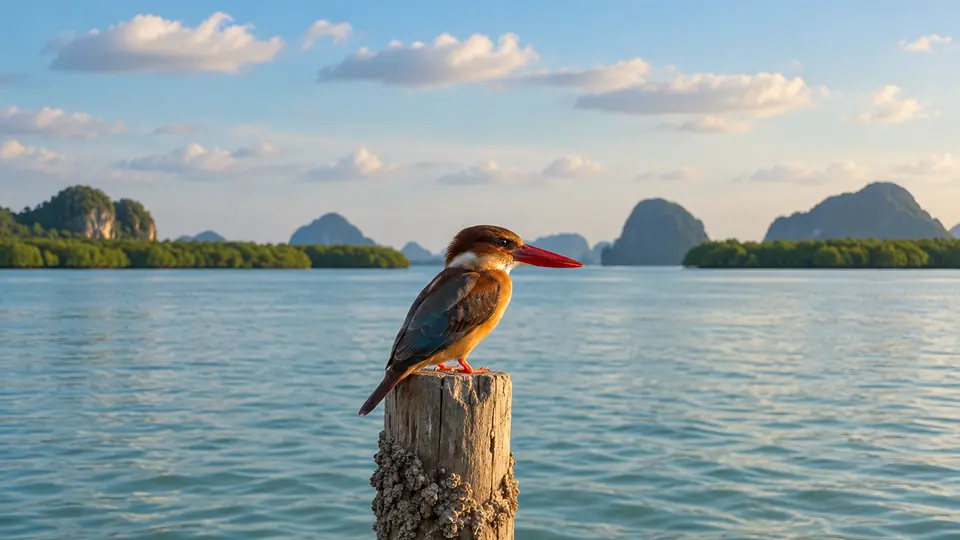
Collared kingfisher in its natural habitat, AI illustration

Collared kingfisher: where and when to see them

Todiramphus chloris

Collared kingfisher at a glance

The collared kingfisher is a sturdy blue-green and white bird strongly associated with tropical coasts. In Thailand it is a characteristic voice of mangroves, shore-edge woodland and some nearby settlements. Its name refers to the broad pale collar separating the head from the back. Although called a kingfisher, it often hunts crabs and terrestrial animals rather than fish, making it well suited to the shifting boundary between coastal vegetation and exposed mud.

Behaviour & reproduction

Size
23-25 cm long
Weight
50-90 g
Lifespan
Not reliably established
Status
Least Concern

A collared kingfisher commonly hunts from an exposed branch, wire or post, watching patiently before dropping onto prey. Captured animals may be struck against a perch before swallowing. Pairs advertise and defend territories with repeated harsh calls, often answering one another. They nest in cavities, including holes excavated in rotten wood or suitable termite structures. Birds may tolerate human activity, but repeated approaches can interrupt feeding and reveal vulnerable nesting locations. Courtship displays can include chases and offering of prey items between partners. Young birds remain dependent on their parents for several weeks after fledging, often being fed by the adults. Their territorial calls are loud and distinctive, a series of harsh 'kek kek kek' notes repeated frequently, often given from a high, exposed perch.

Top wildlife locations

Thailand wildlife habitat

Thailand

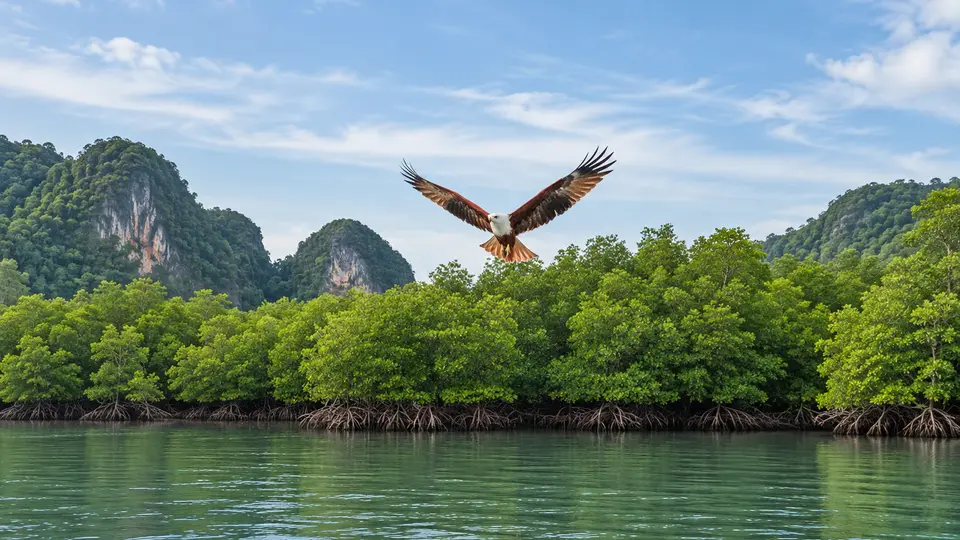
Mangrove boardwalks, tidal creek margins and coastal woodland provide plausible shore-viewing habitat on both major coasts. An inland excursion is unnecessary, although some mangroves are inaccessible and local tides can restrict safe access.

Adventure cruises in Thailand
Destinations describe the species' habitat, not guaranteed cruise stops. Some animals require an optional inland excursion or are found in restricted reserves.

Fun facts about the Collared kingfisher

  • Its broad collar is visible even when the bird faces away.
  • It can excavate a nest chamber in suitable termite structures.
  • Crabs may be beaten against a branch before being swallowed.
  • Several populations formerly included within this species are now classified as separate kingfishers.

Best time to see the Collared kingfisher

The species is resident in Thailand and can be sought throughout the year. Drier months often make coastal paths and mangrove viewpoints easier to use, but rainfall differs between coasts. Tide height and local activity can matter more than season. In Thailand, migratory populations are not a significant factor for this resident species, meaning their presence is stable year-round. Local movements may occur in response to food availability or breeding cycles, but these are generally short-distance shifts. Therefore, any time spent in suitable coastal habitats offers a good chance of an encounter.

Collared kingfisher: season matrix by destination

Travel and observation windows vary by region. Highlighted months are an orientation for planning, not confirmed sightings or a guarantee of access.

Thailand

Year-round residency supports this broad window; coast-specific monsoons, tides and site access affect observation conditions rather than defining a single breeding season.

JanFebMarAprMayJunJulAugSepOctNovDec
Cruise ships in Thailand

Where the Collared kingfisher lives

Mangroves, tidal creeks, coastal scrub, coconut groves and open woodland near shores are typical habitats. It also uses gardens and agricultural edges where suitable perches and prey occur. Nest cavities and sheltered vegetation remain important even in developed coastal landscapes. They are often found in coastal lagoons, estuaries, and even artificial waterways such as shrimp ponds. While adaptable, consistent disturbance can push them out of prime nesting or feeding areas, especially in smaller patches of habitat.

What the Collared kingfisher eats

Crabs are important in many coastal populations, alongside insects, small lizards, worms and occasional fish. Birds take prey from mud, shallow edges and dry ground. Diet changes with habitat, so inland-feeding individuals may rely less heavily on crustaceans. Its powerful bill is well-suited for catching and subduing a wide range of prey, often impacting them against a branch until docile. They are opportunistic hunters, capable of switching prey items as local conditions or availability change. Juveniles often start with smaller, softer prey before tackling larger crustaceans or fish.

Species at a glance

Common name
Collared kingfisher
Scientific name
Todiramphus chloris
Animal group
Birds
Size
23-25 cm long
Weight
50-90 g
Lifespan
Not reliably established
Status
Least Concern
Identification
Its white collar and underparts, blue-green upperparts and dark bill distinguish it from the brown-headed white-throated kingfisher and the much smaller common kingfisher. Subspecies variations can subtly affect plumage brightness, though the core identification features remain consistent. The species also has a distinct, often bright red eye that can be visible at closer range and in good light. Their relatively stocky build and large head are also characteristic when seen in flight or perched.

Collared kingfisher: frequently asked questions

Where can I see the Collared kingfisher?
Thailand. Use mangrove boardwalks or firm shore paths and watch perched birds from a distance. Avoid nest cavities, playback and stepping onto soft tidal mud; check tides before entering any exposed coastal viewpoint. Early mornings or late afternoons often provide the best opportunities for observing active hunting behavior. A good pair of binoculars is essential for appreciating their plumage details and observing subtle behaviors from a respectful distance. Look for them perched prominently on low branches or wires overlooking muddy flats and shallow waters.
When is the best time to see the Collared kingfisher?
The species is resident in Thailand and can be sought throughout the year. Drier months often make coastal paths and mangrove viewpoints easier to use, but rainfall differs between coasts. Tide height and local activity can matter more than season. In Thailand, migratory populations are not a significant factor for this resident species, meaning their presence is stable year-round. Local movements may occur in response to food availability or breeding cycles, but these are generally short-distance shifts. Therefore, any time spent in suitable coastal habitats offers a good chance of an encounter.
How big does the Collared kingfisher get?
23-25 cm long. Adult weight: 50-90 g. Size varies with age, sex and population.
How should I behave around the Collared kingfisher?
Use mangrove boardwalks or firm shore paths and watch perched birds from a distance. Avoid nest cavities, playback and stepping onto soft tidal mud; check tides before entering any exposed coastal viewpoint. Early mornings or late afternoons often provide the best opportunities for observing active hunting behavior. A good pair of binoculars is essential for appreciating their plumage details and observing subtle behaviors from a respectful distance. Look for them perched prominently on low branches or wires overlooking muddy flats and shallow waters.
What does the Collared kingfisher eat?
Crabs are important in many coastal populations, alongside insects, small lizards, worms and occasional fish. Birds take prey from mud, shallow edges and dry ground. Diet changes with habitat, so inland-feeding individuals may rely less heavily on crustaceans. Its powerful bill is well-suited for catching and subduing a wide range of prey, often impacting them against a branch until docile. They are opportunistic hunters, capable of switching prey items as local conditions or availability change. Juveniles often start with smaller, softer prey before tackling larger crustaceans or fish.
Are wildlife sightings guaranteed on an adventure cruise?
No. Animals move freely and routes, weather, access restrictions and local conditions influence every outing. Confirm the actual itinerary and shore program before booking.

Compare wildlife in the same destinations

Explore other birds recorded in these destinations. Similar surroundings do not mean the animals share the same habits or viewing season.

Species comparison by animal group and destination
Collared kingfisherCollared kingfisherBrahminy kiteBrahminy kiteBrown-winged kingfisherBrown-winged kingfisher
Animal groupBirdsAnimal groupBirdsAnimal groupBirds
DestinationsThailandDestinationsIndonesia, Thailand, VietnamDestinationsThailand
All wildlife destinations
Plan your trip

Find your next wildlife adventure

Compare destinations, shore programs and dates with the animals and habitats you would love to see.

  • Naturalist-led shore excursions
  • Responsible wildlife watching
  • Small expedition ships

Newsletter

Take Blue Rides with you

Adventure cruise offers, last-minute deals and trip inspiration.

Free, unsubscribe anytime. Details: Privacy Policy

Partner with Blue Rides

Affiliate Program

Recommend adventure cruises and earn commission on every confirmed booking.

Share. Track. Earn.

Your footage, our stage

Send us your videos or pictures.

Captured beautiful landscapes or wildlife? Share your videos and pictures with us, we may feature them on Blue Rides.