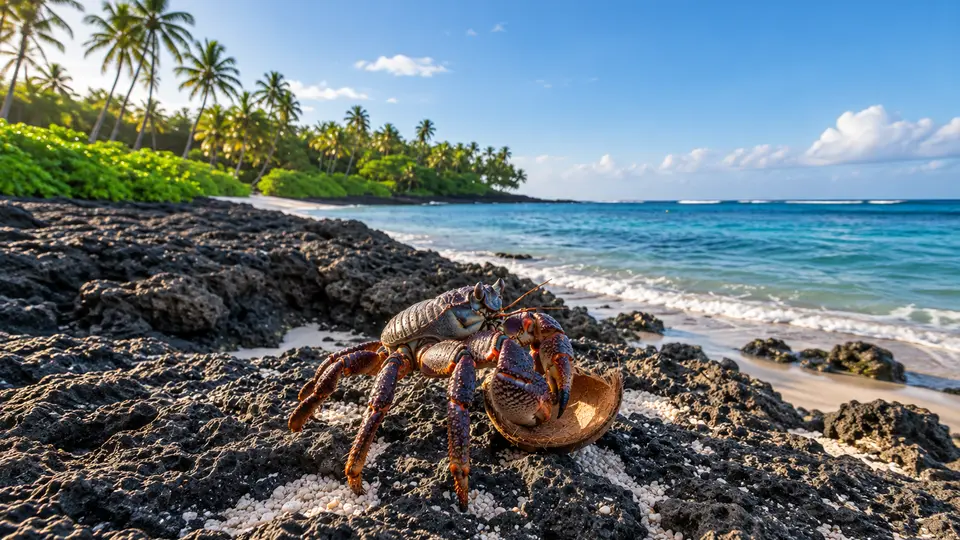
Coconut crab in its natural habitat, AI illustration

Coconut crabBirgus latroWhere and when to see them

Coconut crab at a glance

The coconut crab is the largest living terrestrial arthropod, a powerful island scavenger related to hermit crabs. Adults have a hardened abdomen and no longer carry borrowed shells. Despite its placement in many marine wildlife lists, adult life is overwhelmingly terrestrial; only the early larval phase develops at sea. Across Polynesia its distribution is patchy, and harvesting, habitat loss and introduced predators have reduced populations on many inhabited islands.

Behaviour & reproduction

Size
Adult body length up to about 40 cm
Weight
1-4 kg
Lifespan
Not reliably established
Status
Vulnerable

Coconut crabs usually emerge at night or in humid conditions, using a strong sense of smell to locate food. They shelter in burrows, rock cavities or root tangles and can climb trees. Their large claws tear plant material and manipulate difficult food items. Adults moult in protected retreats and are vulnerable while the new covering hardens. Females move towards the coast to release larvae, but adults cannot live submerged. They possess an acute sense of smell, rivaling that of rats, which helps them detect food sources from a distance. During molting, they remain hidden for several weeks until their new exoskeleton fully hardens.

Top wildlife locations

Polynesia wildlife habitat

Polynesia

Protected coastal woodland and rocky shore margins on some islands offer plausible habitat. Distribution is patchy, and accessible visitor areas may lack crabs; guided land access and local conservation permission may be required.
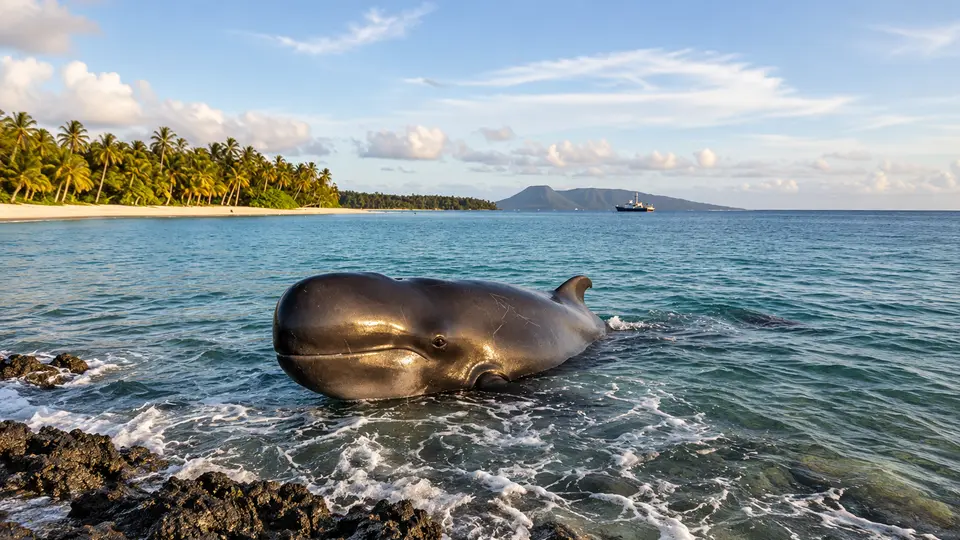
Destinations describe the species' habitat, not guaranteed cruise stops. Some animals require an optional inland excursion or are found in restricted reserves.

Fun facts about the Coconut crab

  • Young juveniles use borrowed shells before developing the adult hardened abdomen.
  • Adults breathe air using specialised branchiostegal lungs.
  • Their antennae detect airborne odours rather than functioning only in water.
  • Females release larvae into the sea, linking terrestrial adults to a marine early life.

Best time to see the Coconut crab

There is no single dependable season across Polynesia's widely separated islands. Warm, humid evenings can encourage activity wherever protected populations persist. Local rainfall, harvest rules and access restrictions should guide visits; a regional tourism calendar cannot establish crab abundance or reproductive timing. Peak larval release often correlates with the lunar cycle, typically around the full moon. Local guides can provide the most accurate information on current activity patterns.

Coconut crab: season matrix by destination

Travel and observation windows vary by region. Highlighted months are an orientation for planning, not confirmed sightings or a guarantee of access.

Polynesia

Polynesia is too broad for a defensible shared monthly window; island-specific rainfall, protection status and verified population information are needed.

JanFebMarAprMayJunJulAugSepOctNovDec
Cruise ships in Polynesia

Where the Coconut crab lives

Suitable habitat combines humid coastal woodland, rocky shelter or burrowable soil, and access to the sea for reproduction. Adults may range inland where conditions allow. Intact island forest and low harvesting pressure are more important than the simple presence of coconut palms. Habitat destruction due to coastal development is a primary threat across their range. They often prefer areas with a deep leaf litter layer and sufficient moisture to prevent desiccation.

What the Coconut crab eats

Fallen fruit, seeds, nuts and other plant material form much of the diet, supplemented by carrion and opportunistically captured animals. Coconuts are only one resource. Strong claws help open tough foods, although handling a whole coconut requires considerable effort. They play an important role as scavengers and detritivores in their island ecosystems. Their diet can also include small crustaceans and even other crabs, especially if carrion is scarce.

Species at a glance

Common name
Coconut crab
Scientific name
Birgus latro
Animal group
Marine life
Size
Adult body length up to about 40 cm
Weight
1-4 kg
Lifespan
Not reliably established
Status
Vulnerable
Identification
Its massive claws, long walking legs and exposed hardened abdomen distinguish an adult coconut crab from smaller land hermit crabs carrying shells. Juveniles are often mistaken for terrestrial hermit crabs as they use discarded shells for protection. The color of adult coconut crabs can vary, ranging from purplish-blue to orange-red or light brown, influenced by diet and environment.

Coconut crab: frequently asked questions

Where can I see the Coconut crab?
Polynesia. Watch with a guide using subdued light and keep hands well away from the powerful claws. Never handle, bait or block a crab's retreat, and follow local protection rules and private-land restrictions. Maintain a respectful distance to avoid disturbing their natural foraging behavior. Flash photography can disorient them and should be avoided or used sparingly.
When is the best time to see the Coconut crab?
There is no single dependable season across Polynesia's widely separated islands. Warm, humid evenings can encourage activity wherever protected populations persist. Local rainfall, harvest rules and access restrictions should guide visits; a regional tourism calendar cannot establish crab abundance or reproductive timing. Peak larval release often correlates with the lunar cycle, typically around the full moon. Local guides can provide the most accurate information on current activity patterns.
How big does the Coconut crab get?
Adult body length up to about 40 cm. Adult weight: 1-4 kg. Size varies with age, sex and population.
How should I behave around the Coconut crab?
Watch with a guide using subdued light and keep hands well away from the powerful claws. Never handle, bait or block a crab's retreat, and follow local protection rules and private-land restrictions. Maintain a respectful distance to avoid disturbing their natural foraging behavior. Flash photography can disorient them and should be avoided or used sparingly.
What does the Coconut crab eat?
Fallen fruit, seeds, nuts and other plant material form much of the diet, supplemented by carrion and opportunistically captured animals. Coconuts are only one resource. Strong claws help open tough foods, although handling a whole coconut requires considerable effort. They play an important role as scavengers and detritivores in their island ecosystems. Their diet can also include small crustaceans and even other crabs, especially if carrion is scarce.
Are wildlife sightings guaranteed on an adventure cruise?
No. Animals move freely and routes, weather, access restrictions and local conditions influence every outing. Confirm the actual itinerary and shore program before booking.

Compare wildlife in the same destinations

Explore other marine life recorded in these destinations. Similar surroundings do not mean the animals share the same habits or viewing season.

Species comparison by animal group and destination
Coconut crabCoconut crabShort-finned Pilot WhaleShort-finned Pilot Whale
Animal groupMarine lifeAnimal groupMarine life
DestinationsPolynesiaDestinationsCape Verde, Seychelles, Maldives, Fiji, Polynesia
All wildlife destinations
Plan your trip

Find your next wildlife adventure

Compare destinations, shore programs and dates with the animals and habitats you would love to see.

  • Naturalist-led shore excursions
  • Responsible wildlife watching
  • Small expedition ships

Newsletter

Take Blue Rides with you

Adventure cruise offers, last-minute deals and trip inspiration.

Free, unsubscribe anytime. Details: Privacy Policy

Partner with Blue Rides

Affiliate Program

Recommend adventure cruises and earn commission on every confirmed booking.

Share. Track. Earn.

Your footage, our stage

Send us your videos or pictures.

Captured remarkable nature or wildlife on your journey? Share it with us, we may feature it on Blue Rides.

