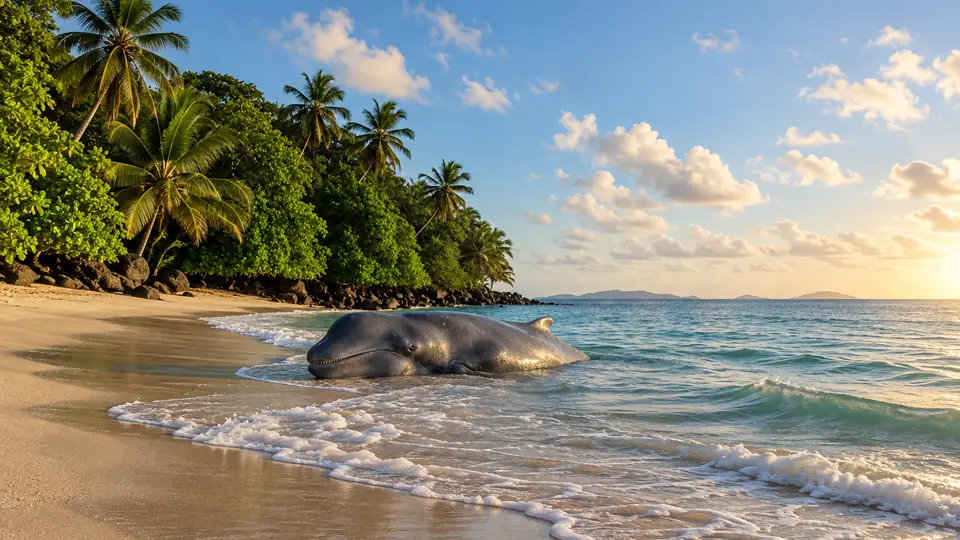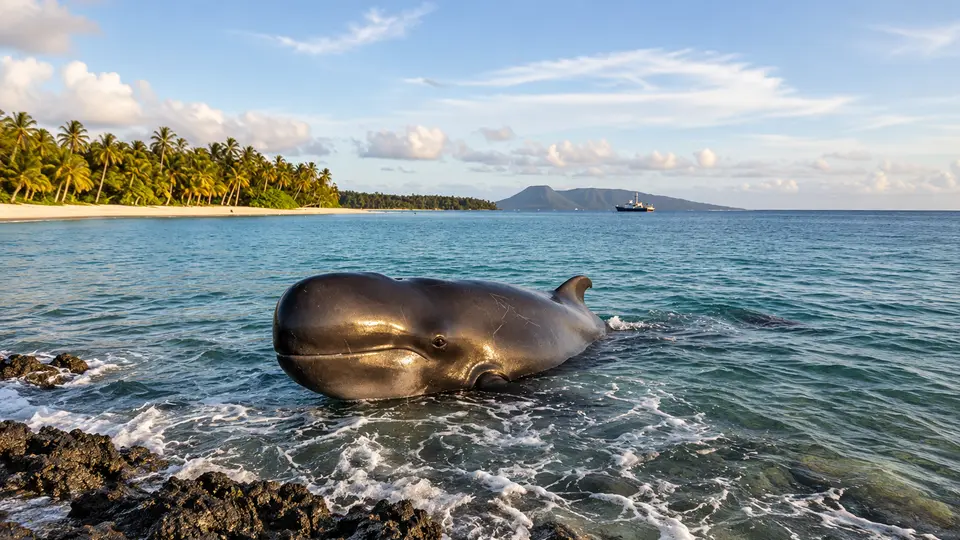
Short-finned Pilot Whale in its natural habitatAI-modified

Short-finned Pilot WhaleGlobicephala macrorhynchusWhere and when to see them

Short-finned Pilot Whale at a glance

The short-finned pilot whale is a large oceanic dolphin of warm temperate and tropical waters. Its rounded forehead, dark coloration and broad dorsal fin create a distinctive silhouette, although separation from the long-finned pilot whale can be difficult at distance. It lives in enduring social groups and commonly occupies deep water beyond continental shelves or beside steep oceanic islands. Coastal visitors may occasionally see surfacing groups from elevated viewpoints or a vessel's deck.

Behaviour & reproduction

Size
3.5–6.5 m (11.5–21.3 ft) long
Weight
1–3 tonnes (1.1–3.3 tons)
Lifespan
40–60 years
Status
Least Concern

Groups maintain strong social bonds and often include related females with their offspring. Animals may rest close together at the surface, travel in coordinated lines or spread out while feeding. They use sound extensively for communication and locating prey at depth. Their social cohesion is associated with mass strandings, although the causes of any event can be complex. Distant observers should avoid interpreting quiet surface behavior as distress without additional evidence. Pod sizes are highly variable, ranging from small family units to large aggregations of hundreds of individuals, especially during seasonal migrations or feeding events. They exhibit strong matrilineal social structures, with adult females often leading the group and providing care for multiple generations. These whales are known for their strong social bonds, often staying with injured or distressed individuals, a factor contributing to mass strandings.

Top wildlife locations

Cape Verde wildlife habitatAI-modified

Cape Verde

Deep water close to volcanic island slopes offers plausible habitat visible from elevated coastal viewpoints or vessel decks. Groups may remain well offshore, and shore identification is uncertain without clear, repeated views.

Seychelles wildlife habitatAI-modified

Seychelles

Pilot whales mainly occupy deeper waters beyond shallow island banks, making ordinary beach observations rare. Outer coastal viewpoints or passage decks may overlook suitable habitat, but no routine shore encounter should be expected.

Maldives wildlife habitatAI-modified

Maldives

Deep channels and outer atoll slopes provide suitable offshore habitat, potentially viewed from passage decks. Low-lying island shores offer limited sightlines, so beach-based records are uncommon and identification may be difficult.

Fiji wildlife habitatAI-modified

Fiji

Ocean-facing headlands and decks crossing deep channels may overlook pilot whale habitat. Groups are not dependable from beaches or shallow lagoons, and some useful coastal viewpoints require a separate road excursion.

Polynesia wildlife habitatAI-modified

Polynesia

Steep oceanic island coasts can place deep-water habitat within sight of headlands or passage decks. The region is extensive, local occurrence is uneven, and shore observations should be considered opportunistic rather than routine.

Destinations describe the species' habitat, not guaranteed cruise stops. Some animals require an optional inland excursion or are found in restricted reserves.

Fun facts about the Short-finned Pilot Whale

  • Despite its name, it belongs to the dolphin family.
  • Females can survive for many years after they stop reproducing.
  • Adult males develop especially enlarged foreheads.
  • Its strong social bonds can keep groups together during stranding events.

Best time to see the Short-finned Pilot Whale

Seasonality differs among archipelagos, and no universal viewing period applies. Favor locally suitable weather, good visibility and established distant observation opportunities. Some island populations are present year-round, but seasonal travel comfort should not be confused with a demonstrated peak in pilot whale abundance. In certain regions like the Canary Islands, calmer sea conditions during specific months can enhance viewing opportunities, though populations are resident. Travelers should consult local wildlife tour operators for specific seasonal insights, as oceanographic conditions influencing prey distribution can vary. Peak visibility may sometimes coincide with periods of increased upwelling, which concentrates food sources.

Short-finned Pilot Whale: season matrix by destination

Travel and observation windows vary by region. Highlighted months are an orientation for planning, not confirmed sightings or a guarantee of access.

Cape Verde

These generally drier travel months can support coastal observation, although trade winds may roughen seas; they do not define a pilot whale breeding or abundance peak.

JanFebMarAprMayJunJulAugSepOctNovDec
Cruise ships in Cape Verde

Seychelles

Intermonsoon periods can improve sea visibility and travel comfort; evidence is insufficient to identify a reliable seasonal shore-occurrence peak.

JanFebMarAprMayJunJulAugSepOctNovDec
Cruise ships in Seychelles

Maldives

The generally drier northeast monsoon period can favor visibility and deck watching, not guaranteed pilot whale presence or a specific reproductive season.

JanFebMarAprMayJunJulAugSepOctNovDec
Cruise ships in Maldives

Fiji

The generally drier season offers a practical travel window, although trade-wind chop can hinder observation; no seasonal whale concentration is implied.

JanFebMarAprMayJunJulAugSepOctNovDec
Cruise ships in Fiji

Polynesia

The supplied destination covers too broad a climatic and geographic area for one defensible monthly window; island-specific weather and occurrence information are needed.

JanFebMarAprMayJunJulAugSepOctNovDec
Cruise ships in Polynesia

Where the Short-finned Pilot Whale lives

Deep tropical and subtropical seas are typical habitat, especially shelf edges, submarine slopes and oceanic island waters. Where steep bathymetry lies close to land, groups can occasionally be visible from shore. Shallow lagoons and enclosed beaches are not their usual feeding environment. They are often found in areas with high productivity, such as upwellings or current convergences, which concentrate their prey. While primarily oceanic, they can sometimes be seen in deep waters near continental shelves and offshore islands. They are less common in very shallow coastal waters.

What the Short-finned Pilot Whale eats

Squid form the main part of the diet, with fish also taken. Feeding frequently occurs far below the surface, where echolocation helps locate prey in low light. Surface sightings therefore provide limited information about feeding success or the full extent of a group's movements. Prey consumed includes various species of squid, such as the jewel squid and glass squid, which are typically found at mesopelagic depths. They are known to undertake deep dives, often exceeding 500 meters, to hunt for these deep-dwelling cephalopods. Fish like cod and hake may also be taken opportunistically, especially if found in their hunting zones.

Species at a glance

Common name
Short-finned Pilot Whale
Scientific name
Globicephala macrorhynchus
Animal group
Marine life
Size
3.5–6.5 m (11.5–21.3 ft) long
Weight
1–3 tonnes (1.1–3.3 tons)
Lifespan
40–60 years
Status
Least Concern
Identification
Its bulbous forehead and broad, swept-back dorsal fin distinguish it from most dolphins, but separating it from the long-finned pilot whale usually requires more than a distant surface view. Key distinguishing features from the long-finned pilot whale include a shorter, more rounded pectoral fin and a less pronounced melon. The dorsal fin of the short-finned pilot whale is typically further forward on the back and has a more pronounced curve. A light gray saddle patch behind the dorsal fin is often visible and can aid in identification.

Short-finned Pilot Whale: frequently asked questions

Where can I see the Short-finned Pilot Whale?
Cape Verde, Seychelles, Maldives, Fiji, Polynesia. Watch from a secure headland or stable deck without requesting closer pursuit. Do not feed animals or assume resting groups need assistance. Report stranded whales to local authorities and keep people clear of powerful tails. Their relatively slow, predictable movements at the surface, especially during rest periods, can offer prolonged viewing opportunities from a vessel. Keep a respectful distance of at least 50 meters to avoid disturbing natural behaviors. Binoculars are essential for observing details from a safe distance, especially to distinguish between species.
When is the best time to see the Short-finned Pilot Whale?
Seasonality differs among archipelagos, and no universal viewing period applies. Favor locally suitable weather, good visibility and established distant observation opportunities. Some island populations are present year-round, but seasonal travel comfort should not be confused with a demonstrated peak in pilot whale abundance. In certain regions like the Canary Islands, calmer sea conditions during specific months can enhance viewing opportunities, though populations are resident. Travelers should consult local wildlife tour operators for specific seasonal insights, as oceanographic conditions influencing prey distribution can vary. Peak visibility may sometimes coincide with periods of increased upwelling, which concentrates food sources.
How big does the Short-finned Pilot Whale get?
3.5–6.5 m (11.5–21.3 ft) long. Adult weight: 1–3 tonnes (1.1–3.3 tons). Size varies with age, sex and population.
How should I behave around the Short-finned Pilot Whale?
Watch from a secure headland or stable deck without requesting closer pursuit. Do not feed animals or assume resting groups need assistance. Report stranded whales to local authorities and keep people clear of powerful tails. Their relatively slow, predictable movements at the surface, especially during rest periods, can offer prolonged viewing opportunities from a vessel. Keep a respectful distance of at least 50 meters to avoid disturbing natural behaviors. Binoculars are essential for observing details from a safe distance, especially to distinguish between species.
What does the Short-finned Pilot Whale eat?
Squid form the main part of the diet, with fish also taken. Feeding frequently occurs far below the surface, where echolocation helps locate prey in low light. Surface sightings therefore provide limited information about feeding success or the full extent of a group's movements. Prey consumed includes various species of squid, such as the jewel squid and glass squid, which are typically found at mesopelagic depths. They are known to undertake deep dives, often exceeding 500 meters, to hunt for these deep-dwelling cephalopods. Fish like cod and hake may also be taken opportunistically, especially if found in their hunting zones.
Are wildlife sightings guaranteed on an adventure cruise?
No. Animals move freely and routes, weather, access restrictions and local conditions influence every outing. Confirm the actual itinerary and shore program before booking.

Compare wildlife in the same destinations

Explore other marine life recorded in these destinations. Similar surroundings do not mean the animals share the same habits or viewing season.

Species comparison by animal group and destination
Short-finned Pilot WhaleAI-modifiedShort-finned Pilot WhaleBlainville's Beaked WhaleAI-modifiedBlainville's Beaked WhaleCoconut crabAI-modifiedCoconut crab
Animal groupMarine lifeAnimal groupMarine lifeAnimal groupMarine life
DestinationsCape Verde, Seychelles, Maldives, Fiji, PolynesiaDestinationsSeychellesDestinationsPolynesia
Scientific nameGlobicephala macrorhynchusScientific nameScientific name
All wildlife destinations
AI-modified
Plan your trip

Find your next wildlife adventure

Compare destinations, shore programs and dates with the animals and habitats you would love to see.

  • Naturalist-led shore excursions
  • Responsible wildlife watching
  • Small expedition ships