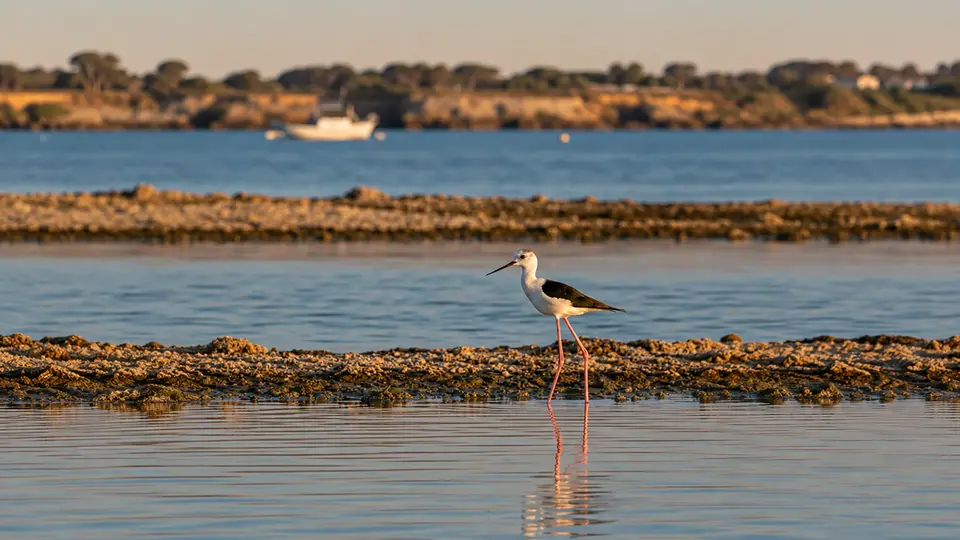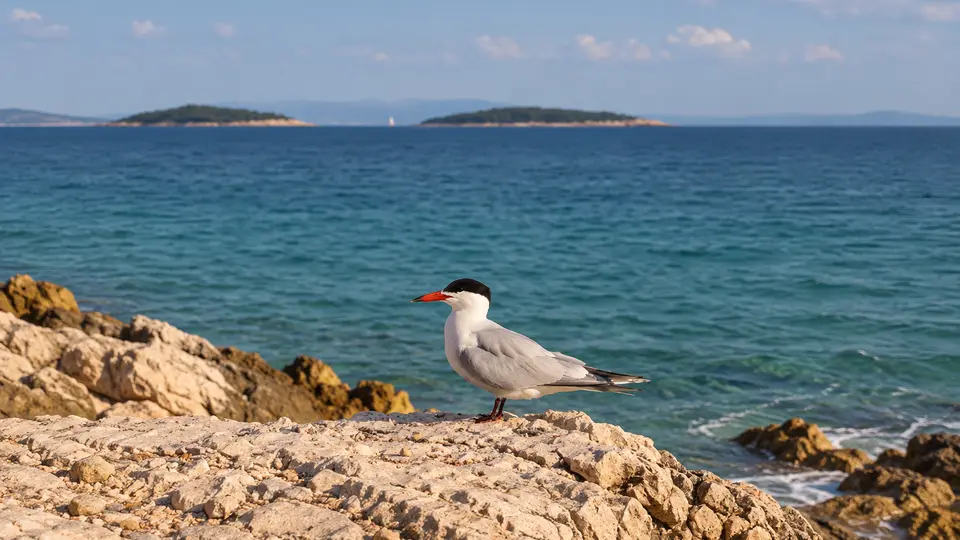
Caspian Tern in its natural habitat, AI illustration

Caspian Tern: where and when to see them

Hydroprogne caspia

Caspian Tern at a glance

The Caspian tern is the world's largest tern, a substantial waterbird with a massive red bill and a harsh, carrying voice. It occurs on several continents, using both coastal and inland waters. In Croatia it is principally a scarce passage visitor rather than a routine feature of every harbour. Its powerful proportions can initially suggest a gull, but its feeding flight and pointed wings reveal its tern identity.

Behaviour & reproduction

Size
48-60 cm long; 127-145 cm wingspan
Weight
530-780 g
Lifespan
Not reliably established
Status
Least Concern

Caspian terns search for fish in deliberate flight, hovering briefly before dropping into the water. They rest on open sandbars, mudflats and exposed shores, sometimes alongside gulls and smaller terns. Breeding birds form colonies or nest in scattered pairs, defending the nest area vigorously. Parents continue feeding young after fledging, and family associations may persist during migration. Their loud, rasping calls often announce their arrival before the bird is noticed. Courtship displays often involve aerial chases and presentation of fish by the male to the female. While generally colonial, they can sometimes be found nesting solitarily or in very small groups, especially at the edges of their range.

Top wildlife locations

Croatia wildlife habitat

Croatia

Coastal lagoons, estuary margins and quiet sandbars, including suitable Neretva delta viewpoints, provide plausible shore habitat. The species is a scarce visitor, so accessible wetlands should not be presented as reliable sighting sites.

Adventure cruises in Croatia
Destinations describe the species' habitat, not guaranteed cruise stops. Some animals require an optional inland excursion or are found in restricted reserves.

Fun facts about the Caspian Tern

  • It is the sole living species in the genus Hydroprogne.
  • Its wingspan can exceed that of many familiar gulls.
  • Adults can carry fish crosswise in the bill to feed young.
  • Despite its name, it has a near-global distribution rather than a solely Caspian range.

Best time to see the Caspian Tern

Spring and autumn migration offer the most plausible opportunities in Croatia, especially around larger coastal wetlands. April to May and August to October are useful broad search periods. Numbers fluctuate, and local reports are more informative than a fixed annual calendar. Early autumn, particularly September, can be excellent as large groups may gather prior to their southward journey. During spring migration, smaller numbers might pause along the Adriatic coast before moving to breeding grounds further north or east.

Caspian Tern: season matrix by destination

Travel and observation windows vary by region. Highlighted months are an orientation for planning, not confirmed sightings or a guarantee of access.

Croatia

These are broad migration search windows, not a Croatian breeding calendar or evidence of regular presence at any particular viewpoint.

JanFebMarAprMayJunJulAugSepOctNovDec
Cruise ships in Croatia

Where the Caspian Tern lives

Suitable habitats include estuaries, lagoons, shallow coastal bays, large lakes and reservoirs. Open resting areas near fish-rich water are important. Breeding sites typically have sparsely vegetated sand, gravel or shell, while migrants use a broader selection of quiet wetland margins. The species also frequently utilizes artificial habitats such as salt pans and aquaculture ponds, which can provide abundant feeding opportunities. These adaptable birds often prefer areas with a mix of shallow and slightly deeper water for hunting, alongside undisturbed areas for roosting.

What the Caspian Tern eats

Fish make up most of the diet, captured close to the water surface after an aerial search. Prey size is relatively large compared with that taken by smaller terns. Crustaceans and other animal foods are occasional additions rather than the main resource. They typically swallow smaller fish headfirst in flight, but will carry larger prey to a perch or the nest before consumption. Common prey items in coastal areas often include mullet, sardines, and anchovies, reflecting local fish availability.

Species at a glance

Common name
Caspian Tern
Scientific name
Hydroprogne caspia
Animal group
Birds
Size
48-60 cm long; 127-145 cm wingspan
Weight
530-780 g
Lifespan
Not reliably established
Status
Least Concern
Identification
Its very large size, heavy red bill with a dark tip and dark outer underwing distinguish it from Croatia's smaller, slimmer terns. Its prominent black cap extends from the bill to the nape during breeding season, often appearing streaky or patchy outside of it. The flight is powerful and direct, with strong, rather stiff wingbeats, unlike the more buoyant flight of smaller terns.

Caspian Tern: frequently asked questions

Where can I see the Caspian Tern?
Croatia. Scan lagoon mouths and sandbars with binoculars or a telescope from established paths. Avoid flushing resting flocks, and never cross nesting barriers; defensive birds and exposed tidal or muddy ground warrant extra caution. When viewing from a boat, scan the water surface and shoreline for their distinctive foraging dives or resting groups. Binoculars are essential for appreciating their identifying features, even from a distance on deck.
When is the best time to see the Caspian Tern?
Spring and autumn migration offer the most plausible opportunities in Croatia, especially around larger coastal wetlands. April to May and August to October are useful broad search periods. Numbers fluctuate, and local reports are more informative than a fixed annual calendar. Early autumn, particularly September, can be excellent as large groups may gather prior to their southward journey. During spring migration, smaller numbers might pause along the Adriatic coast before moving to breeding grounds further north or east.
How big does the Caspian Tern get?
48-60 cm long; 127-145 cm wingspan. Adult weight: 530-780 g. Size varies with age, sex and population.
How should I behave around the Caspian Tern?
Scan lagoon mouths and sandbars with binoculars or a telescope from established paths. Avoid flushing resting flocks, and never cross nesting barriers; defensive birds and exposed tidal or muddy ground warrant extra caution. When viewing from a boat, scan the water surface and shoreline for their distinctive foraging dives or resting groups. Binoculars are essential for appreciating their identifying features, even from a distance on deck.
What does the Caspian Tern eat?
Fish make up most of the diet, captured close to the water surface after an aerial search. Prey size is relatively large compared with that taken by smaller terns. Crustaceans and other animal foods are occasional additions rather than the main resource. They typically swallow smaller fish headfirst in flight, but will carry larger prey to a perch or the nest before consumption. Common prey items in coastal areas often include mullet, sardines, and anchovies, reflecting local fish availability.
Are wildlife sightings guaranteed on an adventure cruise?
No. Animals move freely and routes, weather, access restrictions and local conditions influence every outing. Confirm the actual itinerary and shore program before booking.

Compare wildlife in the same destinations

Explore other birds recorded in these destinations. Similar surroundings do not mean the animals share the same habits or viewing season.

Species comparison by animal group and destination
Caspian TernCaspian TernAudouin's GullAudouin's GullBlack-winged StiltBlack-winged Stilt
Animal groupBirdsAnimal groupBirdsAnimal groupBirds
DestinationsCroatiaDestinationsCroatia, Greece, Portugal, TurkeyDestinationsCroatia, Greece
All wildlife destinations
Plan your trip

Find your next wildlife adventure

Compare destinations, shore programs and dates with the animals and habitats you would love to see.

  • Naturalist-led shore excursions
  • Responsible wildlife watching
  • Small expedition ships

Newsletter

Take Blue Rides with you

Adventure cruise offers, last-minute deals and trip inspiration.

Free, unsubscribe anytime. Details: Privacy Policy

Partner with Blue Rides

Affiliate Program

Recommend adventure cruises and earn commission on every confirmed booking.

Share. Track. Earn.

Your footage, our stage

Send us your videos or pictures.

Captured beautiful landscapes or wildlife? Share your videos and pictures with us, we may feature them on Blue Rides.