
This article is being expanded into a full, peer-reviewed 2,000–2,500-word long-read. Below is the current outline and the key studies that will anchor it. Full 2,000–2,500-word peer-reviewed long-read incoming for Artificial Reefs & Wreck Scuttling. This placeholder shows the outline and confirms the topic is scoped.
On the morning of 17 May 2006, the 911-foot aircraft carrier USS Oriskany slid beneath the Gulf of Mexico surface seven miles south of Pensacola, Florida, in just under 37 minutes. It settled on the seabed at 212 feet, becoming the largest vessel ever intentionally sunk as an artificial reef in American waters. Within months, marine surveys documented the arrival of amberjack, grouper, and spadefish at the hull's upper reaches. Within three years, the wreck was hosting spawning aggregations of commercially significant species and attracting more than 15,000 diver visits annually.
The story of the Oriskany is a compelling symbol of a practice — wreck scuttling for marine habitat creation — that is simultaneously more scientifically complicated and more ecologically nuanced than its promotional literature typically acknowledges. Artificial reef deployment has expanded globally over the past four decades, encompassing sunken vessels, concrete modules, quarry rock, and sculptural installations ranging from the utilitarian to the theatrical. Disentangling what these structures actually do for marine ecosystems — as opposed to what their advocates claim they do — requires engaging with one of the most durable controversies in marine fisheries science: the production-versus-attraction debate.
The Production-vs-Attraction Question
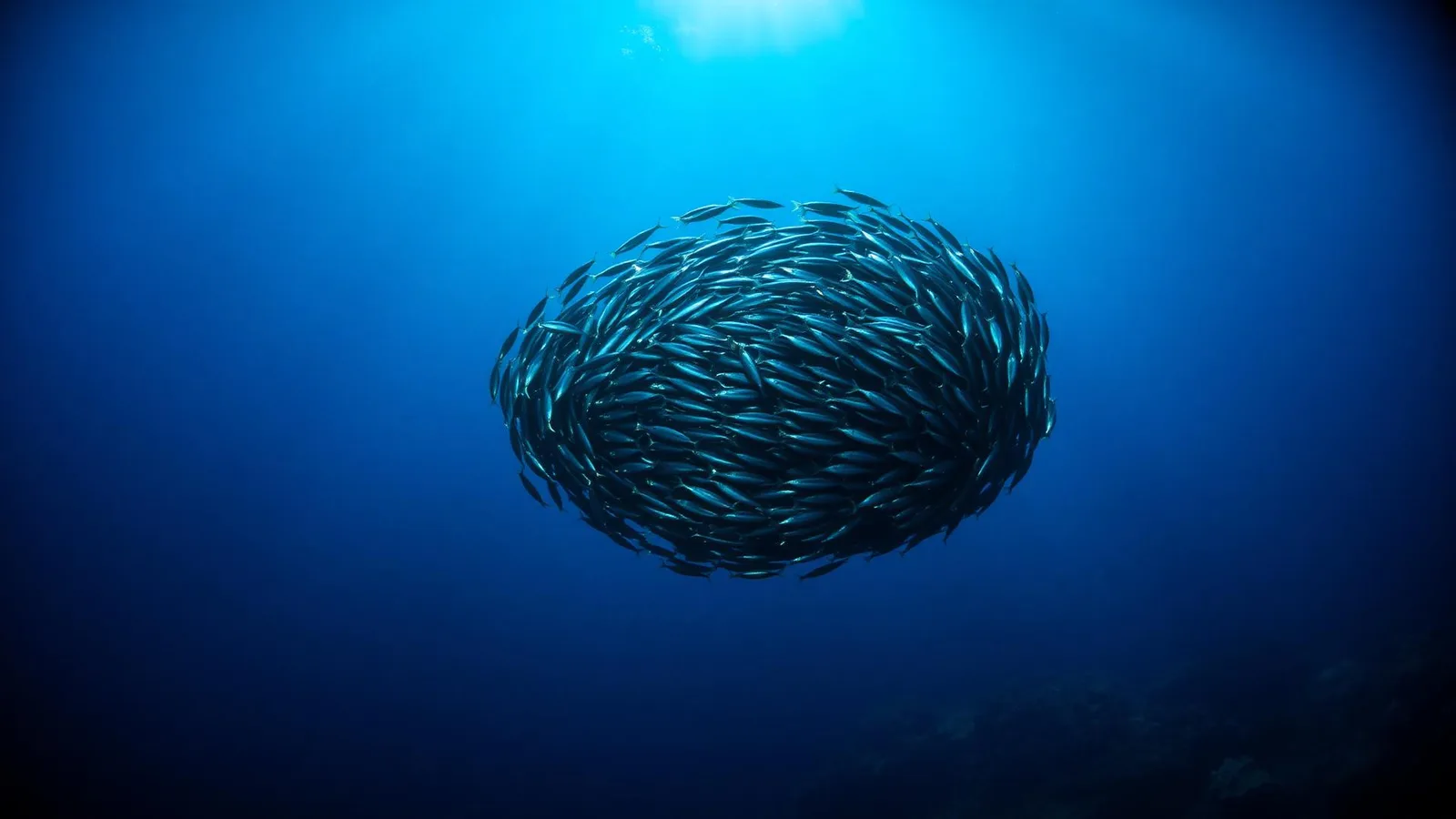
The central scientific question about artificial reefs is deceptively simple: when fish aggregate around a deployed structure, does the total number of fish in the ecosystem increase (production), or are the same fish simply redistributed from natural habitats to the artificial structure (attraction)? The answer matters enormously for management. If artificial reefs primarily attract and concentrate fish from surrounding natural reefs, their deployment may harm fisheries by making fish easier to locate and catch — a phenomenon sometimes described as aggregation fishing — while providing no net ecosystem benefit. If they genuinely produce new fish by providing settlement habitat, food resources, and shelter previously absent from the water column above soft sediment, they represent a legitimate fisheries enhancement tool.
James Bohnsack, a NOAA fisheries biologist, framed this dichotomy most influentially in work that became foundational for the field. Bohnsack reviewed the rapid colonisation rates, high fish densities, and elevated catch per unit effort observed at artificial reefs and argued that these observations were equally consistent with attraction as with production. He proposed that habitat limitation, rather than population limitation, might be the mechanism at work: fish might move to artificial reefs because natural reef habitat was already saturated — which would support a production hypothesis — but the same observation was consistent with simple preference for novel structure independent of any population-level effect. His formal treatment of marine reserve applications to reef fisheries management established the critical governance principle that underpins all subsequent discussion: the conservation value of an artificial reef depends entirely on whether its aggregated fish population is protected from fishing or simply made more catchable [1].
The mathematical tools to formally decompose production and attraction effects were developed by Osenberg and colleagues in a 2002 *ICES Journal of Marine Science* paper that introduced a quantitative framework for attributing fish density changes at artificial reefs to each mechanism [2]. By combining demographic parameters — growth, mortality, and movement rates — with abundance surveys at both artificial and natural reefs, the framework could estimate what fraction of any observed density increase represented genuine population addition. Applied to data from several well-studied reef systems, the approach suggested that both mechanisms operate simultaneously, and that the balance between them varies substantially with reef design, location, and surrounding habitat context [2].
Brickhill, Lee, and Connolly elaborated this finding in a 2005 *Journal of Fish Biology* review that synthesised the methodological advances of the intervening years [3]. They identified two key design variables that shift the balance toward production: deploying artificial reefs in areas with genuine habitat deficits (i.e., above soft-sediment plains far from natural reef), and designing structures with sufficient internal complexity to support prey invertebrates as well as refuge space for fish. Structures deployed immediately adjacent to existing natural reefs in already habitat-rich environments are most likely to function primarily as attractors; those deployed in structurally impoverished environments have the greatest potential for genuine production gains [3].
Using Ecological Processes to Guide Design
Margaret Miller's 2002 *ICES Journal of Marine Science* paper on ecological processes in artificial reef design synthesised the biological mechanisms that govern community succession on hard substrates and drew practical management implications [4]. Miller emphasised that artificial reef colonisation follows the same successional processes as natural reef development: pioneer invertebrate colonisers — bryozoans, hydroids, serpulid worms — create microhabitat complexity that supports secondary colonisers including sponges and soft corals, which in turn attract the fish communities that make reefs ecologically and economically productive.
The time required for this succession is not trivial. Newly deployed structures typically support fish communities within weeks, but the encrusting invertebrate communities that underpin reef trophic structure require years to decades to approach the complexity of natural reefs. Management decisions — particularly whether to protect artificial reefs from fishing during this succession phase — have substantial effects on the trajectory of community development. Miller argued that artificial reefs should be conceived not as static objects but as habitats whose management must evolve in parallel with their ecological development [4].
Structural rugosity — the three-dimensional surface complexity of a reef — is the single strongest architectural predictor of fish community diversity and abundance. High-complexity structures with voids, overhangs, and narrow passages provide refuge from predators for juvenile fish, creating de-facto nursery habitat that enhances recruitment. This has driven the development of purpose-designed reef units — hexagonal concrete modules, reef balls, and proprietary custom designs — that maximise surface area and internal complexity relative to construction cost. Simple concrete blocks or rubble piles, while functionally superior to bare sediment, underperform purpose-designed modules on virtually every biological metric.
The USS Oriskany: Environmental Preparation in Practice
The Oriskany's preparation before sinking was the most comprehensive environmental remediation ever applied to a vessel in US waters and reflects the US Environmental Protection Agency's Best Management Practices for Preparing Vessels Intended to Create Artificial Reefs, finalised in 2006. Over four years preceding the sinking, contractors removed approximately 700 tons of hazardous material: polychlorinated biphenyls (PCBs) from electrical cables and capacitors, asbestos from insulation and fireproofing materials, petroleum residues from fuel tanks, and heavy metals from paint systems and machinery.
The PCB contamination required formal ecological risk assessment and EPA approval under the Toxic Substances Control Act. The assessment determined that residual PCB concentrations in material that could not be economically removed posed acceptable ecological risks at the planned depth and location, given dilution, sediment burial, and the bioavailability limitations of PCBs bound within sealed steel matrices. The approval was conditional and controversial, with environmental groups arguing that residual contamination represented an unacceptable long-term risk to the benthic communities that would colonise the hull.
Decade-long biological monitoring of the Oriskany has produced results that broadly match predictions for a large, complex structure deployed in relatively habitat-poor sandy substrate. Fish species richness and biomass at the site substantially exceed reference soft-sediment sites and compare favourably with natural low-relief limestone reefs in the region. Spawning aggregations of red snapper (*Lutjanus campechanus*) have been documented at the site — ecologically significant because snapper aggregation sites in the Gulf of Mexico are limiting habitat for a commercially important and historically overfished species. Whether these aggregating individuals represent fish attracted from elsewhere or new recruits supported by the site's prey resources has not been formally resolved — mirroring the broader production-attraction uncertainty that Osenberg et al. formalized [2].
The MUSA: Artificial Reefs as Art
At the far end of the artificial reef design spectrum lies the Museo Subacuático de Arte (MUSA) off Cancún, Mexico — an underwater sculpture garden of approximately 500 life-size human figures created by British sculptor Jason deCaires Taylor and installed at depths of four to eight metres adjacent to the Cancún National Marine Park. MUSA represents a deliberate fusion of cultural ecotourism and reef creation: the sculptures are purpose-designed to promote coral colonisation through a high-pH marine concrete substrate.
By design, MUSA serves multiple functions simultaneously. As an artistic installation, it draws snorkellers and divers away from the adjacent natural reef system, reducing anthropogenic pressure on the park's coral communities. As an artificial reef, it has developed measurable fish communities and coral encrustation since the first installations in 2009. As a conservation communication tool, it has generated substantial international media coverage for the Cancún reef system and for marine conservation broadly.
The biological outcomes are modest compared to the ambitions: at depths of four to eight metres, the sculptures are within the zone most affected by tourist wave action, sunscreen contamination, and eutrophication from coastal runoff. Coral colonisation has been patchy, and fish community diversity remains lower than comparable natural reef at the site. However, the reduction of diving pressure on the natural park reef — the primary conservation objective — appears to have been partially achieved, with tour operators reporting that MUSA sites account for a significant fraction of diver visits that would otherwise concentrate on the natural reef system.
Environmental Preparation Protocols: What the Science Requires
The lessons from the Oriskany, MUSA, and several decades of artificial reef science have been consolidated into increasingly rigorous preparation and siting protocols. Key guidance from the US EPA, NOAA, and the International Artificial Reef Conference addresses four core domains.
Hazardous material removal is non-negotiable for vessels. Oil, PCBs, asbestos, tributyltin antifouling paint, and ammunition must be removed or sealed before sinking. For non-vessel structures, the absence of leachable contaminants from construction materials — particularly recycled materials such as fly ash concrete and coal combustion products — must be verified through standardised leachate testing protocols. Several early artificial reef programmes used coal ash as a structural material under the assumption that compaction would prevent leaching; subsequent studies found elevated heavy metal concentrations in overlying sediments and biological tissue, leading to moratoriums on ash-based reef materials in multiple jurisdictions.
Siting must balance ecological opportunity with navigation safety, fisheries management objectives, and sediment stability. Structures deployed in areas of strong bottom currents risk burial under sand migration; those in shipping lanes create navigation hazards; those directly adjacent to existing high-quality natural reefs may function primarily as attractors rather than producers [3]. A habitat deficit analysis — assessing whether the proposed site area lacks hard substrate that would otherwise limit fish population size — is increasingly required as part of the permitting process in well-governed jurisdictions.
Monitoring requirements have been strengthened following high-profile failures of early programmes that deployed materials without ever subsequently assessing biological outcomes. Standard monitoring protocols now include baseline surveys of benthic community composition before deployment, followed by annual fish and invertebrate surveys using consistent methodology — typically video-based or SCUBA visual census — for a minimum of five to ten years post-deployment.
Fishing management integration is perhaps the most critical and most frequently neglected element. An artificial reef without associated fishing restrictions in areas of high fishing pressure is, as Bohnsack's body of work established, likely to function as a fish aggregating device that facilitates sequential depletion of the attracted community [1]. Jurisdictions that zone artificial reefs as no-take areas during an initial succession phase — transitioning to managed access once community development has stabilised — consistently report better long-term ecological outcomes than those with unrestricted access from day one [4].
The Balance Sheet
Artificial reefs and wreck scuttling occupy a scientifically legitimate, ecologically conditional, and enormously popular niche in marine conservation and recreation. Under the right conditions — habitat-poor deployment sites, thorough environmental preparation, purpose-designed structural complexity, protected access during succession, and integration with broader fisheries management — they demonstrably increase local fish biodiversity and abundance and provide genuine ecosystem services. Under the wrong conditions — proximity to existing natural reefs, inadequate hazardous material removal, unrestricted fishing access from deployment — they can concentrate fish for easier harvest, leach contaminants into sensitive benthic communities, and create false confidence that engineering can substitute for habitat protection.
The production-versus-attraction question, first given mathematical rigour by Osenberg et al. [2] and synthesised by Brickhill et al. [3], has not been definitively resolved at the population level — and may never be, given the logistical difficulty of tracking individual fish movements across the landscape scales involved. What the accumulated science does firmly establish is that both mechanisms operate, the balance between them is determined by design and governance choices made before and after deployment, and the conservation value of any artificial reef is therefore determined not by the biology of colonisation but by the management decisions surrounding it.
The diver ascending from a wreck covered in gorgonian fans, schooling fish, and encrusting sponges is witnessing a genuine ecological phenomenon — hard structure in a featureless seabed demonstrably transforms the biological community above it. What the science asks us to resist is the automatic inference that this transformation constitutes conservation gain. Whether it does depends on decisions made in planning offices and fisheries management councils — not on the spectacular biology of colonisation itself.
References
- [1] Bohnsack, J. A. (1998). Application of marine reserves to reef fisheries management. Australian Journal of Ecology, 23(3), 298–304. doi:10.1111/j.1442-9993.1998.tb00734.x
- [2] Osenberg, C. W., St. Mary, C. M., Wilson, J. A., & Lindberg, W. J. (2002). A quantitative framework to evaluate the attraction–production controversy. ICES Journal of Marine Science, 59(Suppl.), S214–S221. doi:10.1006/jmsc.2002.1222
- [3] Brickhill, M. J., Lee, S. Y., & Connolly, R. M. (2005). Fishes associated with artificial reefs: attributing changes to attraction or production using novel approaches. Journal of Fish Biology, 67(Suppl. B), 53–71. doi:10.1111/j.0022-1112.2005.00915.x
- [4] Miller, M. W. (2002). Using ecological processes to advance artificial reef goals. ICES Journal of Marine Science, 59(Suppl.), S27–S31. doi:10.1006/jmsc.2001.1162