
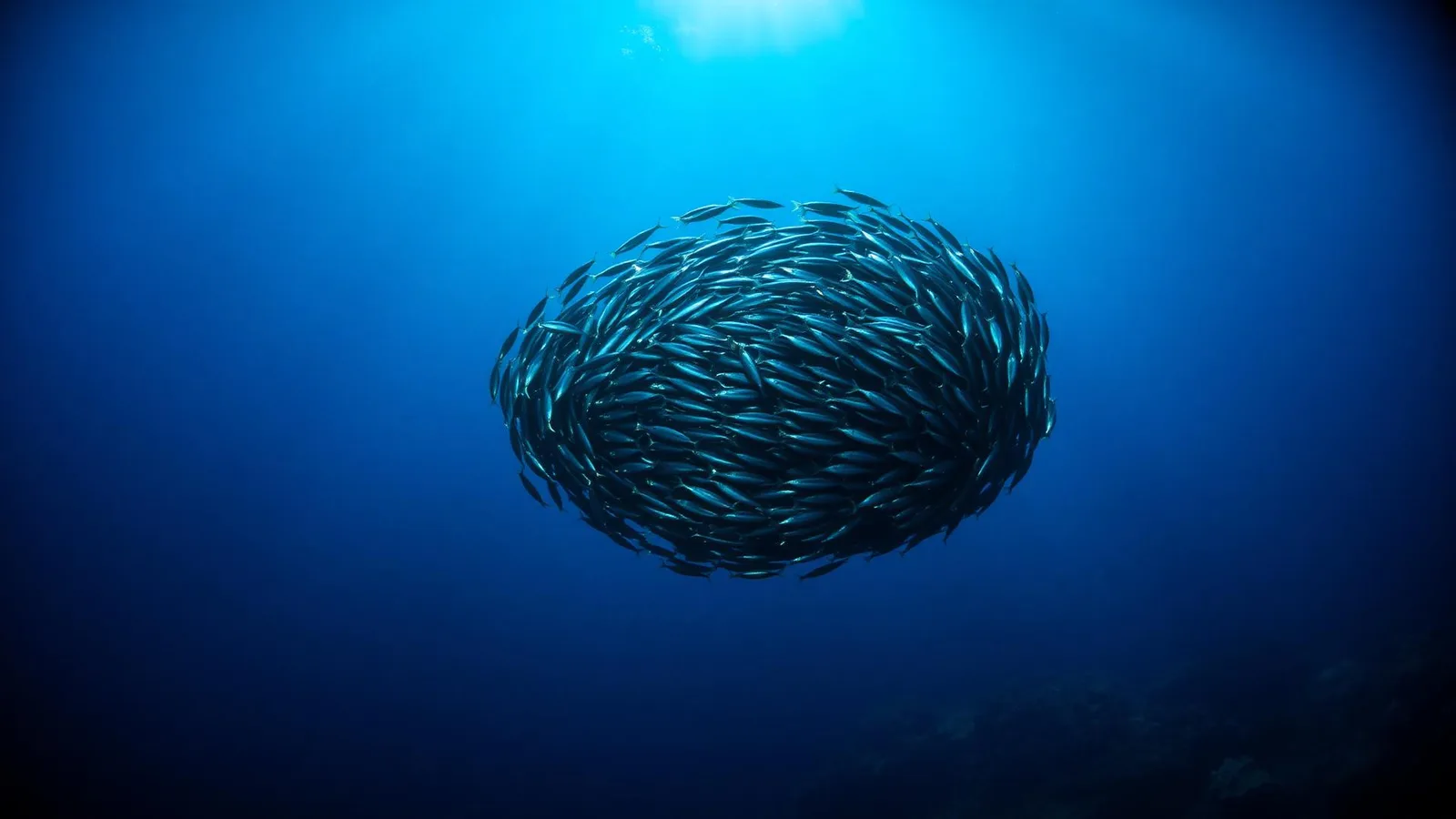
- Provisioning changes short-term site fidelity of individual sharks — but 20 years of telemetry work in Fiji, Bahamas, Palau and French Polynesia does not show population-scale nutritional dependency.
- Shark tourism is worth roughly USD 314 million per year globally (Cisneros-Montemayor et al. 2013) and has driven real national shark-protection laws in the Bahamas, Palau, Fiji, Honduras and Maldives.
- Fuvahmulah is unusual: the tuna-processing food subsidy pre-dates the dive tourism, and the site now hosts one of the world's largest tiger-shark photo-ID datasets (~350+ individuals).
- The International Shark Attack File shows no correlation between provisioning programmes and elevated unprovoked-attack rates on non-participants in the same regions.
- Responsible-provisioning best practice: fixed deep stations, guide-fed, low-frequency, photo-ID audited, embedded in a legal shark-protection regime.
Few practices in the diving world divide the community as sharply as shark feeding and shark baiting. On one side sit the operators, marine biologists and shark-conservation NGOs who point to twenty years of reliable encounter data, funded research, dropped fin-trade prices and — in some regions — measurable local policy wins driven by shark-tourism revenue. On the other side sit behavioural ecologists who worry about conditioning, altered movement patterns, dependency, and the risk that tourists interpret a fed shark as a wild shark. The Maldivian island of Fuvahmulah — now widely known as the world's most reliable place to dive with tiger sharks — has become the newest and most contested case study in this debate. This article synthesises the peer-reviewed literature from Fuvahmulah, the Bahamas, Fiji, Palau and South Africa, avoids activist talking points on either side, and reports what the data actually show.
1. What we mean by 'shark feeding'
The literature distinguishes at least three distinct interaction types that are often lumped together in the popular press. Provisioning is the deliberate offering of food to sharks — usually chum, tuna heads or fish scraps — and it is what most divers imagine when they picture 'shark feeding'. Baiting uses scent or a small teaser to attract sharks without necessarily rewarding them with a swallow. Chumming is broadcast attraction — a scent trail without a defined feeding point. Meyer, Dhellemmes, Guttridge and colleagues, in a widely-cited 2021 review in *Fish and Fisheries*, argue that conflating these three has produced years of confused policy debates [1].
2. Fuvahmulah — the Maldivian tiger-shark case
Fuvahmulah is a single, isolated atoll at the southern tip of the Maldives. Since roughly 2014 local operators have run a daily dive at the harbour outflow ('Tiger Zoo') where the island's tuna processing produces waste that has, for decades, attracted tiger sharks (*Galeocerdo cuvier*). The Maldives banned all shark fishing in 2010, giving the population one of the highest legal protections in the Indian Ocean. Photo-ID work by the Maldivian NGO Miyaru and by the Fuvahmulah Dive School has now catalogued more than 350 individually identified tigers using the site — one of the largest tiger-shark photo-ID datasets globally [2].
Two mechanisms operate in parallel at Fuvahmulah, and it is important not to confuse them. The first is the *industrial food subsidy*: cleaning stations on the harbour wall discharge tuna offal every day whether tourism happens or not. The second is the *dive-guide bait*: a small piece of fish held by the guide during the dive to keep animals in view. Peer-reviewed monitoring of Fuvahmulah is still limited — a 2024 paper by Anderson & Waheed reports high site fidelity and low individual dispersion, but concedes the causal role of the tuna discharge cannot yet be separated from natural upwelling around the atoll [3].
3. Does provisioning change shark behaviour long-term?
This is the sharpest question in the literature. The most-cited longitudinal study remains Brunnschweiler & Barnett (2013), tracking bull sharks (*Carcharhinus leucas*) at the Shark Reef Marine Reserve in Fiji using acoustic telemetry across a season with feeds and one without [4]. Their finding is nuanced: individual sharks showed higher residency at the feed site during feeding days, but their broader home-range and diel patterns did not collapse — sharks continued to travel, feed naturally and occupy the same seasonal ranges. A 2019 follow-up by Brunnschweiler and Baensch replicated the finding with a longer time-series [5].
Gallagher, Vianna, Papastamatiou and co-authors reviewed 47 studies of shark provisioning across the Bahamas, Australia, Fiji, Palau and French Polynesia in a 2015 *Biological Conservation* synthesis [6]. Their conclusions:
- Provisioning reliably increases short-term site fidelity — sharks show up when they expect food.
- There is no consistent evidence, across species, that provisioned sharks become nutritionally dependent on tourism food. The energetic contribution is usually a small fraction of daily intake.
- Where provisioning changes habitat use it can also change vulnerability — sharks that concentrate near tour boats may be easier to fish illegally in adjacent waters without regulation.
- There is no evidence linking provisioning to increased shark bites on non-participating swimmers in the same region.
4. The Bahamas experiment — a shark economy
The most economically studied shark-feeding programme is Tiger Beach in the Bahamas. Haas, Fedler & Brooks (2017) estimated the shark-tourism industry generated USD 113.8 million per year for the Bahamian economy at the time of study, with a substantial share attributable to feeding-based dives [7]. Bahamas has protected all shark species in its EEZ since 2011 (Bahamas National Trust Act amendment). Vianna and colleagues (2012) made a similar economic case for Palau, where a single reef shark was calculated to be worth USD 1.9 million over its lifetime in tourism revenue versus about USD 108 dead — a ratio that has been repeatedly used to argue for shark protection in the region [8].
The value of a shark to the tourism industry vastly exceeds its value as a landed catch. In Palau a single reef shark is worth approximately 1.9 million USD in tourism revenue over its lifetime.— Vianna, Meekan, Pannell, Marsh & Meeuwig, 2012 — *Biological Conservation*
5. Safety: is shark feeding making shark dives more dangerous?
The International Shark Attack File (ISAF, Florida Museum) has published multiple summaries showing that provisioned-shark encounters do not correlate with elevated unprovoked-attack rates in the same regions — including the Bahamas, Fiji and French Polynesia [9]. Where incidents have occurred inside feeding programmes, they are almost always classified as *provoked* rather than *unprovoked* by ISAF definitions. Fuvahmulah has recorded incidents, mostly involving fishing waste rather than dive briefings — a subtle distinction that matters when weighing risk.
6. What responsible feeding looks like — the emerging protocol
A pragmatic consensus is beginning to emerge in the peer-reviewed record and in operator codes of conduct. The Shark Specialist Group of the IUCN and Project AWARE both now recommend the same core principles [10]:
- Fixed, deep-water feeding stations — never surface baiting where swimmers or paddlers can appear.
- Guides feed, divers observe. Divers never hold bait.
- Feed volume is capped at a small fraction of the average daily energetic requirement of the target species.
- Feeds happen at a low, seasonal frequency where possible — not every dive, every day, every hour.
- Photo-ID monitoring is mandatory, ideally with independent researchers auditing the dataset annually.
- The programme is linked to a legal shark-protection regime (an EEZ ban, an MPA, a permit system) — not standalone.
7. Fuvahmulah revisited: what the evidence supports
Given the current dataset, the defensible position on Fuvahmulah tiger-shark diving is neither uncritical enthusiasm nor blanket condemnation. The site meets several of the responsible-provisioning criteria: sharks are protected nationally, individuals are photo-ID'd, feeding is deep and structured, and the food subsidy is largely industrial rather than tourism-driven. What is not yet clear from published work is the medium-term effect on tiger-shark reproduction and dispersal at population scale — the animals ranging into Fuvahmulah come from a wide Indian-Ocean range and dedicated satellite-tagging work is still underway [3].
For divers choosing whether to book a Fuvahmulah trip, the question is therefore not 'is it right or wrong' but 'is the operator following the emerging protocol'. Operators that publish their photo-ID contributions, use fixed feeding points and cooperate with Miyaru or the Maldives Whale Shark Research Programme sit clearly on the defensible side of the current science.
8. Bottom line
Two decades of research have shifted the shark-feeding debate from ideological to empirical. Provisioning does change short-term behaviour — that is uncontroversial. It does not, according to the best current evidence, cause population-scale dependency, elevated attack rates on non-participants, or the collapse of natural predatory behaviour. It has, however, funded protection, driven policy change and given millions of divers a reason to advocate for animals they would otherwise never encounter. In the specific Fuvahmulah case, the ongoing tuna-processing food subsidy makes the site a genuine natural laboratory, and the emerging protocols suggest a defensible middle path — provided operators follow them and researchers keep watching.
References
- [1] Meyer L., Barry C., Araujo G., Barnett A., Brunnschweiler J.M., Chin A., Dudgeon C., Hussey N.E., Guttridge T.L., Simpfendorfer C., Meekan M.G., Huveneers C. (2021). "A trophic hierarchy for provisioned sharks." Fish and Fisheries. doi:10.1111/faf.12592
- [2] Miyaru (Maldives Marine Research Institute NGO) (2023). "Maldives shark photo-ID open database." Miyaru.org. https://miyaru.org
- [3] Anderson R.C., Waheed A. (2024). "Site fidelity and residency of tiger sharks (Galeocerdo cuvier) at Fuvahmulah, Maldives." Journal of the Marine Biological Association of the UK. doi:10.1017/S0025315424000335
- [4] Brunnschweiler J.M., Barnett A. (2013). "Opportunistic visitors: long-term behavioural response of bull sharks to food provisioning in Fiji." PLOS ONE. doi:10.1371/journal.pone.0058522
- [5] Brunnschweiler J.M., Baensch H. (2011). "Seasonal and long-term changes in relative abundance of bull sharks from a tourist shark feeding site in Fiji." PLOS ONE. doi:10.1371/journal.pone.0016597
- [6] Gallagher A.J., Vianna G.M.S., Papastamatiou Y.P., Macdonald C., Guttridge T.L., Hammerschlag N. (2015). "Biological effects, conservation potential, and research priorities of shark diving tourism." Biological Conservation. doi:10.1016/j.biocon.2015.01.007
- [7] Haas A.R., Fedler T., Brooks E.J. (2017). "The contemporary economic value of elasmobranchs in The Bahamas: reaping the rewards of 25 years of stewardship and conservation." Biological Conservation. doi:10.1016/j.biocon.2017.01.007
- [8] Vianna G.M.S., Meekan M.G., Pannell D.J., Marsh S.P., Meeuwig J.J. (2012). "Socio-economic value and community benefits from shark-diving tourism in Palau: a sustainable use of reef shark populations." Biological Conservation. doi:10.1016/j.biocon.2011.11.022
- [9] International Shark Attack File (2024). "Yearly worldwide shark attack summary." Florida Museum of Natural History, University of Florida. https://www.floridamuseum.ufl.edu/shark-attacks/yearly-worldwide-summary/
- [10] IUCN Shark Specialist Group (2022). "Code of Conduct for Shark and Ray Tourism." IUCN SSG. https://www.iucnssg.org/