
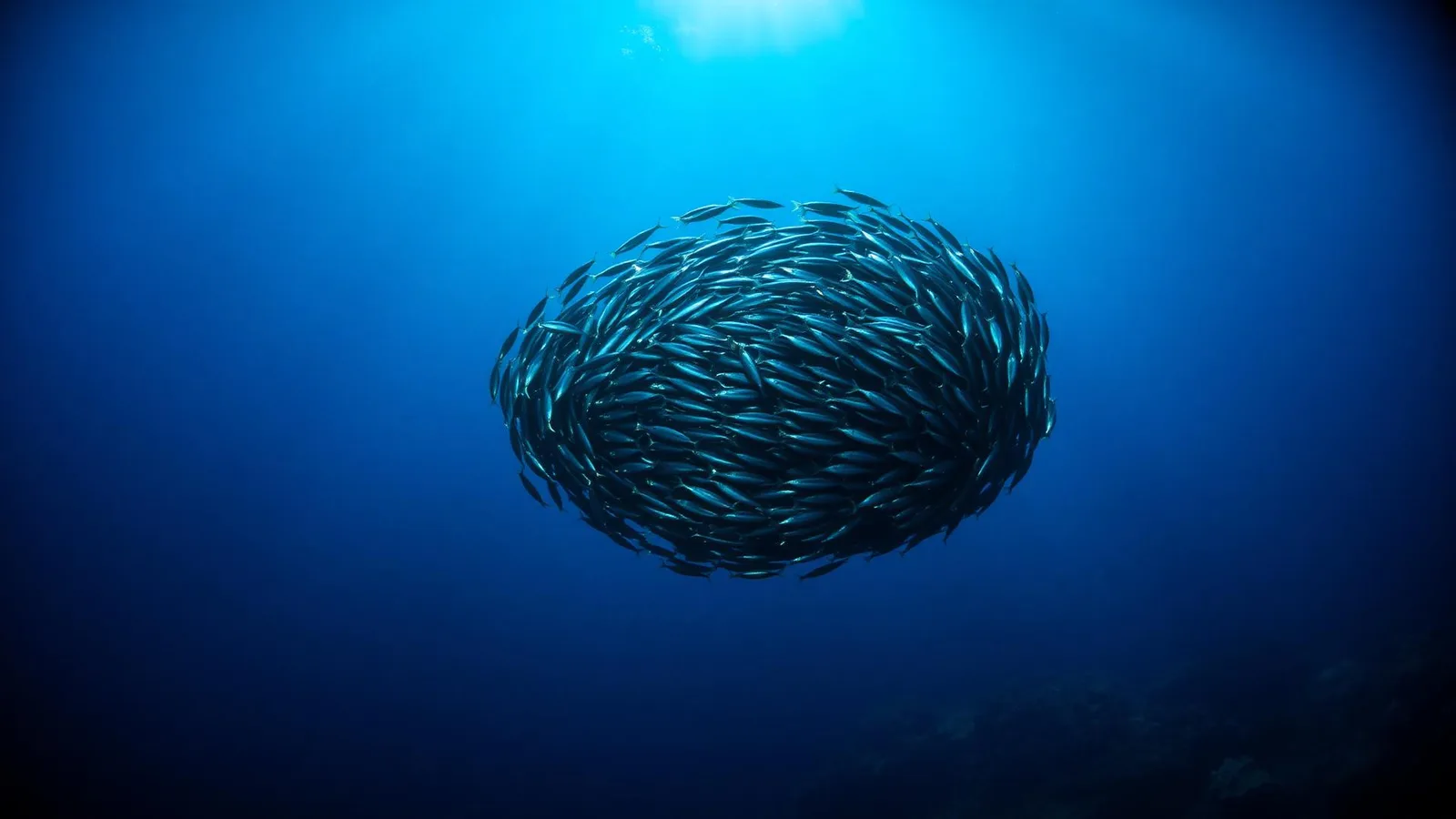
- ENSO operates through the Walker Circulation; El Niño flattens the Pacific thermocline, spiking SSTs across the central and eastern Pacific and into the Indian Ocean.
- The 2015–16 El Niño triggered the third global coral bleaching event, killing approximately 50% of shallow corals in the northern Great Barrier Reef.
- Under high-emissions scenarios, extreme El Niño events are projected to double in frequency, shortening reef recovery windows to sub-decadal intervals.
In the late 1990s, fishermen along the Peruvian coast noticed that the anchovy schools had vanished and the sea felt unnaturally warm. What they were experiencing was the opening act of the 1997–98 El Niño, soon to be called the climate event of the twentieth century — an event that would kill an estimated 16% of the world's reef-building corals in a single year [4]. The phenomenon behind that catastrophe, the El Niño–Southern Oscillation (ENSO), is a coupled ocean-atmosphere mode that oscillates across the tropical Pacific on a 2–7 year cycle, alternating between warm (El Niño) and cool (La Niña) phases. For divers, understanding ENSO is not academic: it determines whether the reef they paid to fly across the world to visit will be a living cathedral of colour or a bleached, algae-smothered ruin. Three of the most destructive mass coral bleaching events in recorded history — 1997–98, 2015–16, and 2023 — coincided with El Niño peaks [1]. Climate models now project that extreme El Niño events will double in frequency under high-emissions scenarios [2], meaning the interval between catastrophic thermal stress events at many dive destinations is shrinking faster than reef recovery rates allow. This article traces the mechanics of ENSO from the equatorial Pacific's thermocline to the specific dive destinations most affected, drawing on the latest peer-reviewed science.
The Walker Circulation: Engine of ENSO
Under normal (ENSO-neutral) conditions, the Walker Circulation drives easterly trade winds across the tropical Pacific, piling warm surface water against the maritime continent of Indonesia and the western Pacific. This warm pool — spanning an area larger than the continental United States — sits atop a sharply tilted thermocline, the boundary layer between warm surface water and cold deep water. In the eastern tropical Pacific, the thermocline sits only 20–50 m below the surface, allowing cold, nutrient-rich water to upwell along the South American coast and around the Galápagos Archipelago. This upwelling drives the extraordinary productivity that supports the Galápagos's iconic marine megafauna.
El Niño: When the Warm Pool Migrates East
El Niño begins when the trade winds weaken — often triggered by a stochastic atmospheric perturbation — initiating a powerful positive feedback loop known as the Bjerknes feedback. As trade winds relax, warm water flows eastward, suppressing the eastern Pacific thermocline and elevating sea surface temperatures (SSTs) by 1–3°C across the central and eastern Pacific. The atmospheric convection that normally anchors over Indonesia shifts toward the central Pacific, altering rainfall patterns across six continents. In the Indo-Pacific, SSTs in the Indian Ocean frequently rise 1–2°C above normal during mature El Niño years, exposing reef systems that sit far outside the direct ENSO epicentre to lethal thermal stress [4].
La Niña: The Overcorrection
La Niña represents the cool, opposite phase of ENSO, characterised by anomalously strong trade winds, a deeper western Pacific thermocline, and enhanced upwelling in the east. For divers, La Niña generally brings cooler, clearer water and stronger thermoclines in upwelling regions like the Galápagos and Peru. Reef bleaching risk is reduced during La Niña phases, though not eliminated — background ocean warming means that even neutral years now deliver SST anomalies that would have qualified as mild El Niño conditions two decades ago [2].
Three Landmark Events That Rewrote Reef Science
1997–98: The Climate Event of the Twentieth Century
The 1997–98 El Niño produced the strongest SST anomalies in the instrumental record up to that point. A pan-tropical thermal footprint stretched from the Maldives and Indian Ocean through the Pacific to the Caribbean. Claar et al. [4] synthesised data from 43 studies and found that coral bleaching severity correlated directly with El Niño intensity, with the Indo-Pacific bearing the heaviest burden. An estimated 16% of all coral reef cover was destroyed globally in this single event. Dive sites that had been pristine for decades — in the Maldives, Seychelles, and across the Coral Triangle — lost decades' worth of framework in months.
2015–16: The Third Global Coral Bleaching Event
The 2015–16 El Niño, combined with the long-term trend of ocean warming, triggered what the scientific community recognised as the third global coral bleaching event, following 1997–98 and 2010. Hughes et al. [1] conducted aerial and underwater surveys across 2,300 km of the Great Barrier Reef and found that 93% of individual reefs experienced some degree of bleaching, with approximately half of the shallow-water coral cover in the northern third of the reef killed outright. Hughes et al. [1] noted that bleaching was occurring at temperatures ~1°C lower than it had in the 1990s — not because corals had become more sensitive, but because they were being exposed again before fully recovering from previous events. In the Indian Ocean, the Maldives, Chagos, and Seychelles saw catastrophic losses. Galápagos eastern reefs, by contrast, were partly buffered by localised cold-water upwelling.
2023: A New Benchmark
The 2023 El Niño developed against the hottest ocean background in the instrumental record. Global mean SSTs surpassed previous records almost continuously from April 2023 through mid-2024 [6]. NOAA Coral Reef Watch declared the fourth global bleaching event in 2024, with bleaching documented across 77% of the world's tropical reef areas — a coverage unprecedented in the observational era. The event demonstrated that even a moderate El Niño, superimposed on an already warmer baseline ocean, can generate catastrophic bleaching conditions that would previously have required a record-breaking El Niño to achieve [2].
ENSO's Fingerprint on Three Iconic Dive Destinations
The Galápagos Archipelago
The Galápagos sits at the confluence of three major ocean currents: the cold Humboldt Current from the south, the Panama Current from the north, and the deep, cold Cromwell (Equatorial Undercurrent) flowing from the west. During La Niña and ENSO-neutral conditions, upwelling of Cromwell Current water drives the productivity that supports the archipelago's famous marine iguanas, penguins, sea lions, and Galápagos sharks. El Niño events suppress this upwelling by deepening the thermocline. During the 1982–83 and 1997–98 events, the Galápagos experienced catastrophic coral bleaching and mass mortality, and sea lion pup survival collapsed as prey fish disappeared. The 2015–16 event was partially buffered at some northern sites by localised upwelling that attenuated heat stress, illustrating the importance of mesoscale oceanographic refugia [5]. Divers visiting the Galápagos during El Niño years should anticipate warmer, less productive water, reduced megafauna aggregations, and elevated bleaching risk on already limited reef structures.
Indonesia's Coral Triangle
Indonesia lies within the Coral Triangle, a 6-million km² region encompassing the highest marine biodiversity on Earth. The western equatorial Pacific is the origin of the ENSO warm pool, meaning Indonesia's oceanic conditions are intimately tied to ENSO phase. During El Niño, the warm pool shifts east, and surface SSTs in some parts of the Indonesian Archipelago may actually cool slightly as the warm pool migrates. However, the 2015–16 event produced anomalous warming even within the warm pool itself, causing bleaching in the Bird's Head Seascape, Raja Ampat, and Komodo — sites that had previously been considered relatively resilient [4]. The impact of ENSO on the Coral Triangle is heterogeneous: Banda Sea upwelling sites may experience different stress patterns than the sheltered Coral Sea reefs of eastern Indonesia.
The Great Barrier Reef
The GBR is Australia's most studied reef system and has become the global index site for ENSO-driven bleaching research. McGowan et al. [3] showed that ENSO-phase weather patterns — through their effects on cloud cover, wind mixing, and insolation — substantially modulate SST and bleaching risk across the GBR, particularly in the northern sections where trade wind variability is greatest. The 2016 bleaching documented by Hughes et al. [1] was the most severe in recorded history for the GBR, driven by a combination of El Niño SST anomalies and the long-term warming trend. A subsequent bleaching event in 2020 — during a La Niña year — underscored that background warming alone is now sufficient to trigger severe events even without El Niño amplification [7].
The Diver's Experience Across the ENSO Cycle
- El Niño: Shallower thermoclines at some sites, warmer surface water, bleached or stressed corals, reduced fish and invertebrate aggregations in upwelling-dependent areas.
- La Niña: Stronger thermoclines, colder upwelling water at Galápagos and Socorro, higher productivity, better visibility in some regions, reduced bleaching risk.
- ENSO-neutral: Generally stable conditions; plan dives around this phase for best marine life encounters at upwelling destinations.
- All phases: Background ocean warming means baseline temperatures are now 0.5–1.0°C above 20th-century averages at most tropical dive sites — El Niño anomalies are additive on top of this already-elevated floor.
Climate Change and the Future of ENSO
Cai et al. [2] used a 21-model CMIP5 ensemble to project that extreme El Niño events — defined by a pronounced eastward extension of the warm pool and a rainfall shift to the central Pacific — will approximately double in frequency under the RCP8.5 high-emissions pathway, occurring roughly once every 10 years rather than once every 20 years. This projection carries profound implications for reef recovery. Hoegh-Guldberg et al. [5] calculated that reefs require at least 10–15 years of non-bleaching conditions to recover structural complexity after a severe event; at doubled El Niño frequency, recovery would be chronically incomplete. Kwiatkowski et al. [7] further projected that under SSP5-8.5, tropical ocean pH will decline and stratification will increase, compounding thermal stress with acidification pressure on the same reef systems.
The question is no longer whether climate change will affect coral reefs, but how much coral will survive the coming decades of repeated thermal stress events.— Hoegh-Guldberg et al., Science, 2007 [5]
Planning Dives Around ENSO
NOAA's Climate Prediction Center issues ENSO outlooks at 3-, 6-, and 9-month lead times. The NOAA Coral Reef Watch Degree Heating Week (DHW) product integrates SST anomalies over time to provide real-time bleaching risk assessments at more than 200 virtual stations globally. Divers planning high-value trips to ENSO-sensitive destinations — Galápagos, Cocos Island, GBR, Maldives — should consult both the ENSO phase forecast and current DHW values before booking. La Niña or ENSO-neutral windows typically offer the most stable, productive conditions at upwelling sites.
References
- [1] Hughes, T.P., Kerry, J.T., Álvarez-Noriega, M. et al. (2017). Global warming and recurrent mass bleaching of corals. Nature. doi:10.1038/nature21707
- [2] Cai, W., Borlace, S., Lengaigne, M. et al. (2014). Increasing frequency of extreme El Niño events due to greenhouse warming. Nature Climate Change. doi:10.1038/nclimate2100
- [3] McGowan, H.A. et al. (2017). ENSO weather and coral bleaching on the Great Barrier Reef, Australia. Geophysical Research Letters. doi:10.1002/2017GL074877
- [4] Claar, D.C., Szostek, L., McDevitt-Irwin, J.M., Schanze, J.J., Baum, J.K. (2018). Global patterns and impacts of El Niño events on coral reefs: A meta-analysis. PLOS ONE. doi:10.1371/journal.pone.0190957
- [5] Hoegh-Guldberg, O., Mumby, P.J., Hooten, A.J. et al. (2007). Coral reefs under rapid climate change and ocean acidification. Science. doi:10.1126/science.1152509
- [6] Frölicher, T.L., Fischer, E.M., Gruber, N. (2018). Marine heatwaves under global warming. Nature. doi:10.1038/s41586-018-0383-9
- [7] Kwiatkowski, L., Torres, O., Bopp, L. et al. (2020). Twenty-first century ocean warming, acidification, deoxygenation, and upper-ocean nutrient and primary production decline from CMIP6 model projections. Biogeosciences. doi:10.5194/bg-17-3439-2020
- [8] Oliver, E.C.J. et al. (2021). Marine heatwaves. Annual Review of Marine Science. doi:10.1146/annurev-marine-032720-095144