
- Aquaculture now provides more than half of all seafood consumed globally, according to FAO SOFIA 2022.
- Naylor et al. (2000) demonstrated that farming carnivorous species like salmon requires large inputs of wild fish for feed, potentially increasing rather than reducing pressure on marine resources.
- Approximately 23% of global fishmeal and 74% of fish oil production is consumed by the aquaculture sector.
- Atlantic salmon farming is associated with sea lice infestations, chemical treatments, wild salmon interactions, and escape events.
- Mangrove forests covering an area larger than Switzerland were cleared globally for shrimp aquaculture between the 1980s and 2000s.
- Integrated Multi-Trophic Aquaculture (IMTA) and Aquaculture Stewardship Council (ASC) certification represent credible pathways toward more sustainable production.
The blue revolution has arrived. Global aquaculture production now exceeds 90 million tonnes per year, surpassing wild capture fisheries as the primary source of seafood for human consumption — a historic milestone reached in the early 2020s that would have seemed implausible a generation ago. The Food and Agriculture Organization reported in its 2022 SOFIA that aquaculture provided 57% of total fisheries and aquaculture production destined for human consumption [1]. For a world population expected to reach 10 billion by 2050, aquaculture is widely promoted as an essential tool for delivering protein without further depleting wild fish populations. But the sector's environmental record is mixed, and its rapid growth has brought with it a suite of ecological problems that require rigorous scientific scrutiny and honest public communication.
The Fishmeal Problem: Wild Fish Inputs to Farmed Fish
The central environmental paradox of aquaculture is that farming carnivorous fish species requires large inputs of wild-caught fish to produce the fishmeal and fish oil that constitute their feed. Atlantic salmon, seabream, seabass, yellowtail, and other high-value farmed species are naturally predatory; in the wild they consume small fish, crustaceans, and zooplankton. Replicating this diet in aquaculture feed requires the harvest of forage fish — anchoveta, sand lance, sprat, herring, and other small schooling species — that are ground into fishmeal protein concentrate and rendered into fish oil. Naylor et al. (2000) first systematically documented this dependency in a landmark *Nature* review, finding that farming carnivorous species could reduce rather than increase net marine protein availability if the wild fish inputs exceeded the farmed fish output on a protein-equivalent basis [2].
The fish-in:fish-out ratio — the weight of wild fish required to produce one unit of farmed fish — varies substantially by species and feed composition. For Atlantic salmon in 1990s conditions, estimates ranged from 2:1 to 5:1 by weight. Improvements in feed efficiency and substitution of plant-based proteins (soy, wheat, canola) for fishmeal have reduced these ratios substantially over the past two decades, and most contemporary Norwegian salmon production operates with fish-in:fish-out ratios below 1:1 by weight for the fishmeal component. However, fish oil substitution is more difficult because its content of long-chain omega-3 fatty acids (EPA and DHA) — the key nutritional reason consumers choose salmon — cannot be replicated by plant oils without compromising the health benefits of the product. This means that even as fishmeal dependency falls, fish oil dependency remains a structural feature of high-value carnivorous aquaculture.
Forage Fish Ecosystems at Risk
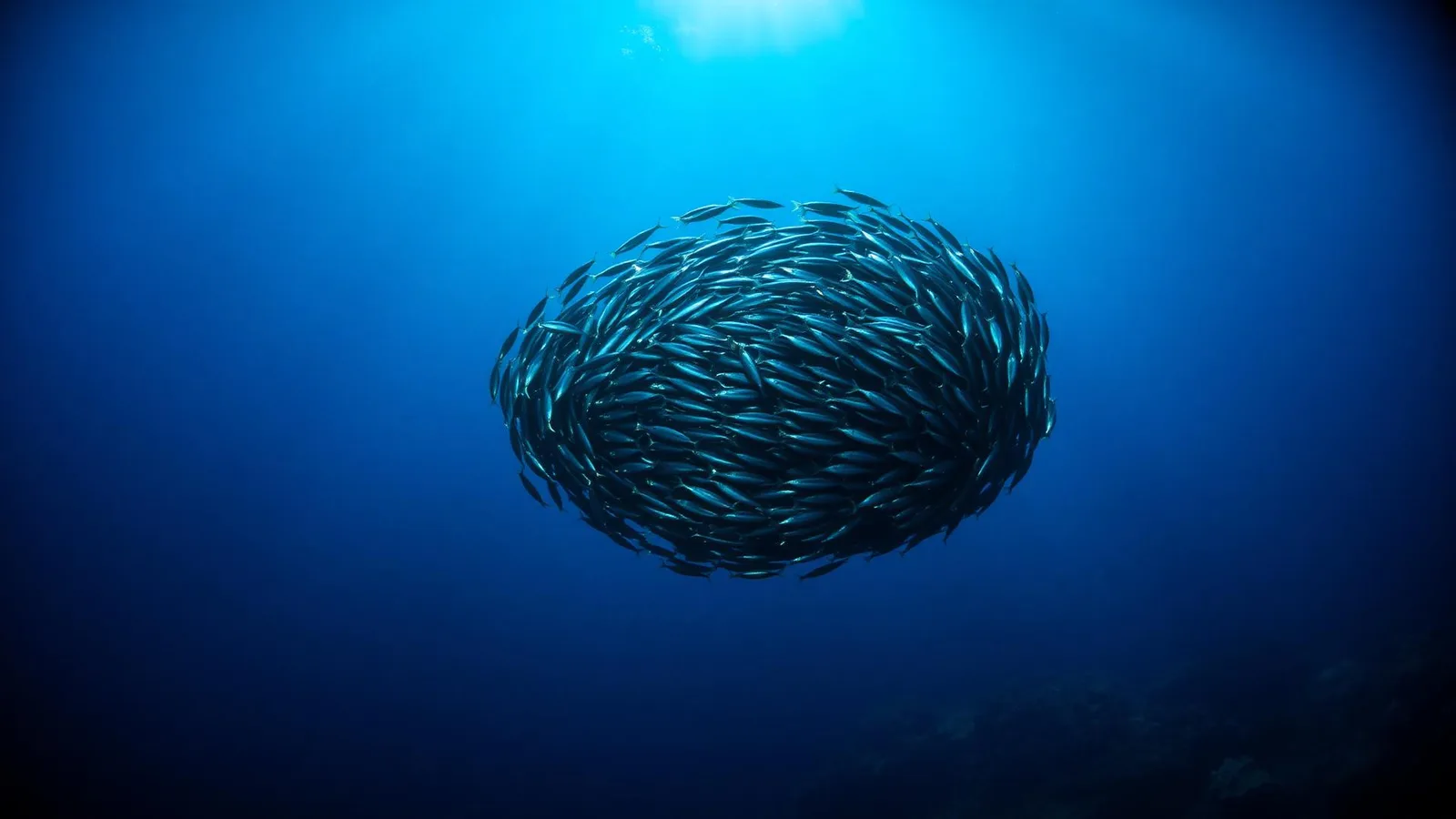
The forage fish consumed by aquaculture feed mills are not nutritionally redundant organisms. Forage fish occupy a critical middle position in marine food webs — they are the primary link between the phytoplankton and zooplankton that form the base of oceanic productivity and the large predators (tuna, sharks, seabirds, marine mammals, humans) that depend on them. The anchovy fisheries of the Humboldt Current off Peru and Chile, the sand lance of the North Sea, and the herring of the Norwegian Sea all support ecosystems of staggering biological richness. The diversion of these species into fishmeal is not simply a matter of redirecting a protein stream; it is the removal of a foundational ecological resource.
Froehlich et al. (2018) modelled the ecological limits of forage fish for fed aquaculture, finding that if current consumption trajectories continue, the extraction of forage fish for aquaculture feed could exceed ecologically sustainable limits within the mid-twenty-first century [3]. Troell et al. (2014) argued that the aquaculture sector's resilience to food system shocks is limited precisely because of its dependency on wild fish inputs that are themselves subject to climate variability and overexploitation — creating a coupled vulnerability across the farmed and wild sectors [4]. The search for alternative feed ingredients — including insect meal (particularly black soldier fly larvae), microalgae-derived omega-3 oils, single-cell proteins, and precision-fermented ingredients — is a major active area of aquaculture research and industry investment.
Salmon Aquaculture: Lice, Escapes, and Chemical Pollution
Atlantic salmon (*Salmo salar*) aquaculture is among the most economically significant and environmentally scrutinised forms of aquaculture globally. Norway, Scotland, Chile, and Canada are the dominant producers, collectively farming approximately 2.7 million tonnes per year. The industry faces several persistent environmental challenges, of which sea lice (*Lepeophtheirus salmonis* and *Caligus* spp.) are perhaps the most acute. Sea lice are ectoparasitic copepods that naturally occur on wild salmonids at low levels but reach epidemic densities on the crowded fish in open-net pens, where they feed on mucus, skin, and blood, causing lesions, impaired osmoregulation, immune suppression, and mortality.
The ecological concern extends beyond farmed fish welfare. Open-net salmon farms are located along coastlines used by migratory wild salmon and sea trout, and the lice clouds that emanate from farms can infect wild fish passing nearby — particularly vulnerable juvenile wild salmon migrating to sea for the first time. Studies in Norway and Ireland have documented correlations between farm density on fjord and river systems and reductions in wild salmonid returns. The industry's responses — chemical treatments (emamectin benzoate, deltamethrin, hydrogen peroxide baths), biological controls (cleaner fish such as wrasse and lumpfish), and laser-based lice removal systems — impose their own environmental costs including impacts on non-target crustaceans, chemical residues in sediments, and welfare concerns for the cleaner fish.
Mangrove Loss for Shrimp Aquaculture
Mangrove forests are among the most biodiverse and ecologically productive coastal ecosystems on Earth. They serve as nursery habitat for enormous numbers of marine species including commercially important fish and crustaceans, filter land-derived pollution before it reaches coastal waters, stabilise shorelines against wave erosion and storm surge, and store some of the highest densities of blue carbon of any ecosystem on the planet. They are also the ecosystem most devastated by the global shrimp aquaculture boom.
From the 1970s onward, shrimp aquaculture expanded explosively through Southeast Asia and Central America, driven by growing global demand for low-cost farmed shrimp. The primary method of establishing shrimp ponds — extensive coastal ponds filled with brackish water — required clearing existing coastal vegetation, and mangroves were overwhelmingly the vegetation cleared. Polidoro et al. (2010) assessed mangrove extinction risk globally and found that overall mangrove forest cover had declined by approximately 20% globally between 1980 and 2005, with losses particularly concentrated in Southeast Asian countries where shrimp aquaculture expansion was fastest [5]. Naylor et al. (2000) specifically identified mangrove conversion as a key mechanism by which aquaculture reduces net marine ecological services, counteracting any food security benefit [2].
The legacy of this conversion is not only ecological. Mangrove clearing for shrimp ponds has also contributed to coastal community vulnerability in ways that have become tragically apparent during major weather events. The 2004 Indian Ocean tsunami killed substantially more people in areas where mangroves had been cleared for shrimp farms than in areas where mangrove belts remained intact — a natural experiment in coastal protection that has driven renewed interest in mangrove restoration among both conservation organisations and disaster risk management agencies.
Disease, Chemicals, and Ecosystem Impacts
High-density aquaculture facilities are inherently disease-prone environments. The proximity of large numbers of genetically similar animals in enclosed or semi-enclosed water bodies creates ideal conditions for pathogen amplification and transmission. White spot syndrome virus in shrimp, infectious salmon anaemia (ISA) in Atlantic salmon, and koi herpesvirus in carp are among the dozens of diseases that have caused catastrophic production losses in global aquaculture, sometimes decimating regional industries. The prophylactic and therapeutic use of antibiotics in aquaculture — particularly in shrimp, salmon, and pangasius farming in parts of Asia — has raised concerns about the development of antimicrobial resistance in aquatic bacteria and in the human pathogens that share environments with aquaculture operations.
The accumulation of uneaten feed, fish faeces, and chemical treatments beneath and around open-net aquaculture facilities can cause local benthic oxygen depletion (hypoxia), sediment enrichment, and associated loss of benthic biodiversity — a problem termed benthic impact that is well-documented beneath salmon farms in Scottish and Norwegian fjords. Naylor et al. (2000) catalogued these localised impacts alongside the broader food web effects in their original critique of the sector, and subsequent decades of research have confirmed and extended their analysis [2]. The degree of impact depends heavily on farm siting — farms placed in areas of strong tidal flushing show much lower benthic impact than those in slow-flushing bays — which has led to improved siting criteria in many regulatory regimes.
Integrated Multi-Trophic Aquaculture (IMTA)
Integrated Multi-Trophic Aquaculture (IMTA) is an approach to farm design that deliberately combines multiple species at different trophic levels in the same system, allowing the waste products of one species to become the food or fertiliser for another. In the most common salmon-based IMTA model, Atlantic salmon are co-cultured with mussels or oysters (which filter the organic particles in salmon waste), and with kelp or sea lettuce (which absorbs the dissolved inorganic nutrients excreted by fish and shellfish). The result is a system in which the environmental footprint of the salmon operation is reduced while additional commercial products are generated — mussels, oysters, and kelp all have commercial markets. IMTA systems have been piloted in Norway, Canada, Scotland, and China, with demonstrated reductions in benthic impact and nutrient loading.
Troell et al. (2014) identified IMTA as one of a suite of innovations that could enhance the ecological resilience of the aquaculture sector if adopted at scale, alongside improvements in feed efficiency, land-based recirculating aquaculture systems (RAS), and selective breeding for disease resistance [4]. The challenge is economic: IMTA systems are operationally more complex than monoculture, markets for by-product species (particularly kelp in Western markets) are less developed, and the regulatory frameworks that govern aquaculture frequently do not accommodate multi-species operations cleanly. Nevertheless, IMTA represents one of the most ecologically coherent frameworks for reducing the environmental intensity of aquaculture production.
Certification and the ASC
The Aquaculture Stewardship Council (ASC), established in 2010 as a partnership between the World Wildlife Fund and the Dutch Sustainable Trade Initiative (IDH), provides the most widely recognised third-party certification scheme for responsibly farmed seafood. ASC standards cover environmental performance (feed sourcing, chemical use, effluent management, disease management, escapes prevention, impact on local ecosystems and wild species) and social performance (worker rights, community relations). As of the mid-2020s, ASC-certified aquaculture production encompasses more than 1.4 million tonnes of certified product annually across more than 20 species groups, including Atlantic salmon, shrimp, tilapia, bivalves, and pangasius.
ASC certification is not without critics. Some researchers and NGOs argue that certification standards are insufficiently stringent, particularly on issues such as wild fish inputs in feed, sea lice management, and the use of antibiotics. The ASC's standard-setting process involves industry stakeholders in ways that critics argue can weaken environmental requirements. Nevertheless, ASC certification provides a structured incentive for continuous improvement and delivers market differentiation for producers committed to higher environmental standards — a mechanism that, in combination with regulatory oversight, can drive incremental progress. The FAO's 2022 SOFIA highlighted certification schemes as important tools for communicating sustainability credentials to consumers and retailers in an increasingly scrutinised global seafood market [1].
"Many people believe that the growth of aquaculture relieves pressure on ocean fisheries, but the opposite is true for some types of aquaculture." — Naylor et al., Nature, 2000 [2]
References
- [1] FAO (2022). The State of World Fisheries and Aquaculture 2022: Towards Blue Transformation. FAO. doi:10.4060/cc0461en
- [2] Naylor RL, Goldburg RJ, Primavera JH, et al. (2000). Effect of aquaculture on world fish supplies. Nature. doi:10.1038/35016500
- [3] Froehlich HE, Jacobsen NS, Essington TE, Clavelle T, Halpern BS (2018). Avoiding the ecological limits of forage fish for fed aquaculture. Nature Sustainability. doi:10.1038/s41893-018-0077-1
- [4] Troell M, Naylor RL, Metian M, et al. (2014). Does aquaculture add resilience to the global food system?. Proceedings of the National Academy of Sciences. doi:10.1073/pnas.1404067111
- [5] Polidoro BA, Carpenter KE, Collins L, et al. (2010). The Loss of Species: Mangrove Extinction Risk and Geographic Areas of Global Concern. PLOS ONE. doi:10.1371/journal.pone.0010095
- [6] Froehlich HE, Runge CA, Gentry RR, Gaines SD, Halpern BS (2018). Comparative terrestrial feed and land use of an aquaculture-dominant world. Proceedings of the National Academy of Sciences. doi:10.1073/pnas.1801692115
- [7] Worm B, Hilborn R, Baum JK, et al. (2009). Rebuilding Global Fisheries. Science. doi:10.1126/science.1173146
- [8] Pauly D, Christensen V, Guénette S, et al. (2002). Towards sustainability in world fisheries. Nature. doi:10.1038/nature01017
- [9] Sala E, Mayorga J, Bradley D, et al. (2021). Protecting the global ocean for biodiversity, food and climate. Nature. doi:10.1038/s41586-021-03371-z