Sobre Blue House
Blue House Garden é um local de mergulho único localizado em Roatán, Honduras, especialmente conhecido a uma profundidade de 60 pés (18 metros). Embora os detalhes específicos sobre a sua topografia mais ampla não estejam extensamente documentados, faz parte da paisagem subaquática diversificada de Roatán, que inclui paredes vertiginosas, recifes vibrantes e formações complexas. O local é reconhecido pela sua característica distinta, talvez caprichosa, mencionada nos relatos dos mergulhadores. Os recifes de Roatán geralmente apresentam uma topografia dramática com paredes, desfiladeiros e fendas, sustentando um ecossistema rico. As profundidades ao redor da ilha atendem a vários níveis de mergulho, oferecendo topos de recife rasos e seções de parede mais profundas. A vida marinha nas Ilhas da Baía é abundante, com diversas populações de peixes, esponjas impressionantes e formações de coral exuberantes. Os encontros podem incluir cavalos-marinhos, lagostas, polvos e cardumes de peixes de recife coloridos. O mergulho em Roatán é geralmente acessível, com muitos locais adequados para vários níveis de certificação, muitas vezes caracterizados por temperaturas de água confortáveis. Embora as informações específicas sobre as correntes para Blue House Garden não sejam detalhadas, os locais de mergulho de Roatán geralmente experimentam correntes de leves a moderadas, dependendo da localização e das condições. As operações de cruzeiro de mergulho geralmente permitem vários mergulhos por dia, proporcionando ampla oportunidade para explorar locais como este.
Destaques
Jardins subaquáticos únicosNotável a uma profundidade de 60 pésTopografia de recife diversificadaVida marinha abundantePotencial para encontros mágicos
Calendário por mês
Melhores meses para mergulhar
Jan
Fev
Mar
Abr
Mai
Jun
Jul
Ago
Set
Out
Nov
Dez
Excelente
Bom
Ficha do ponto de mergulho: Blue House
- Corrente
- Fraca a Forte depending on site e tide
- Visibilidade
- 10–40 m
- Temperatura da água
- 24–31 °C
- Entrada
- Barco / Live drop / Stationary
- Nível
- Todos os níveis
- Tipo de mergulho
- Recife, Parede, Canyon
- Mergulho noturno
- Possible (on request)
- Região / porto
- Roatan, Bay Islands, Honduras
- Coordenadas
- 16.3107, -86.5155
Condições e correntes
As correntes em Roatán são geralmente suaves, o que proporciona condições de mergulho relaxantes, embora alguns locais possam apresentar correntes mais fortes, especialmente quando as marés estão a entrar ou a sair, as quais podem ser muito intensas. Tu deves estar ciente de que as correntes de saída podem ser perigosas se não forem geridas adequadamente, pois nadar contra elas pode ser difícil. As técnicas de entrada e saída são frequentemente baseadas em barco, com opções para entradas estacionárias em amarras ou descidas ao vivo para mergulhos à deriva, dependendo do local. A visibilidade é consistentemente boa, variando de 10 a 40 metros, mas pode ser reduzida durante a estação chuvosa devido a sedimentos agitados, o que, por outro lado, pode atrair vida marinha maior. Termoclinas não são mencionadas de forma proeminente como um fator importante nas fontes para Roatán. Tu deves sempre prestar muita atenção aos briefings de mergulho, especialmente para mergulhos à deriva, para entender a direção da corrente e o procedimento de entrada/saída.
Vida marinha e probabilidade de avistamento

Parrotfish
frequente
Angelfish
frequente
Butterflyfish
frequente
Seahorses
ocasional
Nudibranchs
ocasional
Rays
frequente
Reef sharks
ocasional
Barracudas
ocasional
Groupers
frequente
Jacks
frequente
Sea turtles
ocasional
Lobsters
frequente
Shrimps
frequente
Octopus
frequenteFotografia subaquática
Roatan's clear waters, often exceeding 30 meters visibility, create ideal conditions for underwater photography, particularly during the dry season from March to October. Wide-angle lenses are recommended to capture the expansive coral formations, steep walls, and vibrant reef scenes characteristic of the Mesoamerican Barrier Reef. For macro subjects such as seahorses, nudibranchs, and various shrimps, a macro lens will highlight intricate details. Consistent lighting is usually available, but external strobes or video lights can enhance colors and reduce backscatter, especially in deeper areas or under overhangs. Maintaining excellent buoyancy is crucial to avoid disturbing the healthy coral and sand, ensuring respectful interaction with marine life and preserving visibility. Divers should prioritize non-invasive photography, refraining from touching or chasing animals to get a shot.
Combine com estes pontos
- Satoshi’s Grave
Satoshi’s Grave é um local de naufrágio distinto localizado na costa sul de Roatan, especificamente o naufrágio do Sr.
- Addie's Garden
Addie's Garden é um dos 350 locais de mergulho e snorkel situados em redor de Roatan, nas Honduras, dentro do Sistema de Barreira de Corais…
- Blackish Point
Blackish Point é um mergulho cativante em paredão costeiro com deriva, localizado no lado norte de Utila, oferecendo uma combinação única…
- Butcher's Bank
Butcher's Bank é um local de mergulho celebrado em Roatán, Honduras, amplamente considerado um dos mais agradáveis da ilha, especialmente…
- Wreck of the Aguila
O Naufrágio do Aguila, carinhosamente conhecido como 'A Águia', é um cargueiro de 60 metros (200 pés) afundado propositalmente em 1997 para…
- Al's Garden
Al's Garden é um notável ponto de mergulho localizado em Roatán, parte das Ilhas da Baía de Honduras, uma região famosa pela sua vibrante…
Como chegar e logística
Roatan is accessible via international flights to Juan Manuel Gálvez International Airport (RTB). Dive trips typically involve day boat excursions from various resorts and dive centers located along the island's West Bay, West End, and Sandy Bay areas. A common dive schedule includes a two-tank morning dive returning around noon, followed by an optional single-tank afternoon dive. Night dives can also be arranged with a minimum of four divers and 48-hour notice. Roatan Marine Park fees apply, often purchased as a $10 annual bracelet, which contributes to reef protection. Liveaboards also operate in the Bay Islands, offering broader access to the region. The island's dive operations emphasize short boat rides to sites, with many locations just minutes from shore.
Segurança e ambiente
Roatan Dive Center maintains a strong emphasis on diver safety, carrying DAN oxygen and first aid kits on all boats. Divers are expected to adhere to a responsible diver code, including maintaining excellent buoyancy, not touching corals or marine life, and using designated entry/exit points. Emergency evacuation protocols typically involve local medical facilities, with the nearest recompression chamber likely on the island or nearby. Divers are advised to have comprehensive dive insurance. Site-specific hazards include potentially strong currents, particularly when tides are moving in or out, which requires careful attention during dive briefings. Divers should always plan conservative dive profiles, including a 3 to 5-minute safety stop, and manage air consumption effectively, with maximum bottom times typically around 60 minutes.
Para quem serve — e para quem não
Indicado para
- New divers and those undergoing training
- Underwater photographers seeking clear water and varied subjects
- Families and mixed groups with snorkelers
- Divers desiring a relaxed, multi-dive day
- Those who appreciate healthy coral reefs
Menos indicado para
- Divers seeking extreme or highly challenging currents on every dive
- Those uninterested in reef ecology and conservation
- Budget travelers during peak season (December-February)
- Divers who prefer solitary dive experiences (can be crowded at peak times)
FAQ
FAQ Blue House
What marine life can I expect to see at dive sites around Roatan?
Dive sites in Roatan are rich with Caribbean marine life. You can commonly spot parrotfish, angelfish, butterflyfish, and various schools of jacks. Smaller creatures like seahorses and nudibranchs are present, alongside larger animals such as rays, groupers, barracudas, and occasional reef sharks and sea turtles. Lobsters, shrimps, and octopus are also guaranteed sightings at some locations.
What are the typical water temperatures and visibility conditions in Roatan?
Water temperatures in Roatan generally range from highs of 29-31°C from June through October, and lows of 24-27°C from January to April, with some January temperatures dropping to 22°C. Visibility is consistently good year-round, typically ranging from 10 to 40 meters, though it can extend to 36 meters during the dry season (March to May) and may reduce slightly during the rainy season.
Are there strong currents, and what do I need to know about them?
While many Roatan sites feature gentle conditions, some areas can experience very strong currents, particularly during tidal changes. Outgoing currents, in particular, can be dangerous as swimming against them is difficult. Dive briefings are essential for understanding specific current directions and appropriate entry, navigation, and exit procedures, especially for drift dives.
What are the best months to visit Roatan for diving?
Roatan is considered an excellent year-round diving destination. March through October, the dry season, offers warmer waters and the best visibility, often exceeding 30 meters, making it ideal for photographers. The wet season, November through February, still provides great diving, with the added potential for larger marine life attracted by stirred-up sediments, despite some rainfall.
How are dive trips typically organized in Roatan?
Most dive operations in Roatan offer two-tank morning dives, returning to shore around noon, followed by an optional single-tank afternoon dive. Night dives are available upon request, usually requiring a minimum of four divers and advance notice. Dive sites are typically chosen based on daily conditions and diver preferences, with an emphasis on short boat rides to minimize travel time.
What kind of dive training or experience is recommended for Roatan?
Roatan is suitable for divers of all levels, from beginners to experienced individuals. The generally calm conditions and healthy reefs make it an ideal location for new divers and those seeking training. However, experience with currents can be beneficial for certain sites, and advanced certifications may open up opportunities for deeper or more challenging dives.
Por que mergulhar em Blue House em liveaboard?
Blue House é um dos locais emblemáticos de Honduras. Um liveaboard te hospeda na água e oferece três a quatro mergulhos guiados por dia, incluindo amanhecer e noturnos raramente oferecidos por barcos diários. Você evita o retorno diário ao porto e alcança locais mais tranquilos da mesma região em uma única viagem.
Abaixo estão os liveaboards que incluem Blue House em seus itinerários por Honduras.
Liveaboards em Blue House
Estes liveaboards podem visitar Blue House em itinerários selecionados — os locais exatos dependem da partida, do tempo e das condições.
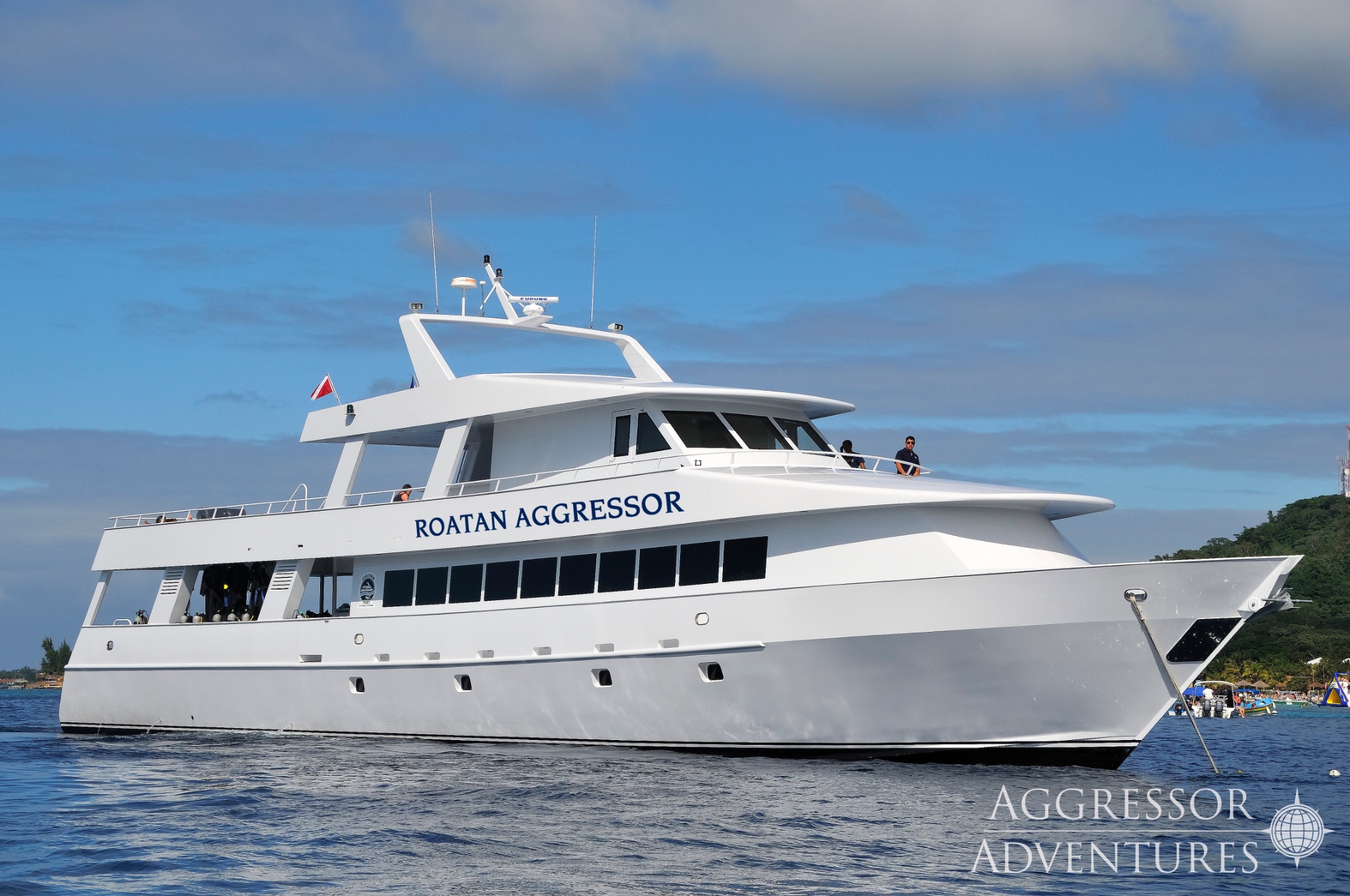
Roatan Aggressor
Honduras
18 hóspedes31.1 m
€272/dia
Locais de mergulho parecidos com Blue House
Mesmo carácter, mesmas águas: mais seis locais adorados pelos mesmos motivos.Compare épocas, acessos e rotas de liveaboard para escolher o local ideal para a sua viagem.
© Esri — Maxar, Earthstar, GIS
Satoshi’s Grave
Honduras
Satoshi’s Grave é um local de naufrágio distinto localizado na costa sul de Roatan, especificamente o naufrágio do Sr. Bud.
- Indicado para
- Iniciante
- Corrente
- Moderada
- Acesso
- Liveaboard ou barco diário
- Profundidade
- 18–18 m
- Tema
- Naufrágio / Recife
© Esri — Maxar, Earthstar, GIS
Jardim da Addie
Honduras
Addie's Garden é um dos 350 locais de mergulho e snorkel situados em redor de Roatan, nas Honduras, dentro do Sistema de Barreira de Corais Mesoamericano.
- Indicado para
- Intermediário
- Corrente
- Moderada
- Acesso
- Liveaboard ou barco diário
- Profundidade
- 5–30 m
- Tema
- Recife
© Esri — Maxar, Earthstar, GIS
Marie's Kitchen
Honduras
Marie's Kitchen é um local de mergulho situado nas Bay Islands de Honduras.
- Indicado para
- Intermediário
- Corrente
- Moderada
- Acesso
- Liveaboard ou barco diário
- Profundidade
- 5–30 m
- Tema
- Recife
© Esri — Maxar, Earthstar, GIS
Butcher's Bank
Honduras
Butcher's Bank é um local de mergulho celebrado em Roatán, Honduras, amplamente considerado um dos mais agradáveis da ilha, especialmente para mergulhadores novatos.
- Indicado para
- Iniciante
- Corrente
- Fraca
- Acesso
- Barco diário
- Profundidade
- 12–18 m
- Tema
- Recife
© Esri — Maxar, Earthstar, GIS
Naufrágio do Aguila
Honduras
O Naufrágio do Aguila, carinhosamente conhecido como 'A Águia', é um cargueiro de 60 metros (200 pés) afundado propositalmente em 1997 para criar um recife artificial dentro dos limites de mergulho recreativo.
- Indicado para
- Intermediário
- Corrente
- Fraca
- Acesso
- Barco diário
- Profundidade
- 20–33 m
- Tema
- Naufrágio / Recife
© Esri — Maxar, Earthstar, GIS
Jardim de Al
Honduras
Al's Garden é um notável ponto de mergulho localizado em Roatán, parte das Ilhas da Baía de Honduras, uma região famosa pela sua vibrante topografia subaquática e diversos ecossistemas marinhos.
- Indicado para
- Intermediário
- Corrente
- Moderada
- Acesso
- Liveaboard ou barco diário
- Profundidade
- 9–40 m
- Tema
- Recife