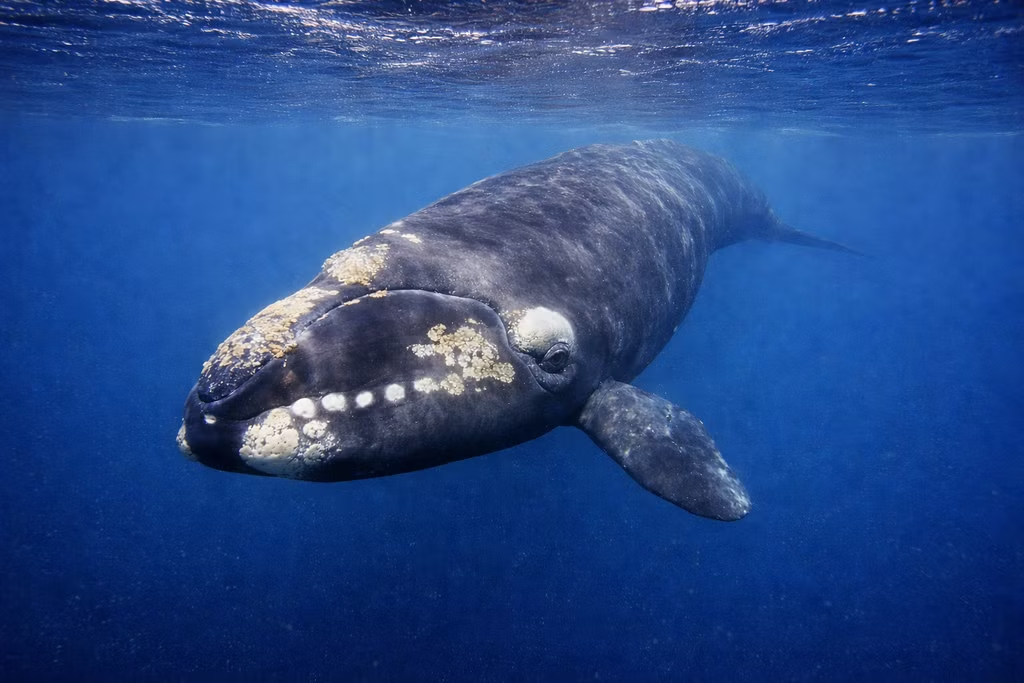
Maximize your chances of unforgettable encounters with these gentle giants of the Southern Hemisphere.
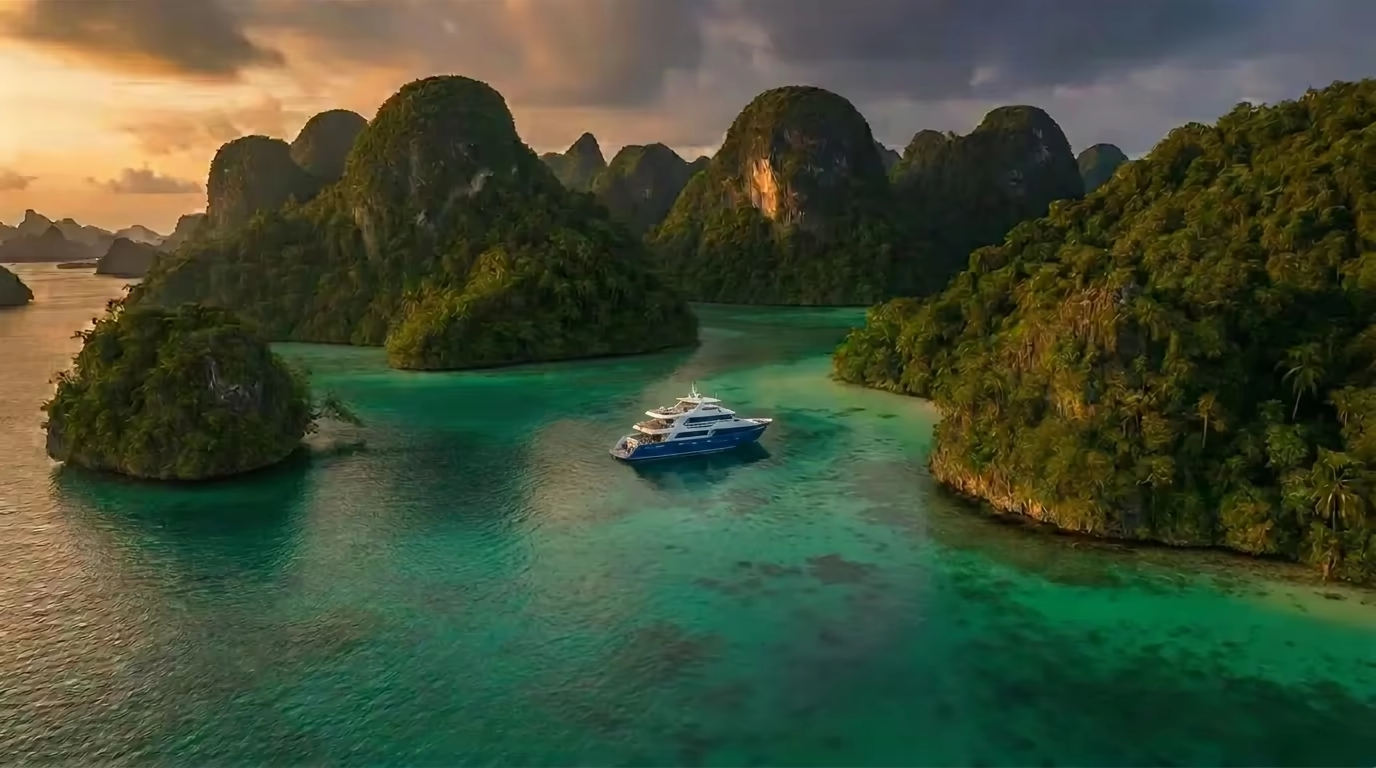
Finding a liveaboard dedicated solely to Southern Right Whales is a challenge, as their main aggregation sites are incredibly well-protected and typically served by land-based day boat tours. Key hotspots for reliable sightings include Hermanus in South Africa, Península Valdés in Argentina, and Australia’s southern coastline. While you won’t find liveaboards parked in these specific calving bays, certain expedition-style itineraries transit through their migratory routes, offering a potential—and truly breathtaking—bonus sighting during your dive trip.
A liveaboard’s primary advantage is its range. These vessels can operate for days or weeks in remote offshore waters that lie along whale migration corridors, far from the reach of daily operators. This extended time at sea, especially during the right season, simply increases the odds of a chance encounter. This list was curated not to feature trips *for* Southern Right Whales, but rather to highlight the best liveaboard expeditions in regions where your trip dates and their migration patterns might luckily overlap.
The best time to potentially see Southern Right Whales is during their breeding and calving season, which runs from roughly June to November. During these months, they leave their Antarctic feeding grounds and migrate to sheltered coastal waters. The most famous congregations are in South Africa, Argentina, and Australia. While liveaboards don't typically focus on these zones, itineraries for South Africa's Sardine Run (June/July) or expedition cruises departing for the sub-Antarctic islands later in the season offer the highest probability of an opportunistic sighting.
When evaluating a vessel for this potential bonus, look for one built for expedition travel. A high, spacious observation deck or flying bridge is paramount for spotting blows on the horizon. Fast-moving rigid inflatable boats (RIBs) or skiffs are essential, not for chasing wildlife, but for repositioning the group for respectful observation if an opportunity arises and regulations permit. Some expedition vessels carry a hydrophone, allowing you to listen for whale songs—an incredible experience in itself. From a diving perspective, a large, well-organized dive deck and nitrox availability are standard on the quality expeditions that travel these waters.
Because these are not dedicated whale trips, you should budget based on the primary itinerary. A South African Sardine Run liveaboard typically lasts 7-10 nights and costs between $4,000 and $7,000 USD. Longer expedition voyages heading toward the Antarctic Peninsula or sub-Antarctic islands like South Georgia are much longer, often 14-21 days, with prices ranging from $9,000 to over $20,000 USD. The possibility of a Southern Right Whale sighting is a priceless bonus, not a guaranteed part of the package.
Ethical encounters are governed by strict national and international laws. All reputable operators adhere to a passive observation model. This means maintaining a significant distance (often 100-300 meters), cutting engines, and letting the animals control the encounter. The biggest mistake is expecting an in-water experience; swimming with Southern Right Whales is illegal in almost all their breeding grounds. A pro tip is to bring a good pair of binoculars and a camera with a long telephoto lens to make the most of surface sightings from the mandated safe distance.
The world's most reliable spots for seeing Southern Right Whales—like Hermanus, South Africa, and Península Valdés, Argentina—are served by land-based day boats, not liveaboards. Liveaboard itineraries that travel through their migratory routes, such as South Africa's Sardine Run or Antarctic expeditions, offer a chance for an opportunistic sighting. These are bonus encounters on a trip focused on other marine life.
The peak season for Southern Right Whales in their coastal breeding grounds is June through November. Your best chance for a liveaboard encounter is during this window on a trip that intersects their migration paths. For example, a Sardine Run trip in South Africa during June or July offers a possibility, but sightings are entirely opportunistic and never guaranteed.
Whale encounters are typically surface-based, so your dive certification is not a factor for observation. However, the liveaboard itineraries that travel through their habitat, like the Sardine Run, often require an Advanced Open Water certification or higher due to challenging dive conditions like currents, depth, and cold water. Your certification level determines your eligibility for the diving portion of the trip.
As there are no dedicated itineraries, the cost is for the primary expedition. A South African Sardine Run trip, where sightings are possible, typically costs between $4,000 and $7,000 USD for a 7-10 night trip. Longer trans-ocean or sub-Antarctic voyages can cost upwards of $9,000. The whale sighting is a potential, priceless bonus, not a paid-for component of the trip.
No, encounters are absolutely not guaranteed. Southern Right Whales are wild, migratory animals in a vast ocean. Any sighting from a liveaboard is a matter of luck and perfect timing. Reputable operators will never promise a sighting and must follow strict regulations that forbid chasing or disturbing the animals. Appreciate any encounter as a rare and fortunate bonus.