
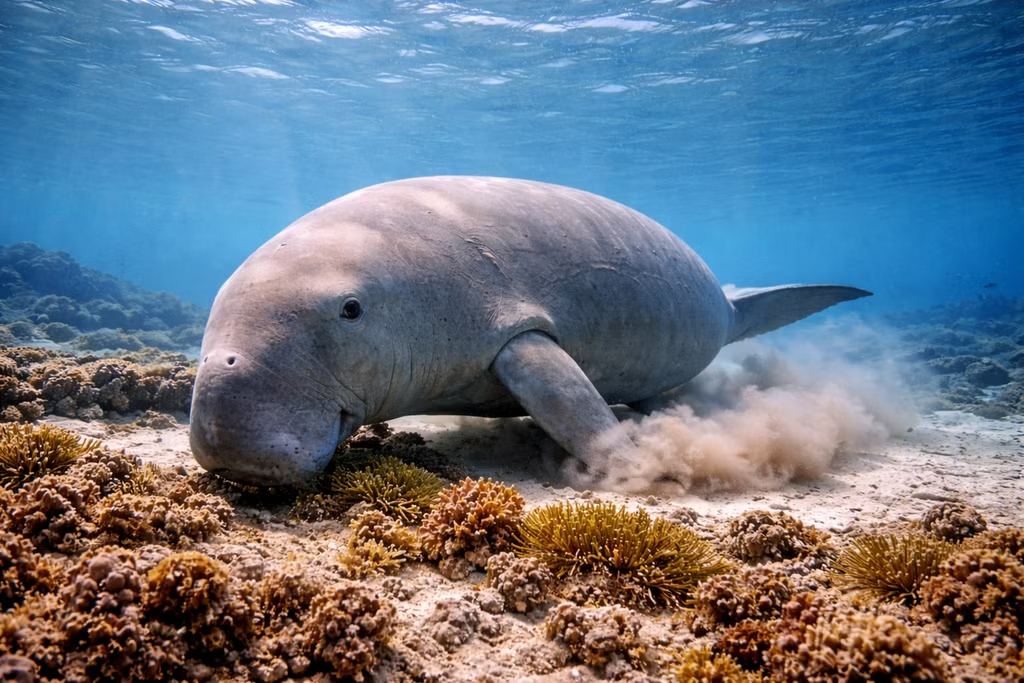
Boost your chances of a rare, respectful encounter with the ocean's gentle 'sea cows' on these specialized trips.
Seeing a dugong in the wild is a rare privilege, and a liveaboard is your best platform for making it happen. These shy marine mammals graze in remote seagrass beds, far from crowded day-trip areas. The most reliable destination for liveaboard-based encounters is, by a wide margin, the Southern Red Sea in Egypt. Itineraries focusing on the Fury Shoals, St. John's, and Marsa Alam areas specifically target the shallow, protected bays where dugongs are known to feed. While sightings are occasionally reported in places like Palawan in the Philippines, only Egypt offers dedicated itineraries where finding a dugong is a primary objective.
Not all liveaboards are suited for finding dugongs. It requires specific local knowledge and an itinerary that prioritizes spending time in shallow, sandy bays over deep reefs. The best vessels use zodiacs or skiffs for quiet, minimally-invasive approaches to seagrass areas. Experienced dive guides who can spot feeding trails and understand dugong behavior are crucial. This list was curated by selecting liveaboards in the Egyptian Red Sea with proven southern itineraries, experienced crews, and a strong focus on responsible, ethical marine life encounters.
The best region for liveaboard dugong encounters is the Southern Red Sea in Egypt. Sightings are possible year-round, but the periods from April to June and September to November offer the most comfortable surface conditions and water temperatures. These months avoid the peak summer heat and winter winds, making for a more pleasant trip overall and calmer seas for exploring the shallow bays where dugongs feed.
When choosing a vessel, look for those offering 'Southern Red Sea' or 'St. John's' itineraries. Range is key, as these trips venture far from the main ports. A boat with spacious and sturdy zodiacs (RIBs) is essential, as these are used to quietly transport divers to the shallow seagrass meadows, minimizing disturbance. While not used for 'chasing', they are critical for access. A large dive deck makes gearing up for these specific excursions smoother. Nitrox is highly recommended; since you'll be in shallow water (5-10 meters), it can significantly and safely extend your bottom time, maximizing your chance for a prolonged, passive observation if you are lucky enough to find a dugong.
Typical dugong-focused liveaboard trips in Egypt last for 7 nights. Prices generally range from $1,200 to $2,500 USD per person. This usually covers your accommodation, meals, standard drinks, tanks, weights, and around 3-4 dives per day. Exclusions typically include flights, visa fees, dive gear rental, nitrox fills, crew gratuities, and mandatory marine park or port fees, which can add another $100-$200 to the total cost.
Dugongs are protected and shy. Ethical encounters are non-negotiable. The golden rule is passive observation. Never chase, touch, or block a dugong's path. Approach slowly and quietly from the side, stay low, and avoid sudden movements or flash photography. A common mistake is crowding the animal; give it ample space and let it control the encounter. Pro tip: look for 'feeding trails' — distinct trenches in the sand where they have been grazing on seagrass. Staying calm and patient is your best strategy. Remember, an encounter is a privilege, not a guarantee.
The Southern Red Sea in Egypt is the most reliable place in the world for liveaboard encounters with dugongs. Specific itineraries visiting the sheltered bays and seagrass beds around Marsa Alam, Fury Shoals, and St. John's offer the highest probability. While other locations have dugong populations, they do not have liveaboards that specifically and reliably target them for divers. Choosing a 'South & St. John's' itinerary in Egypt is your best bet.
Encounters in the Red Sea are possible year-round. However, for the best overall conditions, consider booking between April-June and September-November. During these months, the air and water temperatures are pleasant, and the seas are generally calmer, which makes the journey south and the zodiac excursions to shallow bays more comfortable. Sightings depend on the animal's presence, not the season, but good weather helps maximize your opportunities.
Not necessarily for the dugong encounter itself. These typically occur in very shallow water (5-10 meters), well within the limits of an Open Water Diver certification. However, most Southern Red Sea itineraries also include deep walls and reefs at sites like St. John's or Elphinstone, which do require an Advanced Open Water certification. Always check the specific trip's certification requirements before booking, as it often applies to the itinerary as a whole.
A typical 7-night liveaboard in Egypt's Southern Red Sea ranges from approximately $1,200 to $2,500 USD per person. The price depends on the vessel's comfort level and the time of year. This cost typically includes accommodation, meals, and up to 21 dives. Be sure to budget for extras, such as flights, marine park fees (around $100-200), equipment rental, nitrox, and crew tips, which are not included in the headline price.
No, absolutely not. Dugongs are wild, shy, and solitary animals. Sightings are never guaranteed on any trip. Booking a liveaboard with a specialized southern itinerary and an experienced crew significantly increases your chances, but it remains a matter of luck and being in the right place at the right time. The best operators will be honest about this. Any company that 'guarantees' a sighting should not be trusted. The thrill lies in the possibility, not the certainty.