
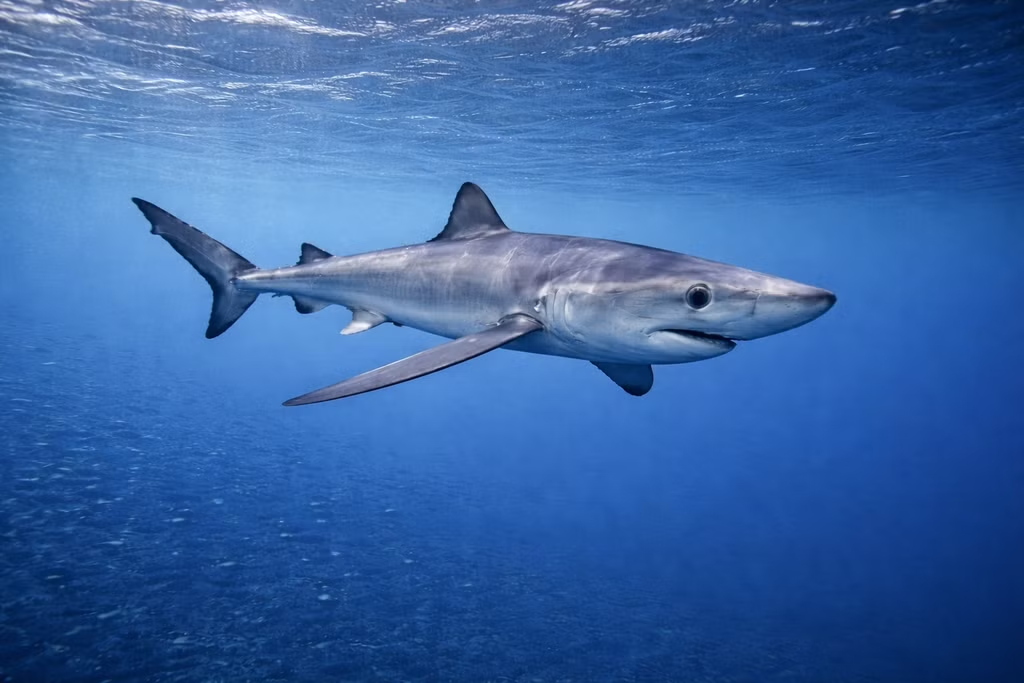
Dive the deep blue with the ocean's most elegant nomads on these dedicated Blue Shark liveaboard expeditions.
Encounters with the sleek, migratory Blue Shark happen far from shore, in the deep, temperate waters they call home. Liveaboards are uniquely positioned to reach these pelagic hotspots. The most reliable destination is the Azores archipelago in Portugal, specifically the offshore banks near Pico and Faial islands. Other notable regions where specialized liveaboards venture include the open Pacific off Baja California, Mexico, and certain deep-water sites in the Eastern Atlantic. These are true blue-water expeditions, a world away from a typical reef dive.
A liveaboard is essential for Blue Shark diving because it provides the range to travel dozens of miles offshore where these sharks live. Vessels can stay on-site for multiple days, maximizing opportunities within narrow seasonal windows. Expert crews provide critical briefings on open-ocean safety protocols and responsible shark interaction. The boats on this list were chosen for their proven itineraries to prime Blue Shark habitats, experienced guides, and robust safety standards for pelagic diving.
The prime season for Blue Shark encounters in the North Atlantic, particularly the Azores, is during the summer months from July to October. This period offers the best combination of warmer water temperatures, calmer sea conditions, and higher shark numbers. In the Pacific, such as off Baja California, dedicated pelagic trips are often scheduled in late summer and autumn to align with favorable conditions and the presence of other open-ocean species.
When choosing a vessel for a Blue Shark trip, look for a seaworthy, steel-hulled boat built for open-ocean crossings. A crucial feature is one or more rigid inflatable boats (RIBs) or skiffs, which are used to get divers into the action quickly and safely away from the mothership. Due to the nature of blue-water diving, where you might be holding a depth for some time, Nitrox is highly recommended to extend your no-decompression limits, and most dedicated boats offer it. A spacious dive deck is also important for managing gear efficiently for these specialized dives.
Itineraries focused on Blue Sharks are typically 7 to 10 nights long, providing enough time to accommodate weather days and maximize time on remote offshore sites. Given the logistics of these expeditions, expect prices to be in the mid-to-upper range. A typical trip to the Azores or a similar pelagic destination usually costs between $3,500 and $5,500 USD per person. This generally includes your cabin, all meals, and diving, but be sure to check for extras like marine park fees, gear rental, and Nitrox fills.
Ethical encounters are paramount. All reputable operators follow strict, non-invasive protocols. This means no touching, no chasing, and maintaining a respectful distance. While chum is often used to attract sharks in the vast open ocean, it is done so sparingly and responsibly to trigger curiosity, not a feeding response. A common mistake for divers is making quick, jerky movements. The key is to remain calm, vertical in the water column, and follow your guide's every instruction. Slow, deliberate movements and good buoyancy control are essential for a safe and rewarding dive.
The Azores, a Portuguese archipelago in the mid-Atlantic, is widely considered the world's most reliable destination for liveaboard diving with Blue Sharks. Expeditions from Pico or Faial islands head to offshore seamounts where encounters are frequent in the summer. Other locations like the open Pacific off Baja California, Mexico, also offer dedicated pelagic trips with good chances of seeing them, often alongside other open-ocean species.
Seasonality is key. For the Azores, the peak season runs from July through early October. During these summer months, the Atlantic is calmer, the water is warmer, and the sharks are most consistently present. For other pelagic destinations, trips are often timed for late summer and fall to align with the best sea conditions and marine life activity. Always check the specific seasonality for your chosen itinerary.
Yes, almost universally. These are 'blue water' dives in the open ocean with no visible bottom. Operators require at least an Advanced Open Water certification and a significant number of logged dives (often 50+). Experience in deep diving and drift diving is crucial. Excellent buoyancy control and comfort in a challenging environment are non-negotiable for your safety and the quality of the encounter.
The cost reflects the expeditionary nature of these trips. For a 7- to 10-night liveaboard in a prime location like the Azores, you can expect to pay between $3,500 and $5,500 USD per person. This price typically includes accommodation, meals, and all dives. Always confirm what's excluded, such as flights, marine park fees, crew gratuities, or Nitrox fills, which are highly recommended.
No. Encounters with wild animals, especially highly migratory pelagic species, can never be guaranteed. Liveaboard operators use decades of experience to schedule trips during peak seasons and visit proven locations, which maximizes your chances significantly. However, success is always subject to weather, currents, and the unpredictable nature of wildlife. Approach the trip as an expedition, where the search is part of the adventure.