
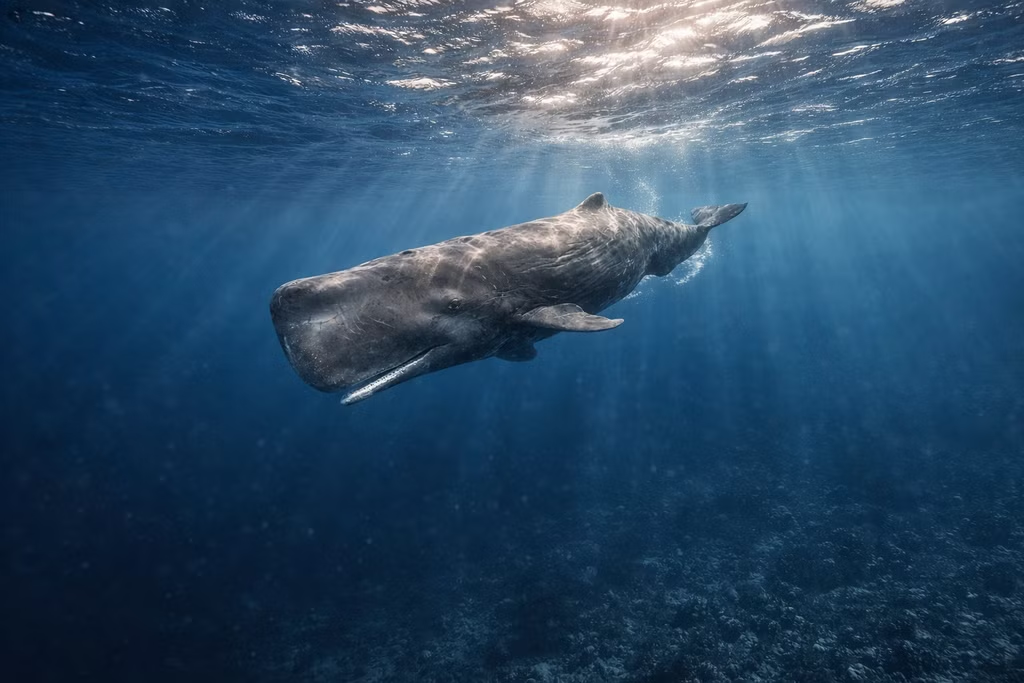
Get face-to-face with the largest toothed predator on Earth from the world’s most specialized liveaboards.
Encounters with sperm whales are one of diving's rarest and most profound experiences. Unlike more common whale sightings, opportunities to meet these deep-diving giants are limited to a few specific global hotspots. The volcanic island of Dominica in the Caribbean is paramount, hosting a resident population of sperm whales year-round. Here, a small, dedicated fleet operates with special government permits. The Azores, a remote archipelago in the mid-Atlantic, is another key destination, particularly during the summer months when whales pass through on their migration. Sri Lanka also offers seasonal opportunities off its southern and eastern coasts.
A liveaboard is the ultimate platform for sperm whale expeditions. These vessels have the range to travel far offshore to the deep-water canyons where sperm whales hunt. Itineraries are flexible, allowing crews to dedicate days to tracking pods using hydrophones and responding to sightings. These are not typical dive trips; they are highly specialized expeditions. Our list is curated based on which boats hold the extremely rare permits required for in-water encounters, their use of expert guides and tracking technology, and a proven history of conducting responsible, ethical operations.
The best time to book a sperm whale liveaboard depends on the destination. In Dominica, the prime season runs from November to March, when calmer seas make for more comfortable and successful expeditions. This region is unique because it hosts a year-round, non-migratory population. For the Azores, the best window is from May to October, coinciding with the sperm whales' migratory route through the North Atlantic and offering the best surface conditions. While sightings are possible at other times, these peak seasons offer the highest probability of successful and comfortable in-water encounters.
Choosing the right vessel is critical. First and foremost, confirm the operator holds a valid government permit for in-water sperm whale encounters, as these are extremely limited, especially in Dominica. The liveaboard must have the long-range capability to reach deep offshore waters. Look for boats equipped with a hydrophone, an underwater microphone used to listen for whale vocalizations, which is the primary method for locating them. The vessel should also operate fast, easily deployable rigid inflatable boats (RIBs) or skiffs for quiet, non-invasive approaches to the whales once they are located. Since most interactions are snorkeling, a massive dive deck isn't essential, but good gear storage and easy water entry are.
Sperm whale expeditions are specialized and command a premium. Expect itineraries to be between 7 and 10 nights to maximize the chances of finding these elusive animals. Due to the limited permits, vessel specialization, fuel costs for long-range travel, and expert crews, prices are higher than standard dive trips. A typical trip costs between $5,500 and $8,500 USD per person. Booking well in advance is essential as these trips have very few spots and sell out quickly, often more than a year ahead of time.
Ethical encounters are the absolute priority. All interactions are governed by strict regulations. Encounters are passive and almost always done via snorkeling or freediving to minimize disturbance; scuba is generally not permitted with the whales. You will be instructed to enter the water quietly and drift, letting the animals approach on their own terms. Never chase, touch, or restrict a whale's movement. A common mistake is excess splashing or noise. Pro tips: practice silent water entry, be patient, and always be ready to go—sightings can happen at any moment and windows of opportunity can be brief.
Dominica is widely considered the best and most reliable location. It has a resident population of sperm whales, and a small number of operators hold special government permits for in-water encounters. The Azores (Portugal) is another top-tier destination, offering excellent chances to see them on their migratory routes during the summer months. These locations have established regulations and experienced guides dedicated to ethical and successful interactions.
The best season varies by location. For Dominica, the primary season is from November to March, when sea conditions are typically calmest. In the Azores, the peak season is longer, running from May through October. These periods are chosen to align with predictable whale presence and the most favorable weather for offshore expeditions, maximizing both comfort and your chances of a successful encounter.
No, advanced certification is not usually required because almost all in-water sperm whale encounters are conducted while snorkeling or freediving, not on scuba. This minimizes noise and disturbance to the animals. However, you must be a strong, confident swimmer, comfortable in deep open water far from shore. Any standard diving on the itinerary will require a regular Open Water certification.
Sperm whale expeditions are specialist trips and are priced accordingly. Expect to pay between $5,500 and $8,500 USD per person for a 7- to 10-night trip. The cost reflects the rarity of government permits, the use of specialized equipment like hydrophones, long-range fuel consumption, and the high level of expertise required from the crew and guides. These trips have very limited availability and book up far in advance.
No, sightings and in-water encounters are never guaranteed. Sperm whales are wild animals living in a vast ocean environment. Reputable liveaboards use expert guides, hydrophones, and years of experience to maximize your chances, but they cannot control the whales' behavior or weather conditions. Success requires patience and an understanding that you are a visitor in their world. The thrill of the search is part of the expedition.