Go where the giants roam. These are the world's best liveaboards for reliable Oceanic Manta Ray encounters.
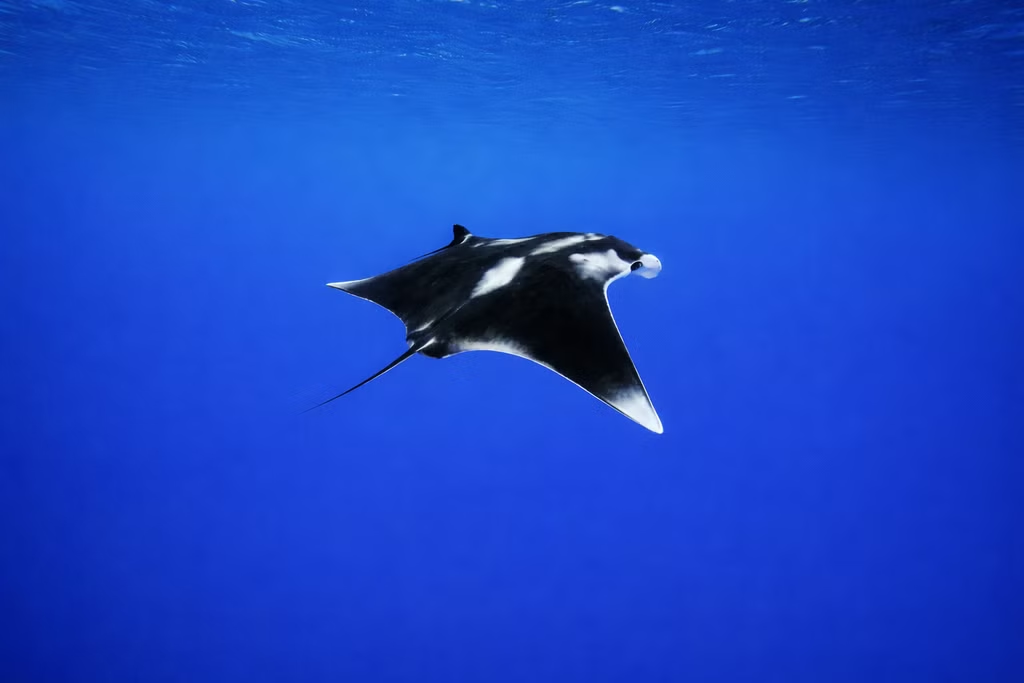
For divers seeking the awe-inspiring Oceanic Manta Ray (Mobula birostris), a few remote corners of the world offer unparalleled encounters. The Revillagigedo Archipelago, better known as Socorro, is legendary for its population of exceptionally curious mantas. Other hotspots include the wild currents of the Galápagos Islands, especially around Darwin and Wolf, and specific offshore seamounts in Indonesia. These pelagic destinations are far from shore, lying in the deep blue where these giants feed and visit cleaning stations—making them accessible almost exclusively by liveaboard.
Liveaboards are the key to unlocking these encounters. They have the range to travel hundreds of miles offshore and the endurance to stay for a week or more, allowing divers to fully immerse themselves in the peak season. Onboard guides provide critical briefings on manta behavior and interaction protocols, ensuring safe and respectful dives. This list was curated by selecting top-rated vessels with proven itineraries that focus specifically on these famed aggregation sites and are equipped for serious open-ocean diving.
The best time to book a liveaboard for Oceanic Manta Rays depends on the region. The season for Socorro, Mexico runs from November to May, with many divers considering February through April to be the peak for the calmest, most intimate encounters. In the Galápagos Islands, the cooler, nutrient-rich waters from June to December bring mantas in greater numbers, coinciding with whale shark season. While some Indonesian liveaboards find Oceanic Mantas year-round, specific itineraries focusing on remote southern sites often have the highest success rates.
A vessel built for open-ocean exploration is non-negotiable. Look for ships with a long operational range and robust stabilization. Sturdy, inflatable tenders (Zodiacs or pangas) are essential for dropping divers precisely on remote pinnacles and for safety in strong currents. The dive deck should be spacious and well-organized to handle a full boat of divers and their gear without chaos. Nitrox is a must-have; it significantly extends your no-deco limits on the repetitive, multi-level profiles typical of these destinations, giving you more precious time with the mantas.
Expect these trips to be a significant investment in both time and money. Socorro itineraries typically last 8 to 10 nights, with prices ranging from $3,500 to $6,000 USD per person. Galápagos trips, due to their remote nature and strict regulations, are usually 7 to 10 nights and cost between $5,000 and $8,500 USD, plus substantial park and chamber fees. These are not short jaunts but true expeditions to some of the most protected and wildlife-rich waters on the planet.
Ethical encounters are paramount for protecting these intelligent animals. The golden rule is to never chase, touch, or block a manta's path. Instead, find a strategic, stationary position—ideally near a cleaning station—and let them approach you. Keep your movements slow and deliberate, maintain good buoyancy, and stay close to the reef. A common mistake is swimming directly at a manta, which is intimidating and will almost always cause it to depart. The best encounters happen when divers become part of the environment, allowing the curious mantas to circle and observe them on their own terms.
Mexico's Socorro Island (Revillagigedo Archipelago) is arguably the most famous destination for consistent, close-up dive encounters with Oceanic Manta Rays, especially at sites like The Boiler. The Galápagos Islands, particularly the northern islands of Darwin and Wolf, are another world-class hotspot. These remote, volcanic locations are perfect for liveaboard expeditions and offer incredible pelagic action.
For Socorro, the prime season is November to May. In the Galápagos, mantas are frequently seen during the cooler water season from June to December. While sightings can occur outside these windows, booking a liveaboard during these peak months gives you the statistically highest chance for multiple, quality encounters in the best possible conditions.
Yes. Destinations like Socorro and Galápagos are not for beginners. Liveaboards here universally require an Advanced Open Water certification (or equivalent) and proof of 50+ logged dives. Experience with drift diving, deep dives, and strong currents is essential. These are challenging, open-ocean environments, and operators enforce these rules strictly for diver safety.
Costs vary significantly by destination. A typical 8-10 night liveaboard to Socorro, Mexico, generally ranges from $3,500 to $6,000 USD. A 7-10 night trip to the Galápagos Islands is more expensive, typically costing $5,000 to $8,500 USD, plus mandatory park fees, which can add over $500. These prices reflect the remote nature and expeditionary style of the trips.
No, sightings of any wild animal are never guaranteed. However, these liveaboards operate in the world's most reliable manta ray aggregation sites during peak seasons. The itineraries are expertly designed to maximize your chances of encounters. While guarantees are impossible, the probability of seeing Oceanic Manta Rays on these specific trips is exceptionally high.