
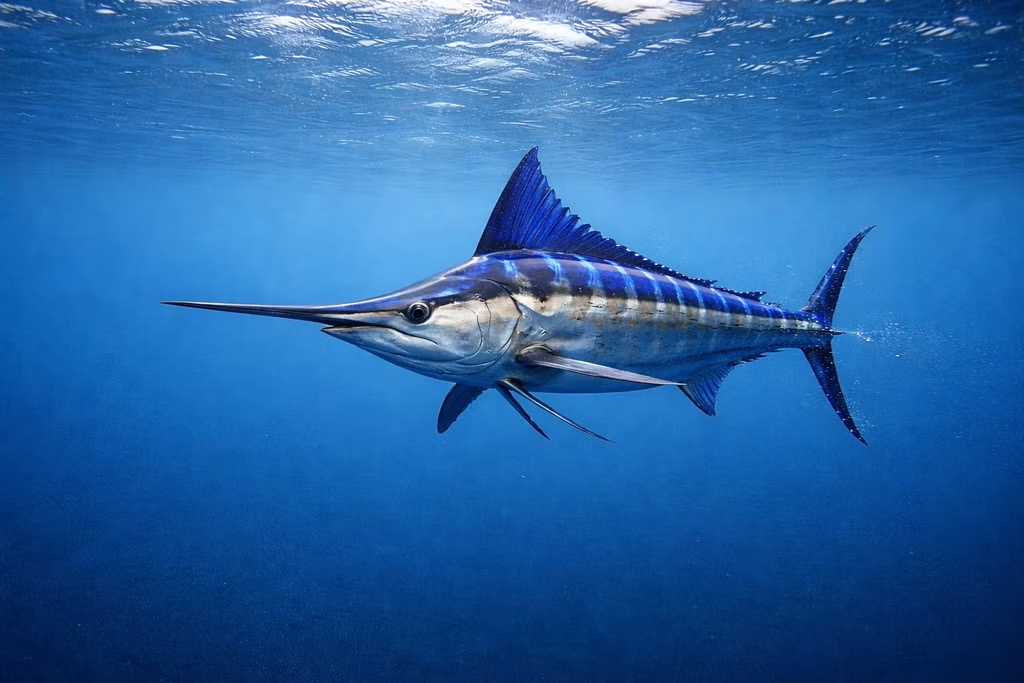
Chase the ultimate pelagic prize on a liveaboard trip designed for thrilling Blue Marlin encounters.
Blue Marlin are the ghosts of the open ocean, but some places offer a better chance of a face-to-face meeting. For divers, the most reliable encounters happen in remote, current-swept hotspots. The Galápagos Islands, particularly Wolf and Darwin Islands, are legendary for pelagics, including marlin hunting along reef edges. In Mexico, the Revillagigedo Archipelago (Socorro) offers blue-water dives where marlin are often sighted. Other hotspots include Cocos Island, Costa Rica, where deep-water upwellings attract these apex predators.
A liveaboard is essential for reaching these isolated destinations. These vessels cover vast distances to put you in the right place at the right time, maximizing opportunities within tight seasonal windows. Top operators provide detailed briefings on marlin behavior and specific dive procedures for open-ocean encounters. We curated this list by selecting liveaboards with proven itineraries in marlin territory, experienced guides who know how to find them, and boats equipped for true expedition diving.
Timing is everything. The Galápagos offer your best odds from June to November when cooler, nutrient-rich waters attract more pelagic life. Socorro's season runs from November to May, with marlin sightings possible throughout, but often peaking mid-season. For a different experience, the Azores can be productive from July to September, especially when large bait balls form offshore, though these trips are more expeditionary and less common for standard scuba liveaboards.
Your vessel is your base camp in the deep blue. Look for liveaboards with long-range capabilities and fuel capacity to reach remote archipelagos. Sturdy, fast-response inflatable tenders (RIBs or skiffs) are crucial for dropping divers precisely where the action is, sometimes far from the mothership. A spacious dive deck is a must for gearing up efficiently. Given the nature of these dives—often deep and repetitive—Nitrox is highly recommended to extend bottom time and increase safety margins.
Be prepared for a significant investment in time and budget. Trips to primary marlin destinations like the Galápagos or Socorro are typically 8 to 10 nights long to justify the travel time and maximize dive opportunities. Prices generally range from $4,500 to $8,000+ USD per person, depending on the destination, vessel standard, and trip duration. This usually covers your cabin, meals, and diving, but excludes flights, park fees, gear rental, and Nitrox.
Ethical encounters are paramount. The golden rule is never to chase or pursue a marlin; let the animal control the interaction. Maintain a safe distance and stay with your group and guide. Common mistakes include rushing into the blue and losing track of your depth, buoyancy, or dive buddy. Listen carefully to your guide's briefing—they will have a specific plan. Stay calm, keep your movements minimal, and have your camera ready, but don't let it distract you from your safety.
The volcanic arches of Wolf and Darwin in the Galápagos and the submerged pinnacles of Socorro, Mexico, are the world's most reliable hubs for liveaboard divers to see Blue Marlin. These locations feature strong currents and deep-water upwellings that create a rich food chain, attracting these top predators. While less predictable, Cocos Island (Costa Rica) also offers seasonal opportunities.
The best time varies by region. For the Galápagos, the peak season is June through November. In Socorro, the main liveaboard season is November to May. Planning your trip within these specific windows significantly increases your chances, as marlin movements are tied to water temperature and food availability.
Yes. These are challenging, open-ocean dives. An Advanced Open Water certification is the minimum requirement, along with 50+ logged dives. Experience in deep water, strong currents, and negative entries is essential. Nitrox certification is also highly recommended to safely manage repetitive dives. Operators will verify your experience level before confirming a booking.
An 8 to 10-night liveaboard trip to a prime Blue Marlin destination like the Galápagos or Socorro typically costs between $4,500 and $8,000 USD. This price generally includes accommodation, meals, and all dives. It usually excludes international flights, national park fees (which can be substantial), dive gear rental, Nitrox fills, and crew gratuities.
Absolutely not. Blue Marlin are wild, highly migratory pelagic animals. Sightings are a rare privilege, not a guarantee. Liveaboards use their extensive experience to take you to the most likely locations during the best seasons, which dramatically improves your odds. However, factors like water temperature, currents, and luck all play a role in what you might see.