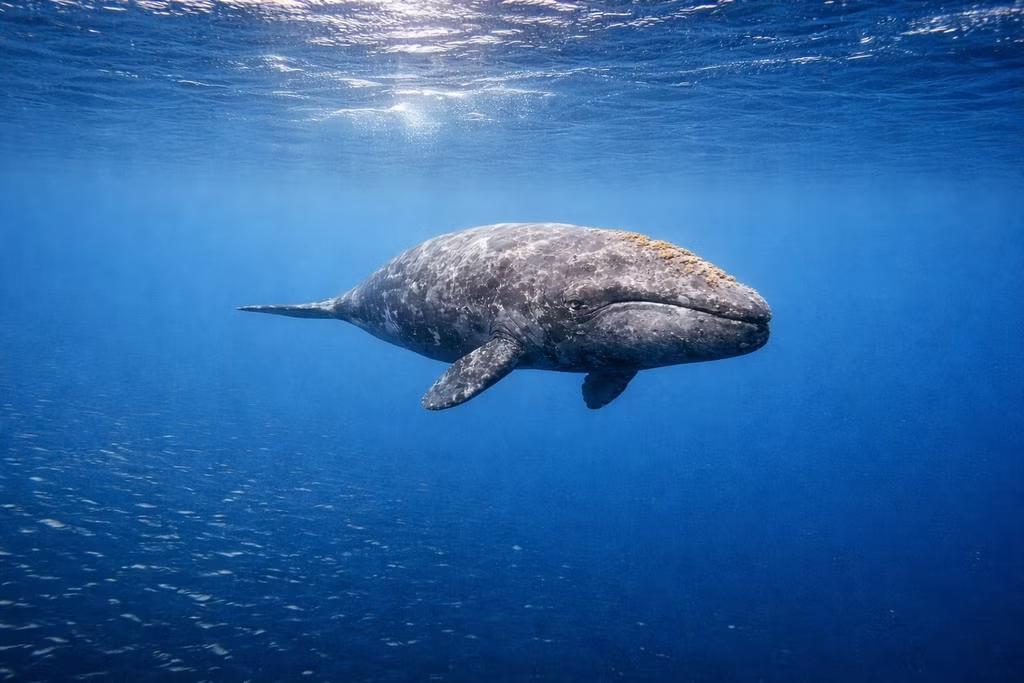
Follow the epic migration of gray whales to their birthing lagoons on these dedicated liveaboard expeditions.
The world's premier destination for reliable, up-close gray whale encounters is unequivocally the Pacific coast of Baja California, Mexico. Every winter, these gentle giants travel to sheltered birthing lagoons like San Ignacio Lagoon, Magdalena Bay, and Ojo de Liebre. These specific, protected areas are where mothers nurse their calves, providing a unique and heartwarming spectacle. A liveaboard is the only way to immerse yourself fully in this remote environment, far from day-trip crowds.
A liveaboard serves as a comfortable, mobile base, allowing you to spend multiple days positioned right at the heart of the action. This maximizes your time on the water during the short, critical season. Expert guides provide detailed briefings on whale behavior and the strict interaction protocols. This list was curated by selecting vessels with official permits, deep regional experience, and itineraries designed not for diving, but specifically for respectful, surface-based whale encounters from small panga skiffs.
The best time to see gray whales in Baja California is during their breeding and calving season, which runs from late January to early April. This is when the lagoons host the highest concentration of whales, including curious newborn calves that often approach the boats. San Ignacio Lagoon and Magdalena Bay are the two primary regions accessible to liveaboards, both offering phenomenal and highly regulated encounters.
When choosing a vessel, prioritize the expedition's focus over typical dive boat amenities. The most critical assets are the small, maneuverable skiffs (pangas) used for the actual encounters, and the experience of their local drivers. The mothership should offer comfort for a long trip in a remote area, but features like nitrox or a large dive deck are irrelevant, as this is a surface-viewing trip. A vessel equipped with a hydrophone is a fantastic bonus, allowing you to listen to the whales' complex vocalizations.
Gray whale expeditions are specialized trips, typically lasting 8 to 10 nights to account for travel time to the remote lagoons. Prices generally range from $4,000 to $7,000 USD per person. This reflects the all-inclusive nature of liveaboards (lodging, meals, excursions), the high cost of permits required to operate in these protected marine parks, and the salaries of expert naturalist guides who lead the trips.
Ethical encounters are paramount and strictly enforced by the Mexican government. Rules are simple: let the whales initiate contact. Boats must cut their engines, and it is the curious whales, particularly the calves, that choose to approach. Never pursue, block, or harass the animals. A common mistake is being too loud or making sudden movements. The best tip is to be patient, quiet, and have your camera ready, but also be prepared to simply put it down and witness this incredible connection firsthand.
Encounters with gray whales are not scuba diving activities. The best place is Baja California, Mexico, where you interact with them from small boats (pangas) on the surface. The calm, protected waters of San Ignacio Lagoon and Magdalena Bay are the primary sites. These are breeding and nursery grounds, so for the safety of the whale calves, scuba diving with them is not permitted. Liveaboards provide the best access to these remote lagoons.
The prime season is short and specific, running from late January through early April. This is when gray whales congregate in Baja California's lagoons to give birth and mate. Liveaboard operators schedule their expeditions exclusively during this window to coincide with peak whale numbers, including the presence of mothers with their newborn calves. These trips fill up far in advance, so booking early is essential.
No diving certification of any kind is required. Gray whale watching is a surface-based activity, making it accessible to everyone, not just divers. All interactions happen from the water's surface in small, stable skiffs called pangas. The main liveaboard vessel simply acts as your floating hotel and base of operations, transporting you to the remote whale-watching areas. It is an ideal trip for non-divers and photographers.
A dedicated gray whale liveaboard expedition in Baja California typically costs between $4,000 and $7,000 USD per person. These trips are usually 8 to 10 nights long. The price reflects the specialized nature of the trip, the remote location, mandatory government permits and park fees, expert naturalist guides, and the all-inclusive service covering your accommodation, meals, and daily excursions.
While no operator can ever guarantee wildlife sightings, the gray whale gathering in Baja's lagoons is one of the most predictable and concentrated marine mammal events on Earth. During the season, encounters are extremely likely. Reputable liveaboards operate with the best local guides and permits, giving you the highest possible chance of multiple, awe-inspiring, up-close encounters with these friendly giants over several days.