
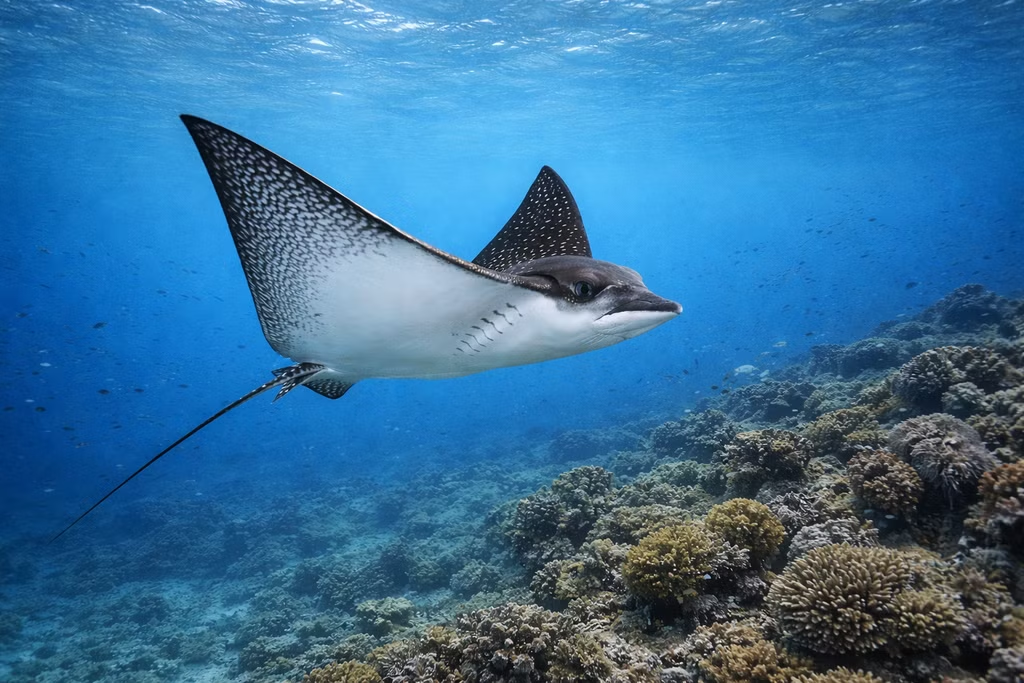
Our picks for the top liveaboard destinations to witness the grace of schooling Eagle Rays.
Divers seeking encounters with the spotted eagle ray (Aetobatus narinari) have several world-class options accessible by liveaboard. These pelagic hotspots offer the most reliable sightings, often of large schools. The Galápagos Islands, particularly around Wolf and Darwin Islands, are legendary. In Mexico, the Revillagigedo Archipelago (Socorro) is another prime location where rays congregate at offshore seamounts. The atolls of the Maldives, especially during the northeast monsoon, frequently host schools in their channels and cleaning stations. Further afield, Cocos Island in Costa Rica and certain sites in French Polynesia also provide consistent, memorable encounters with these elegant animals.
A liveaboard is the ideal platform for finding eagle rays. These vessels are built for range, allowing them to reach remote, offshore islands and pinnacles far from day-trip boats. They operate within specific seasonal windows when sightings are most probable and daily itineraries can be adapted to follow animal activity. Onboard guides provide detailed briefings on ray behavior and responsible interaction. The list below was curated based on our own diving experience, verifiable customer reports, and itineraries that consistently place divers in the right place at the right time for these beautiful pelagic encounters.
The best time and place to see eagle rays varies by region. For the Eastern Pacific hotspots like the Galápagos and Socorro Islands, the prime season generally runs from November through May, when water temperatures are warmer and large schools are often observed. In the Maldives, the dry season from January to April offers the best visibility and conditions for seeing schools in the atolls' channels. While eagle rays can be seen in many tropical locations year-round, these specific destinations and seasons offer the highest probability of encountering significant aggregations.
When choosing a vessel, prioritize those with proven experience in pelagic destinations. A sturdy, ocean-going liveaboard is essential for handling the open-ocean crossings to places like Socorro and Cocos. The dive operation should use rigid inflatable boats (RIBs) or similar skiffs (pangas) to drop divers precisely on key sites, which may be exposed pinnacles. A spacious dive deck is crucial for comfort and gear management on trips with intensive diving schedules. Finally, Nitrox availability is a must. It allows for longer bottom times at the moderate depths (60-100ft / 18-30m) where eagle rays are commonly found.
Itineraries focused on eagle rays and other pelagics are typically longer, ranging from 7 to 10 nights. This duration is necessary to account for travel time to remote islands and to maximize diving opportunities at the best sites. Pricing reflects the remote nature and comprehensive service of these trips. Expect to pay between $3,500 and $6,000 USD for a week-long trip to Socorro or the Maldives. Trips to the highly-regulated Galápagos Islands or Cocos Island are at the upper end, often starting from $6,000 and reaching $8,000+ per person.
Ethical encounters are paramount. The golden rule is to never chase, crowd, or attempt to touch an eagle ray. Sudden movements, especially from above, can spook them. The best approach is to remain calm and stationary, allowing the rays to pass by or even approach you. In currents, use a reef hook to stay in one place with minimal effort. Observe from the side, giving them a clear path. Pay close attention to your guide's briefing; they understand local animal behavior and will provide specific instructions for each site to ensure safe, respectful, and rewarding dives.
There is no single 'best' place, as each offers a unique experience. The Galápagos Islands and Socorro Island are famous for large, organized schools in deep, oceanic water. The Maldives is known for rays cruising through atoll channels, often in shallower water with great visibility. Cocos Island also offers consistent sightings alongside other pelagic life. Your choice depends on whether you prefer massive schools in a remote setting or more frequent encounters as part of a diverse reef dive.
It depends on the destination. For the Eastern Pacific (Galápagos, Socorro, Cocos), the warmer season from November through May is generally considered peak time for eagle ray schools. In the Maldives, the dry northeast monsoon season from January to April offers the best conditions and high chances of sightings in the channels. While rays are present year-round in many locales, these windows maximize your probability of seeing larger groups in favorable conditions.
Yes, an Advanced Open Water certification is typically required for liveaboards visiting top eagle ray destinations. These trips involve diving in deep water, strong currents, and open-ocean conditions. Operators will want to see proof of experience, often with a minimum of 50 logged dives. A Nitrox certification is also highly recommended to safely extend your bottom time at the depths where eagle rays are most commonly seen. These requirements are for your own safety and enjoyment.
Costs vary significantly by destination. A 7-night trip in the Maldives can range from $2,500 to $4,500 USD. Expeditions to more remote locations like Socorro Island typically cost between $3,500 and $6,000. Trips to the highly protected and logistically complex Galápagos and Cocos Islands are the most premium, often starting at $6,000 and exceeding $8,000 for 7-10 night itineraries. Prices depend on the vessel, season, and trip length.
No, sightings of any wild animal, including eagle rays, can never be guaranteed. These liveaboards travel to specific locations during peak seasons to maximize the probability of an encounter, but marine life is unpredictable. Weather, currents, and natural behavioral shifts can all affect sightings. The purpose of these trips is to put you in the best possible position for an encounter, but a successful trip is never dependent on a single species. Enjoy the entire ecosystem!