Dive into a paradise of granite reefs, giant tortoises, and whale sharks from the deck of a top-rated vessel.
The Seychelles isn't just a postcard-perfect honeymoon destination; it's a world-class dive region with a character all its own. Liveaboards here unlock a chain of 115 islands split between the granitic Inner Islands and the remote coral atolls of the Outer Islands. Imagine descending alongside massive granite boulders covered in vibrant corals, finning through schools of colourful reef fish, and keeping an eye on the blue for passing reef sharks, eagle rays, and turtles. During the right season (October to November), you even have a chance of encountering the majestic whale shark.
Choosing the right vessel is key to experiencing the best of this Indian Ocean Eden. A liveaboard gives you access to the more distant and pristine sites that day boats simply can't reach. To build this list, we focused on boats with proven safety records, experienced local guides who know the secret spots, comfortable accommodations, and itineraries designed for maximum underwater discovery. These are the liveaboards that consistently deliver unforgettable Seychelles diving.
 #1
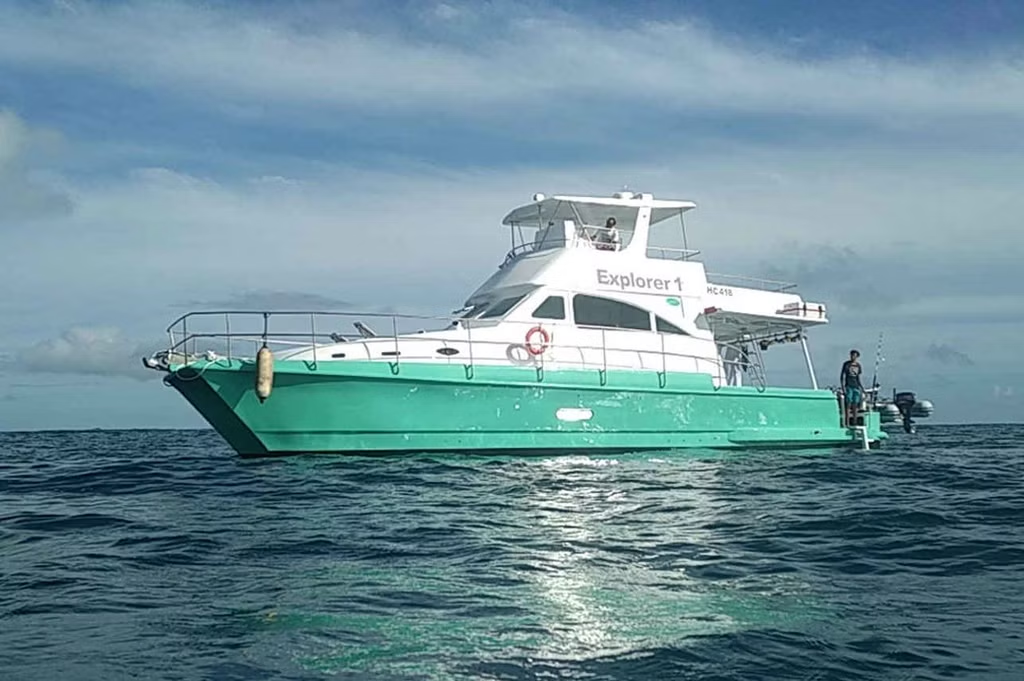
#1The Explorer 1 catamaran offers exclusive access to Seychelles' most secluded and spectacular dive sites, from Desroches Drop to UNESCO-protected atolls, all with personalized luxury.
 #2
#2These traditional sailing yachts offer an intimate journey through the Inner Islands, perfectly blending a classic experience with incredible dive opportunities.
 #3
#3Experience the Seychelles aboard a traditional schooner, seamlessly blending exceptional dive adventures with charming island exploration.
The best time for a Seychelles liveaboard is during the calm inter-monsoon periods: April-May and October-November. This is when you'll find the warmest water, best visibility (often exceeding 30 meters), and flattest seas, making for comfortable crossings and fantastic diving. The October-November window is particularly popular as it coincides with the peak season for whale shark sightings around Mahé. While diving is possible year-round, the trade winds from June to September can bring cooler water and choppier conditions.
A good Seychelles liveaboard needs to be more than just a floating hotel. Given the distances between islands, especially for trips venturing toward the Outer Islands, a vessel with a good cruising range and stability is essential. Look for boats equipped with sturdy and spacious dive tenders (RIBs), as many of the best sites are accessed this way. A well-organized dive deck with ample space for gearing up is a must. We also highly recommend choosing a boat that offers nitrox to maximize your bottom time and reduce fatigue over a week of multi-dive days.
Most itineraries are 7 nights and explore the Inner Islands, including Mahé, Praslin, and La Digue, along with marine parks like Ste. Anne. These trips offer a great mix of diving and island exploration. Prices for a standard 7-night trip typically range from $2,500 to $4,500 USD per person. For the truly adventurous, rare and more expensive 10- to 14-night expeditions to the remote Outer Islands (like the Amirantes or Aldabra) offer unparalleled, expedition-style diving. Your trip cost usually includes a cabin, all meals, and diving, but excludes flights, marine park fees, and gear rental.
One common mistake divers make is underestimating the travel time and cost to reach the Seychelles; plan your logistics carefully. Another is assuming all trips are the same; if you're an advanced diver seeking pelagic action, an Inner Islands trip might feel tame compared to the challenging currents and big rewards of the Outer Islands. Pro tip: Don't forget non-diving essentials like reef-safe sunscreen, a hat, and polarized sunglasses. Also, consider booking a few extra days on land to explore the unique terrestrial environment, from the famous Coco de Mer palms to the giant Aldabra tortoises.
Water temperatures are consistently warm, typically ranging from 27°C to 30°C (81-86°F). Most divers find a 3mm shorty or full wetsuit to be more than sufficient. In the warmest months, many are comfortable in just a rash guard and shorts. Check with your liveaboard for specific conditions expected during your travel dates, as slight variations can occur between seasons.
Not necessarily for all trips. Most liveaboards exploring the Inner Islands are suitable for PADI Open Water divers with a reasonable number of logged dives, as sites are often protected and relatively shallow. However, trips to the more remote Outer Islands, with their strong currents and deeper walls, typically require an Advanced Open Water certification and a minimum of 50 logged dives. Always check the specific requirements of your chosen itinerary.
Yes, most Seychelles liveaboards offer Enriched Air Nitrox, often for an additional fee. It is highly recommended. Using nitrox allows you to extend your no-decompression limits, giving you more bottom time on the beautiful reefs. It also helps reduce surface intervals and can leave you feeling less tired at the end of a day with three or four dives, helping you make the most of your trip.
The Seychelles boasts a rich diversity of marine life. You can expect to see huge schools of fusiliers and snappers, hawksbill and green turtles, whitetip and grey reef sharks, eagle rays, and a variety of moray eels. The macro life is also excellent. Seasonally, from October to November, there's a good chance of spotting whale sharks. The unique granite underwater landscapes, draped in healthy hard and soft corals, are a sight in themselves.
Absolutely. Most liveaboards incorporate land excursions into their itineraries. This may include beach barbecues on deserted islands, visits to nature reserves to see giant tortoises, or hikes through lush tropical forests. Many boats also carry kayaks or stand-up paddleboards for guests to use during surface intervals, offering a perfect way to enjoy the stunning surface-level scenery.