Swim with gentle whale shark giants and explore the wild reefs of the Red Sea's southern entrance.
Djibouti offers a diving experience that’s truly off the beaten path. Tucked between the Red Sea and the Indian Ocean, its nutrient-rich waters are a magnet for megafauna. The main event is the annual aggregation of juvenile whale sharks in the Gulf of Tadjoura, a spectacle that draws divers from November to February. Beyond these gentle giants, you'll explore the legendary Seven Brothers archipelago, a chain of volcanic islands with vibrant coral gardens, dramatic drop-offs, and strong currents that attract sharks, mantas, and massive schools of fish.
This isn't a destination with dozens of boats; the fleet is small and specialized. In curating this list, we've focused on the operators with proven expertise in this unique environment. We prioritized vessels with excellent safety records, knowledgeable guides who respect the wildlife, comfortable accommodations for the journey, and consistently positive feedback from fellow divers. The boats below represent the best way to experience Djibouti’s raw and rewarding underwater world.
 #1
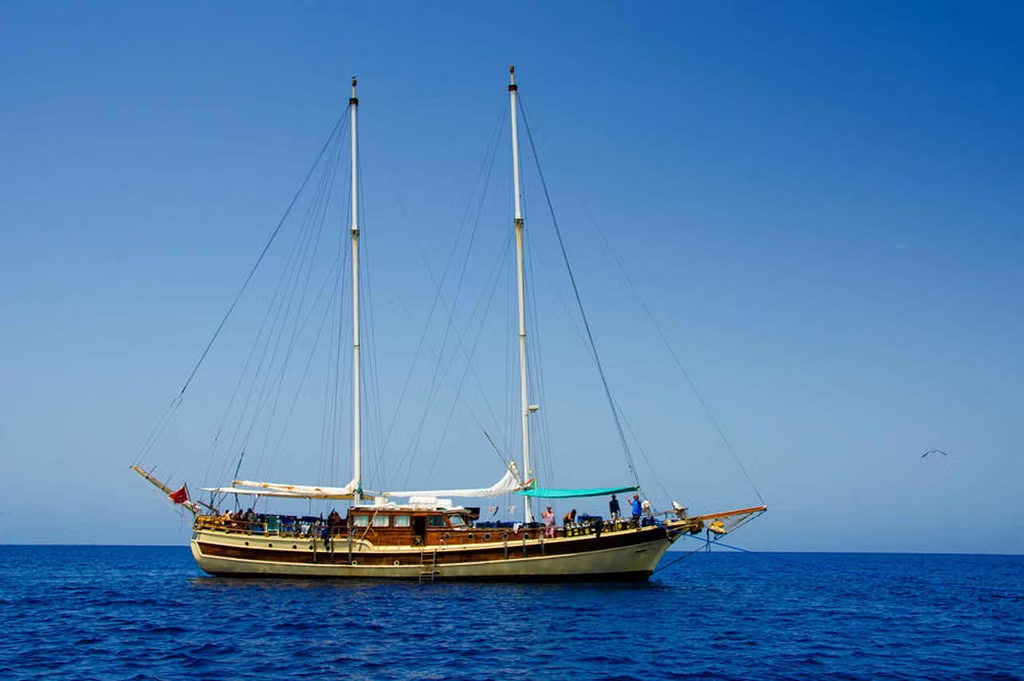
#1The Elegante offers an intimate schooner experience to witness Djibouti's annual whale shark and manta migration, away from crowds. Perfect for stunning reef exploration.
 #2
#2This intimate vessel is ideal for exploring Djibouti's unique crossroads, offering eco-conscious adventures among its dramatic underwater landscapes and rich marine life.
The prime time to dive Djibouti is short and specific: November through February. This is when the plankton blooms in the Gulf of Tadjoura, creating a feeding frenzy that attracts dozens of juvenile whale sharks. Water temperatures are cooler during this period, typically 25-27°C (77-81°F), so a 5mm wetsuit is essential. Outside this window, the water gets much warmer, the visibility can decrease, and the main attraction—the whale sharks—move on to deeper, cooler waters, making it a less predictable and rewarding time to visit.
Given the distances covered between the main whale shark area and the remote Seven Brothers islands, a sturdy, long-range vessel is a must. Look for liveaboards with powerful and reliable tenders (RIBs or zodiacs), as most diving is done from these smaller boats to access specific drop-off points and navigate currents. Nitrox is a huge advantage here, allowing for more bottom time on the deeper reefs. A spacious, well-organized dive deck is also critical for handling gear comfortably and safely, especially when the boat is full during the popular peak season.
A typical Djibouti liveaboard itinerary lasts for 7 nights, which is enough time to explore both the Gulf of Tadjoura and the Seven Brothers. Prices generally fall between $1,800 and $2,800 per person for a standard trip. This usually covers your accommodation, all meals, and around 3 dives per day. Be prepared for extra costs, which almost always include marine park fees, port fees, gear rental if you need it, nitrox fills, and any alcoholic beverages. Always check the 'what's not included' section before booking.
One of the biggest mistakes divers make is not booking far enough in advance. With a very short season and a limited number of reputable boats, trips sell out quickly, often a year or more ahead. Another common issue is underestimating the conditions; sites like the Seven Brothers can have ripping currents, so you must be a confident diver comfortable with drifts. A pro tip is to pack a reef hook. Also, manage expectations: Djibouti is an adventure destination. The focus is on incredible, wild animal encounters, not five-star luxury service or buzzing nightlife.
The absolute best time is from November to February. During these months, seasonal plankton blooms in the sheltered Gulf of Tadjoura create a reliable food source, attracting a large aggregation of juvenile whale sharks. This makes encounters highly probable. Outside this window, the sharks disperse and sightings become very rare, so it's crucial to plan your trip for this specific winter season.
Djibouti is generally considered a destination for intermediate to advanced divers. While some sites in the Gulf of Tadjoura are sheltered, many key areas, like the Seven Brothers archipelago, feature strong, unpredictable currents and deep walls. Divers should be comfortable with drift diving and have good buoyancy control. Some operators may require an Advanced Open Water certification and a minimum number of logged dives.
Djibouti's biodiversity is impressive. In addition to whale sharks, you're likely to encounter pods of dolphins, pilot whales, and occasionally manta rays. The reefs of the Seven Brothers are patrolled by grey reef, nurse, and sometimes whitetip sharks. The coral is vibrant and healthy, hosting dense schools of snapper, jackfish, and barracuda. Macro life, including various nudibranchs, is also abundant for those with a keen eye.
A 5mm wetsuit is standard, though some divers prefer a 7mm for the cooler winter waters (25-27°C). A reef hook is highly recommended for handling currents. Don't forget your certification cards and personal dive gear. For topside, pack light clothing, a hat, reef-safe sunscreen, and a windbreaker for cool evenings. Sea sickness medication is also a wise precaution.
Direct flights to Djibouti–Ambouli International Airport (JIB) are not common from North America or most of Europe. Most travelers connect through major airline hubs such as Dubai (DXB) with Flydubai, Istanbul (IST) with Turkish Airlines, or Addis Ababa (ADD) with Ethiopian Airlines. It's important to book flights well in advance and allow ample time for connections.