
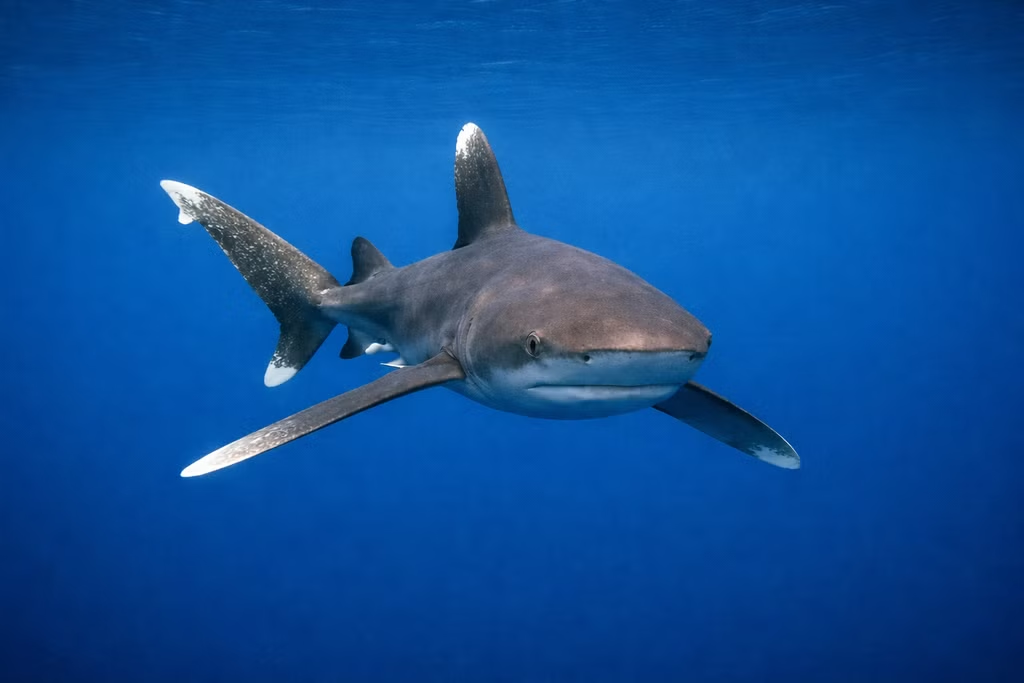
Dive with one of the ocean's most curious pelagic predators from the best boats in the business.
Reliable encounters with Oceanic Whitetip Sharks happen far from shore, making liveaboards the only real option. The most famous hotspots are in the Red Sea, particularly the offshore marine parks of the Brothers Islands, Daedalus Reef, and Elphinstone. For a more focused experience, Cat Island in the Bahamas is legendary for its seasonal aggregation. These remote locations are where these pelagic sharks patrol the blue, often investigating anything new in their environment—including divers.
A liveaboard's primary advantage is its range, allowing it to reach these isolated reefs and stay for several days, maximizing opportunities. This mobility also means the vessel can operate during the precise seasonal windows when sharks are most prevalent. The liveaboards on this list are curated for their proven itineraries in Oceanic Whitetip hotspots, experienced crews who excel at open-water safety, and comprehensive dive briefings that prepare you for these powerful encounters.
The best time to see Oceanic Whitetips is highly seasonal. In Egypt's Red Sea, the peak season is split between late spring (May-June) and autumn (September-November), when water temperatures are favorable. For the Bahamas, the prime window at Cat Island is narrower and more intense, typically running from April to June. Planning your trip within these specific months is the single most important factor for increasing your chances of a memorable encounter.
When choosing a vessel, look for one built for open-ocean travel with a long range. Since encounters happen in the blue, sturdy and fast rigid inflatable boats (RIBs) or tenders are essential for diver deployment, safety, and potential 'chase' scenarios where guides position you ahead of a cruising shark. Onboard, a spacious dive deck is crucial for gearing up without feeling crowded. Nitrox is a non-negotiable for most divers on these trips, as it extends no-decompression limits, giving you more valuable time in the water with the sharks, especially on multi-dive days.
Itineraries focused on Oceanic Whitetips are typically 7 to 10 nights long. A 7-night trip in the Red Sea to the Brothers, Daedalus, and Elphinstone (BDE) route generally costs between $1,500 and $2,500 USD. More specialized trips, like those dedicated to Cat Island, can range from $2,000 to $3,500 USD, reflecting the targeted and remote nature of the expedition. These prices usually cover accommodation, diving, and meals, but exclude flights, marine park fees, and gear rental.
Ethical encounters are paramount. These are bold, intelligent sharks; never touch, chase, or block their path. Always follow your guide's instructions. Standard procedure is to stay in a close group, maintain a vertical position in the water column, and keep your eyes on the shark at all times. Avoid frantic movements. A common pro tip is to use your camera on a short pole as a gentle physical block if a shark gets too inquisitive—not to hit it, but to maintain a comfortable distance. Feeding is strictly prohibited and extremely dangerous.
Egypt's offshore marine parks in the Red Sea (Brothers, Daedalus, Elphinstone) and Cat Island in the Bahamas are the world's most reliable hotspots. The Red Sea offers classic reef diving with frequent pelagic encounters. Cat Island provides a more specialized trip, often focused solely on finding and diving with Oceanic Whitetips in open blue water.
It's highly seasonal. For the Egyptian Red Sea, the prime time is late spring (May-June) and autumn (September-November). For the special aggregation at Cat Island, Bahamas, the season is shorter and more concentrated, typically running from April through June. Booking within these windows is critical for the best chance of sightings.
Yes, an Advanced Open Water certification (or equivalent) is almost always required, along with a minimum of 50 logged dives. These dives are in open ocean conditions, often with currents and in deep water. Experience with drift diving and diving in the blue is strongly recommended for your safety and to get the most out of the experience.
A 7-night liveaboard on a classic Red Sea itinerary costs between $1,500 and $2,500 USD per person. More specialized expeditions, such as those to Cat Island, Bahamas, are typically priced between $2,000 and $3,500 USD. These prices generally exclude international flights, marine park fees, gear rental, and crew gratuities.
No, sightings of any wild animal can never be guaranteed. Oceanic Whitetips are migratory pelagic species, and their presence depends on many environmental factors. However, by choosing a reputable liveaboard that operates in a known hotspot during peak season, you significantly increase your probability of a successful and amazing encounter.