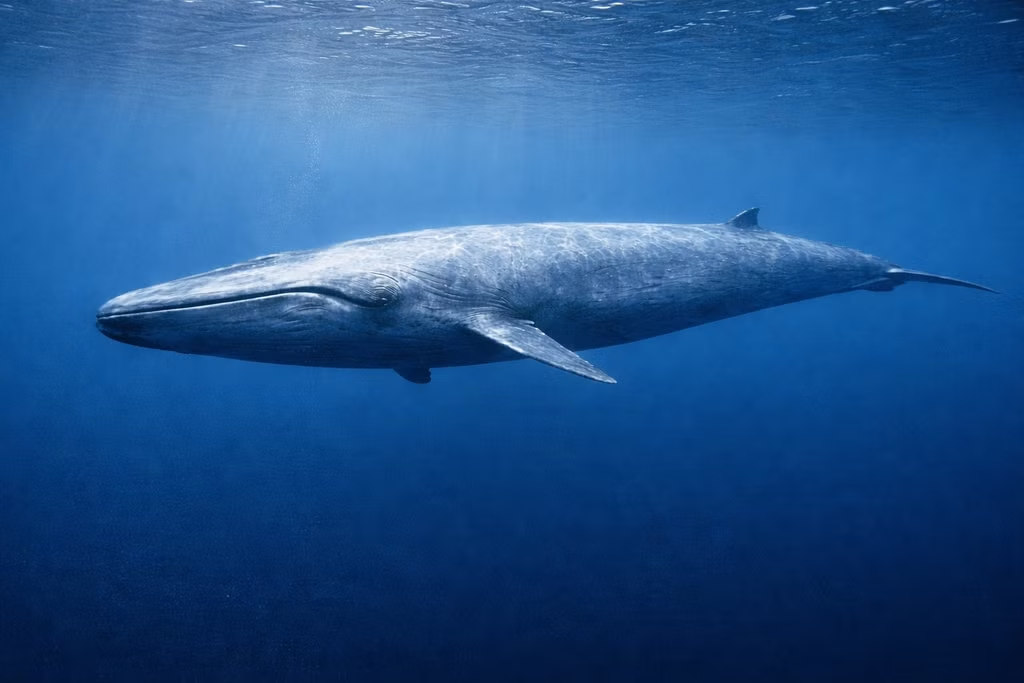
Your guide to liveaboard trips offering the best chance to encounter the ocean's largest inhabitant.
Seeing a blue whale in its natural habitat is an experience that sits at the top of many divers' wish lists. While notoriously elusive, targeted liveaboard expeditions can place you in the right ocean, at the right time. The most reliable regions for liveaboard encounters include the Galápagos Islands, where whales are drawn to nutrient-rich upwellings, Mexico's Sea of Cortez, a known calving and feeding area, and the waters around Sri Lanka, a major hotspot on their migratory route. These locations provide the backdrop for some of the most profound big-animal encounters available to divers.
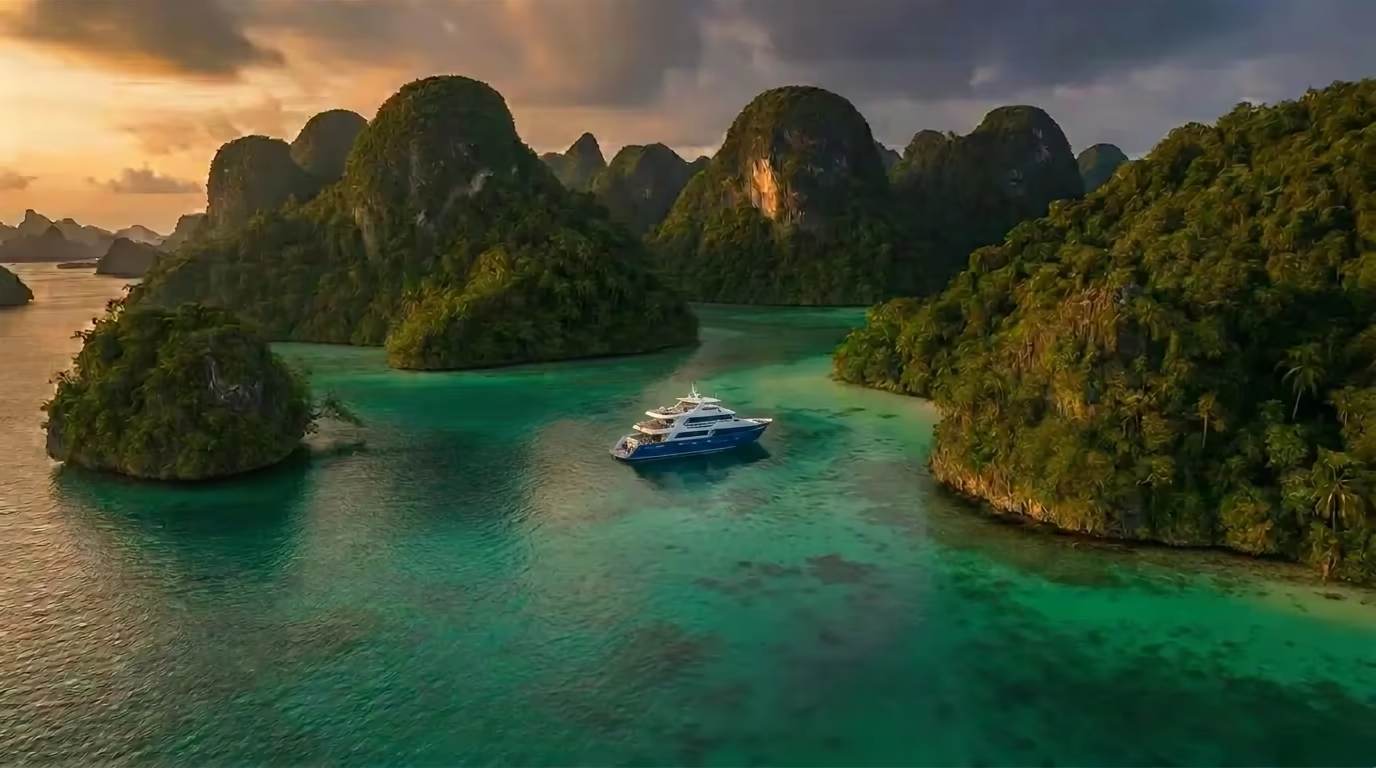
A liveaboard is the ultimate platform for this quest. These vessels have the range to travel far offshore to remote feeding grounds that day-boats simply cannot reach. Trips are scheduled during narrow seasonal windows to coincide with peak whale activity, and operators use their extensive experience to track and locate animals. Onboard briefings from expert guides prepare you for potential encounters, ensuring interactions are ethical and safe. The liveaboards on this list have been selected for their proven itineraries in blue whale hotspots, vessel capability, and commitment to responsible wildlife viewing.
The key to a successful blue whale expedition is timing. Your best chances are during specific migration and feeding seasons. In Mexico’s Sea of Cortez, this is between January and March. For the Galápagos, the cooler, nutrient-rich season from June to December offers the highest probability, peaking in September-October. In Sri Lanka, the peak season runs from February to April. Liveaboards plan their entire schedule around these windows, so booking a designated 'blue whale' itinerary is your first step.
When choosing a vessel, look for features built for pelagic expeditions. A long-range, C-worthy vessel is non-negotiable. The most critical feature is a fleet of fast, rigid-inflatable boats (RIBs) or pangas. Blue whale encounters are rarely static scuba dives; they are often opportunistic surface encounters where you are quickly and quietly shuttled via skiff for a snorkeling or surface-viewing opportunity. A hydrophone is a fantastic bonus, allowing the crew to listen for whale songs to help locate them. A large, efficient dive deck is always beneficial for the other dives on your trip.
Expect these itineraries to be longer than a typical reef trip, usually ranging from 8 to 14 nights to maximize opportunities in remote waters. Pricing reflects the expeditionary nature of these trips. A trip in the Sea of Cortez might cost between $3,500 and $5,500 USD, while a highly-regulated Galápagos expedition will typically be in the $6,500 to $9,500+ range. These prices reflect the vessel's quality, trip duration, and the logistical challenges of operating in these exclusive areas.
Ethical encounters are paramount. Reputable operators follow strict guidelines: no chasing, maintaining a significant distance, approaching slowly and parallel to the animal's direction of travel, and often cutting the engines. Physical contact is strictly forbidden. The biggest mistake is expecting a perfect, close-up scuba dive with a blue whale; this is exceptionally rare. The reality is most often a breathtaking surface encounter. Be prepared for snorkeling, manage your expectations, and trust your guide. Any time spent in the presence of these giants is a privilege, not a guarantee.
There's no single 'best' place. Focus on seasonal hotspots: the Galápagos (Jun-Dec) for remote upwellings, Baja California's Sea of Cortez (Jan-Mar) for aggregations, and Sri Lanka (Feb-Apr) on dedicated trips. Each offers a different experience, and success depends entirely on timing your visit with the whales' migration and feeding patterns in that specific region. Your chances are highest on a liveaboard specifically targeting these animals.
It's highly seasonal and destination-specific. For the Sea of Cortez, target January through March. In the Galápagos Islands, the cooler months from June to December are prime, peaking in September. For Sri Lanka, it’s February to April. Liveaboards schedule their trips during these peak windows, so choosing the right itinerary for the right time of year is the most important step in planning your trip.
Not for the whale encounter itself, which is often a surface snorkeling activity. However, the liveaboards in these remote destinations (like Galápagos) almost always require an Advanced Open Water certification and 50+ logged dives. This is due to the challenging conditions—strong currents, deep profiles, and cold water—on the other world-class dive sites included in the itinerary. Always verify the specific operator's certification and experience requirements before booking.
Prices vary widely by destination and vessel. A 7-10 night trip in Mexico's Sea of Cortez or Sri Lanka can range from $3,500 to $5,500 USD. A longer, more regulated expedition to the Galápagos typically costs between $6,500 and $9,500+ USD per person. These prices reflect trip duration, vessel quality, and the logistical costs of operating in remote areas. Flights and park fees are usually extra.
No. Blue whales are wild animals on vast migratory routes, and sightings are never guaranteed. Liveaboards use deep expertise of seasons and locations to maximize your chances, but weather, ocean conditions, and the whales' own behavior are unpredictable. The best approach is to view the trip as a remarkable expedition into the whales' world; any sighting is an incredible bonus, not a certainty.