Dive the legendary Blue Hole and pristine atolls from the comfort of a top-rated Belize liveaboard.
Belize is a diver’s dream, anchored by the second-largest barrier reef in the world. A liveaboard here isn’t just a trip; it’s an expedition to the country's most iconic and remote underwater treasures. The main events are the offshore atolls: Turneffe, Lighthouse Reef, and the world-famous Great Blue Hole. Imagine dropping into that colossal sinkhole, descending past ancient stalactites, followed by electrifying wall dives teeming with Caribbean reef sharks, majestic eagle rays, and huge groupers. The best diving is far from shore, making a liveaboard the only practical way to experience it all. The prime season runs from December to May, offering calm seas and great visibility.
We know choosing the right boat is crucial. Our list of the best Belize liveaboards isn't based on paid promotions or fancy marketing. It's curated from thousands of diver reviews, detailed vessel inspections, and an honest assessment of itinerary quality and value. We’ve focused on operators with proven safety records and crews who know these waters like the back of their hand, ensuring you have an incredible and safe adventure.
 #1
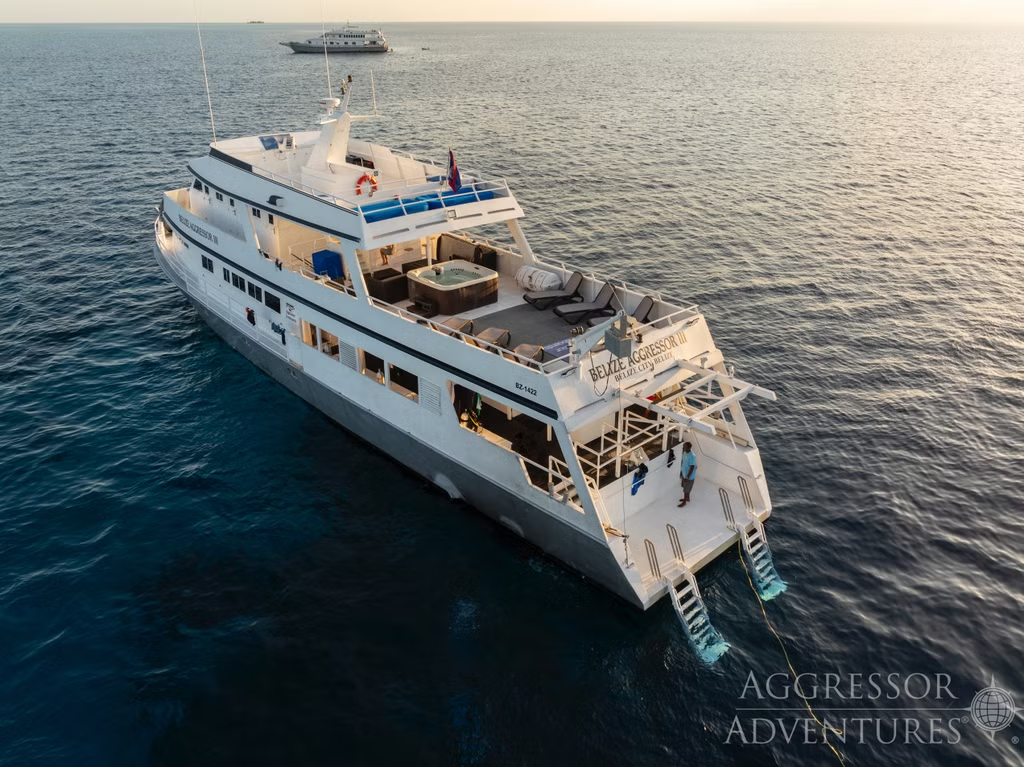
#1Located by the vast Mesoamerican Barrier Reef and three true coral atolls, the Belize Aggressor III offers unparalleled access to diverse underwater environments and abundant marine life unique to Belize.
 #2
#2Dive the iconic Mesoamerican Barrier Reef and atolls with luxury amenities. Expect diverse marine life, including sharks and rays, and geological wonders like the Great Blue Hole.
The best time to dive Belize is during the dry season, from December to May. You'll get the sunniest days and calmest surface conditions, which makes for comfortable cruising between the atolls. The shoulder months, like November and June, can also offer great diving with fewer crowds. The wet season (June to November) brings more rain, but underwater visibility often remains good. It’s also when you might have a chance to see whale sharks near Gladden Spit (March-June), though this is a specialized trip. Be mindful that August through October is peak hurricane season, so travel insurance is non-negotiable.
For Belize, your liveaboard is your basecamp for exploring remote sites. Look for a vessel with good range and stability to handle open-ocean crossings to the outer atolls. Sturdy, fast-launching tenders (RIBs or pangas) are essential for getting you right on top of the dive sites, especially for drops into the Blue Hole. Onboard Nitrox is a huge plus, as it will allow you to maximize bottom time on the stunning, multi-level wall dives you'll be doing all week. Lastly, a well-organized and spacious dive deck makes a world of difference when you're gearing up for 3-4 dives a day.
Nearly all Belize liveaboard itineraries are 7 nights long. This duration provides enough time to comfortably cruise from the mainland to Lighthouse Reef (home of the Blue Hole and Half Moon Caye) and Turneffe Atoll, logging around 20-22 dives. Price-wise, you can expect to pay between $2,900 and $4,000 USD per person for a standard 7-night trip. This typically includes accommodation, all meals, and diving. Park fees, gear rental, and Nitrox are almost always additional costs, so factor those into your budget.
One common mistake is booking a trip without the right certification. To dive the Great Blue Hole, you'll need to be an Advanced Open Water diver (or equivalent) due to its depth. Don't miss out by not being qualified. Another pitfall is focusing solely on the Blue Hole; while iconic, the vertical walls of sites like Half Moon Caye and the vibrant reefs of Turneffe are often the highlight for many divers. Pro tip: pack reef-safe sunscreen and robust travel and dive insurance (like DAN). And remember to budget for the marine park fees, which are paid onboard.
It is highly recommended. While many sites are suitable for Open Water divers, the iconic Great Blue Hole is a deep dive requiring an Advanced Open Water certification to fully experience. Operators will not let you dive beyond your training limits. To get the most out of your trip and access all the premier sites without limitation, being AOW certified is your best bet. Some boats may offer the course onboard if arranged in advance.
Belize offers warm, tropical waters year-round. In the winter months (Dec-Feb), temperatures hover around 25-27°C (77-81°F). During the summer (Jun-Aug), it warms up to a balmy 28-30°C (82-86°F). For most divers, a 3mm full wetsuit is perfect for thermal protection over multiple dives. In the warmer months, many divers are comfortable in just a shorty or even a dive skin. Check the forecast for your specific travel dates.
Absolutely. Belize liveaboards feature multi-dive days on incredible walls and reefs. Using Enriched Air Nitrox allows for longer bottom times, especially in the 18-30 meter (60-100 foot) range where much of the action is. It also helps reduce surface intervals and feelings of fatigue over a week of intense diving. Most divers find that the extra cost for Nitrox pays for itself in extended, more enjoyable dives.
It's possible, but unlikely on standard itineraries. Whale sharks aggregate near Gladden Spit, primarily from March to June, to feed on snapper spawn. This area is far south of the typical liveaboard routes that focus on Turneffe and Lighthouse Reef. While a chance encounter is always possible, seeing them requires a specialized charter focused on that specific area and time. Don't book a standard trip expecting to see whale sharks.
Marine park and port fees are almost always an additional charge, paid onboard in cash (usually USD). These fees support the conservation of the fragile marine ecosystems you'll be visiting. For a 7-night trip covering the Blue Hole Natural Monument and Half Moon Caye Natural Monument, expect to pay between $115 and $150 USD per person. This amount is subject to change, so it's always best to confirm the current fee with your chosen liveaboard operator before you travel.