
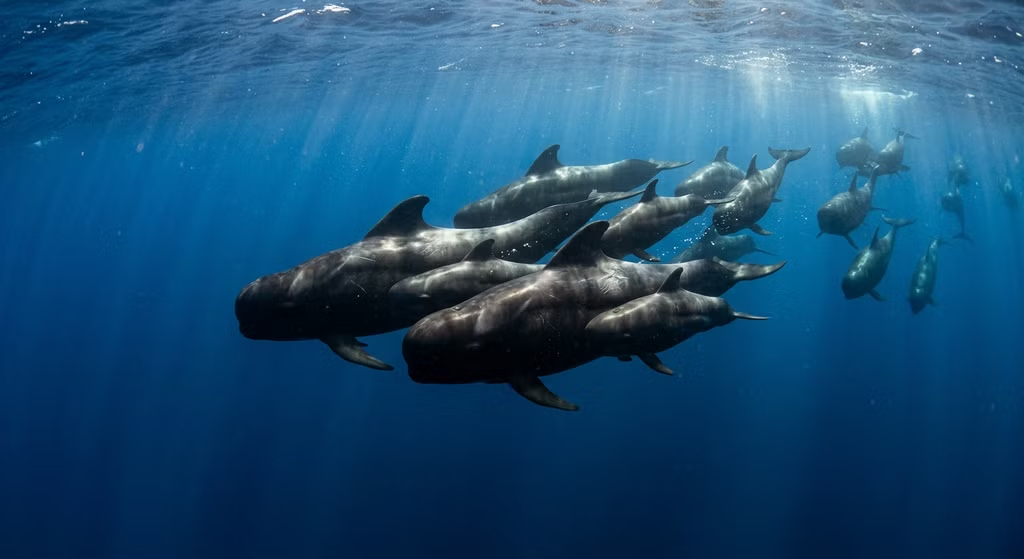
Go beyond the reef to meet these social, deep-diving cetaceans in their open-ocean home.
Pilot whales are highly intelligent and social cetaceans found in deep offshore waters, making them a prized, if often surprising, encounter for scuba divers. Liveaboards visiting remote oceanic islands offer the best chances for a meeting. Key hotspots include Mexico's Revillagigedo Archipelago (Socorro Island), where they roam the same pelagic ecosystem as giant mantas and sharks. The Galápagos Islands are another prime location, with their nutrient-rich currents attracting a wide array of marine mammals. Further afield, the atolls of French Polynesia host resident populations, offering another excellent opportunity for sightings during oceanic crossings.
A liveaboard is the ideal platform for finding pilot whales precisely because these animals are pelagic. Itineraries are designed to cover the vast, open-ocean distances where these whales hunt and socialize. This maximizes your time in their habitat, far from shore-based operations. Experienced crews know how to spot the signs of cetacean activity and plan opportunistic encounters. This list was curated by selecting liveaboards that operate in known pilot whale aggregation zones and have a track record of responsible, opportunistic sightings, prioritizing the animals' welfare above all else.
The best regions to see pilot whales from a liveaboard are destinations known for deep water and pelagic life. In Mexico's Socorro Islands, the season runs from November to May. In the Galápagos, they can be seen year-round, though the cooler, richer waters of the garúa season (June to November) often lead to more cetacean activity. French Polynesia's resident populations mean sightings are possible on any trip, especially during crossings between atolls. While not a primary liveaboard hub, the Canary Islands (specifically Tenerife) and the Strait of Gibraltar are world-famous for resident pilot whale pods, and specialized trips may operate there.
When choosing a vessel, prioritize those built for open-ocean travel, as stability and range are key. A crucial feature is the boat's tender (i.e., a Zodiac, skiff, or panga). These smaller craft are sometimes used for quiet, passive surface observation if conditions and regulations permit. Some forward-thinking vessels may carry a hydrophone, allowing the crew to listen for whale vocalizations to help locate pods. While not directly for pilot whales, a large, well-organized dive deck allows you to gear up quickly for any dive, and having Nitrox available is a plus for maximizing your overall diving itinerary and reducing fatigue.
Itinerary length is a significant factor. Trips to premier pilot whale destinations like Socorro and the Galápagos are rarely shorter than 8 nights, with many lasting 10 nights or more to properly explore the remote sites. Journeys through French Polynesia's Tuamotu atolls typically range from 7 to 10 nights. Expect to invest accordingly for these remote expeditions. Prices generally range from $3,500 USD for a trip in Socorro to over $9,000 USD for a premium Galápagos adventure, reflecting the logistical complexity and unique access these trips provide.
Ethical encounters are paramount. Pilot whale sightings are opportunistic and must be on their terms. Reputable operators will never chase or harass a pod. The standard protocol is to cut the engines at a safe distance and allow the naturally curious whales to approach if they choose. Always follow the crew's specific instructions, as local regulations (especially in marine reserves like the Galápagos and Socorro) are strict. A pro tip: always have your mask, snorkel, and fins readily accessible on deck. Many encounters happen at the surface between dives, and you’ll want to be ready for a potential in-water experience if the captain deems it safe and appropriate.
There's no single 'best' place, but you can maximize your chances by visiting remote pelagic hotspots. Liveaboards in Mexico’s Socorro Islands, the Galápagos Islands, and French Polynesia offer the highest probability. These destinations are famed for their deep, nutrient-rich waters that support large marine life, including pods of pilot whales. Sightings are always a bonus, never a guarantee.
It depends on the destination. For Socorro, the liveaboard season is November to May. In the Galápagos, sightings are possible year-round, but cetacean activity can be higher during the cooler, nutrient-rich season from June to November. In French Polynesia, resident populations mean there's a chance of an encounter at any time of year. Bear in mind these are opportunistic sightings, not predictable migrations.
Yes, typically an Advanced Open Water certification with 50+ logged dives is required for the itineraries where pilot whales are seen. While an encounter might happen on the surface via snorkel, the liveaboards travel to remote locations like Socorro and the Galápagos, which feature deep dives, strong currents, and challenging conditions that demand experienced divers. The certification is for the trip's overall diving, not a specific animal.
The cost varies significantly by destination. A liveaboard trip to Socorro typically ranges from $3,500 to $5,500 USD for an 8-9 night trip. A trip to the Galápagos, a premium destination with higher park fees and operational costs, will generally cost between $6,000 and $9,000+ USD for a similar duration. French Polynesia trips usually fall within the $4,000 to $6,000 range.
No, absolutely not. Pilot whales are wild, deep-ocean animals with vast territories. Booking a liveaboard in a known hotspot significantly increases your chances, but sightings are never guaranteed. These are special, opportunistic encounters. It's best to choose an itinerary for its overall fantastic diving, and consider a pilot whale sighting an incredible, priceless bonus.