
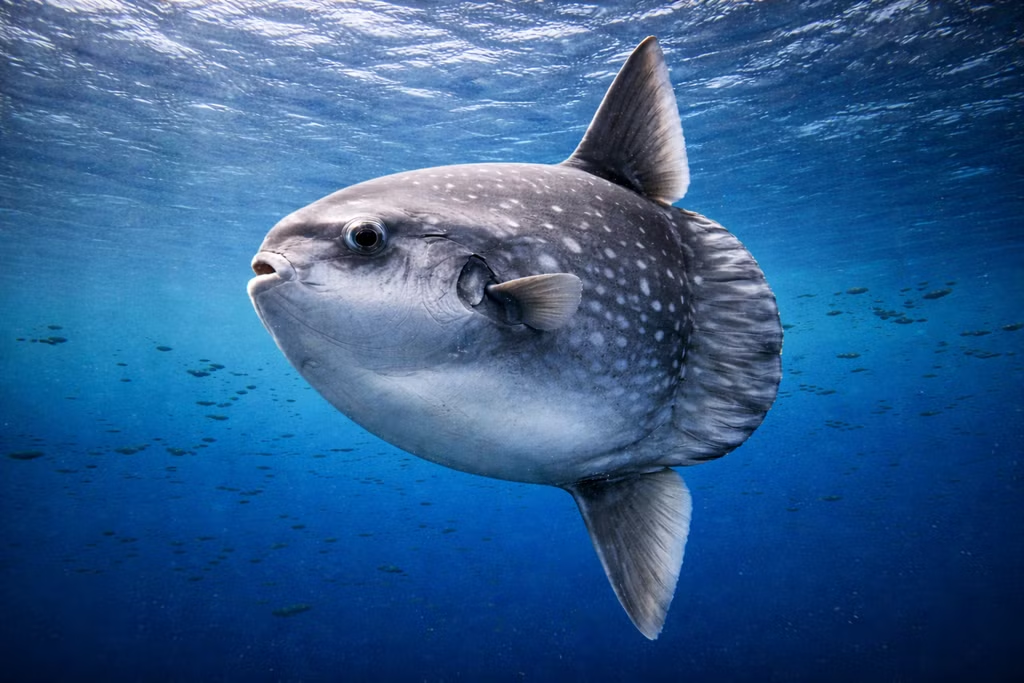
Your front-row seat to one of the ocean’s oddest and most spectacular giants.
Encounters with the giant ocean sunfish, or Mola Mola, are a true holy grail for many divers. While famously elusive, certain global hotspots offer reliable seasonal sightings from a liveaboard. The most renowned destination is the channel between Nusa Penida and Nusa Lembongan in Bali, Indonesia, particularly during the cold-water upwelling season. The Galápagos Islands, specifically around Isabela and Fernandina Islands, are another prime location where these giants are frequently seen at cleaning stations. For divers exploring further afield, the nutrient-rich waters of Alor, Indonesia also provide less-crowded opportunities for Mola Mola sightings.
A liveaboard is the ultimate platform for tracking down these deep-water visitors. They cover the necessary range to moor near specific cleaning stations and can adjust schedules based on recent sightings and water conditions. Trips are timed to coincide with narrow seasonal windows when cold, nutrient-rich water brings molas into shallower depths. Onboard briefings from experienced guides are crucial, as they provide essential knowledge on mola behavior and protocols for a successful, respectful encounter. This list was curated by selecting vessels with proven itineraries in mola hotspots, expert dive teams, and strong track records of maximizing guest chances.
The prime time to see Mola Mola is dictated by seasonal cold-water upwellings. In Bali, Indonesia (Nusa Penida and Lembongan), the peak season runs from July to October, when water temperatures can drop significantly. In the Galápagos, the cooler, nutrient-rich garúa season from June to December offers the most consistent sightings, particularly at cleaning stations like Punta Vicente Roca. While possible at other times, your chances are highest during these windows. Always check the specific itinerary, as some Komodo trips add a Bali component specifically for mola season.
When choosing a vessel, prioritize those with itineraries dedicated to these seasonal phenomena. A good liveaboard has powerful, stable tenders (RIBs or skiffs) for quick and safe drops in potentially choppy conditions or when a mola is spotted. Because these dives can be deep and cold, having a spacious dive deck is a plus. Nitrox is highly recommended to extend your no-deco time at the depths where molas are typically found (20-40 meters), so ensure your chosen boat offers it and that you are certified.
Liveaboard trips to prime mola destinations typically range from 7 to 11 nights. An itinerary in Indonesia that includes the Nusa Penida hotspots might cost between $3,500 and $6,000 USD. Galápagos trips are a larger investment, generally falling between $6,000 and $9,000+ USD for a 7 to 10-night trip, reflecting the remote nature and stringent park regulations of the archipelago. Prices vary based on the vessel's luxury level, cabin type, and trip duration.
Ethical encounters are non-negotiable. The golden rule is to never touch, chase, or block the path of a mola. Approach slowly from the side, maintain a respectful distance (at least 3-4 meters), and keep movements calm and predictable. Avoid using flash photography. A common mistake is descending directly on top of the fish, which will almost certainly cause it to depart. The best encounters happen when divers remain still and let the mola continue its business at the cleaning station. Listen to your guide's briefing; they know the local animal behavior.
Nusa Penida in Bali, Indonesia, is arguably the world's most famous hotspot, offering highly reliable sightings from July to October. The Galápagos Islands are another top contender, with frequent encounters at cleaning stations around the western islands. Both destinations are best accessed by liveaboard to maximize your time at the key sites. Alor in Indonesia is a more off-the-beaten-path alternative with good seasonal potential.
Timing is critical. The peak season for Mola Mola in Bali (Nusa Penida) is from July to October when cold upwellings bring them to recreational diving depths. In the Galápagos, the best chances are during the cool, dry 'garúa' season from June through December. Booking a liveaboard during these specific windows significantly increases your probability of an encounter.
Yes, an Advanced Open Water certification (or equivalent) is highly recommended and often required by liveaboards. Dives targeting Mola Mola are often deep (20-30 meters+), can have strong currents, and involve cold water. Experience with deep dives and drift diving is essential for your safety and comfort. Nitrox certification is also a major advantage for extending bottom time at depth.
The cost varies greatly by destination. A 7-10 night liveaboard in Indonesia focused on Mola Mola hotspots typically ranges from $3,500 to $6,000 USD. A trip to the Galápagos, a premium and highly regulated destination, will generally cost between $6,000 and $9,000+ USD for a similar duration. The final price depends on the boat's level of luxury and the specific itinerary.
No, encounters with any wild animal, including Mola Mola, are never guaranteed. They are elusive, deep-water fish whose presence depends on specific conditions like water temperature and currents. However, you can dramatically increase your chances by booking a reputable liveaboard with an experienced crew during the peak season for a known hotspot. It's about maximizing probabilities, not certainties.