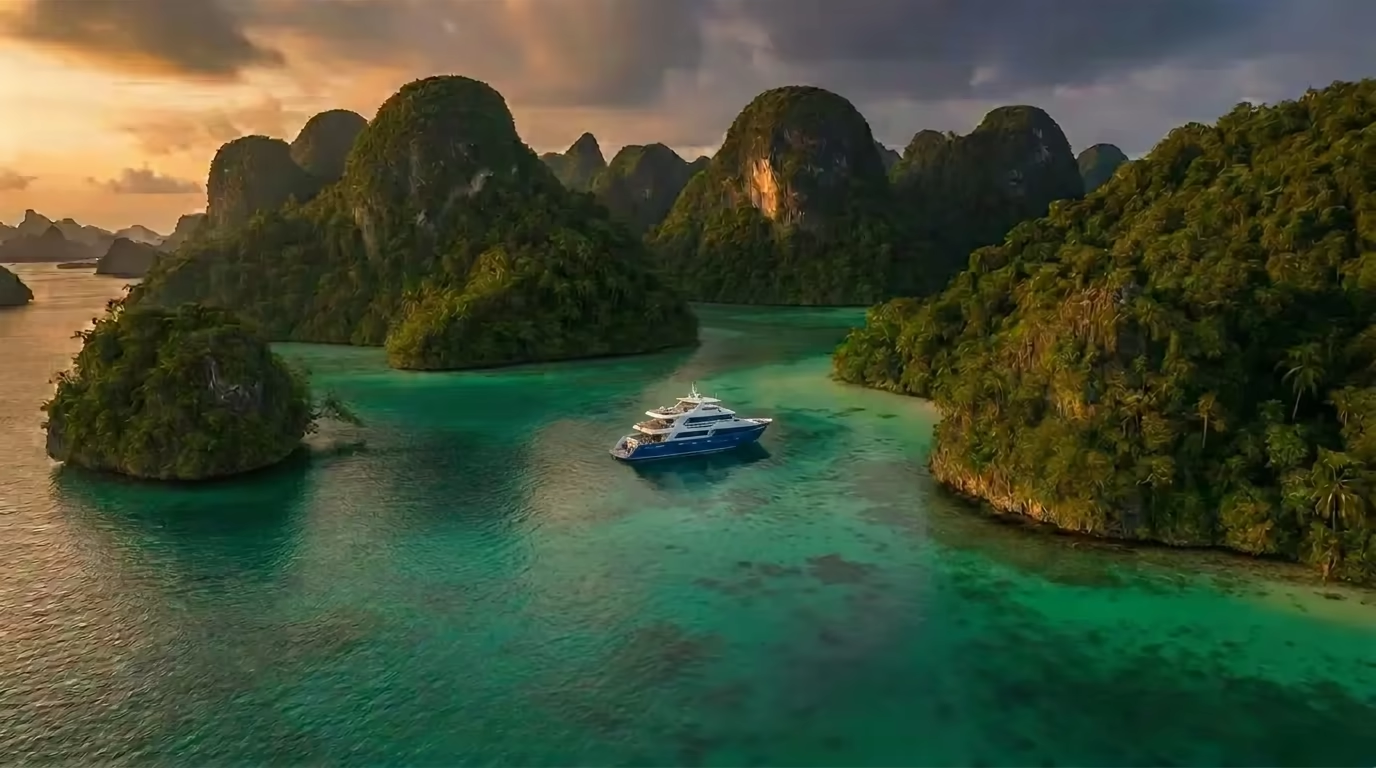
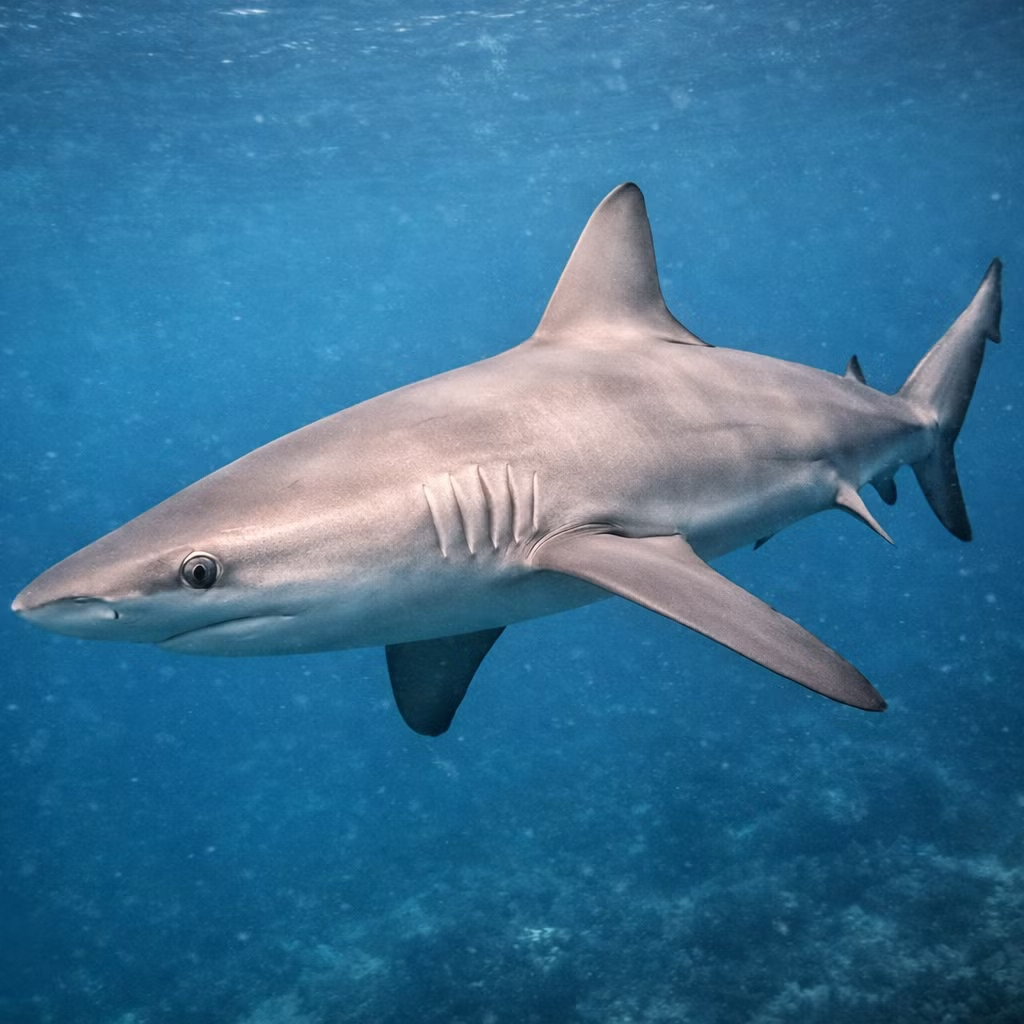
Board a liveaboard to reach the remote, current-swept islands where Galápagos sharks congregate.
The most reliable places to encounter Galápagos sharks are remote, oceanic islands that serve as natural aggregation sites. Liveaboards are the only way to access these legendary hotspots. The premier destinations include the Galápagos Islands themselves, specifically Wolf and Darwin Islands; Costa Rica's Cocos Island; and Mexico's Revillagigedo Archipelago, better known as Socorro. These locations are characterized by strong currents and an incredible biomass of marine life, providing the perfect habitat for these powerful requiem sharks.
A liveaboard is the ideal platform for this pursuit. These vessels have the range to travel hundreds of miles offshore and stay for extended periods, allowing for multiple dives in peak locations inaccessible to day boats. They are scheduled to coincide with optimal seasons, and their itineraries are built around maximizing time at the best sites. The list below has been curated based on vessels with proven itineraries to these shark havens, excellent safety records, experienced guides who understand shark behavior, and robust dive operations.
The best regions for Galápagos shark encounters are the Galápagos Islands, Cocos Island, and the Socorro Islands. While these sharks are often present year-round, seasonality affects dive conditions and the presence of other megafauna. In the Galápagos, the cooler, nutrient-rich season from June to November brings more consistent shark sightings, though the warmer, calmer season from December to May is also excellent. At Cocos Island, the rainy season from June to December is typically considered peak for shark activity. For Socorro, the main liveaboard season runs from November to May.
Choosing the right vessel is critical. Look for a liveaboard with the oceangoing capability and range to comfortably reach these distant islands. The dive operation should use sturdy, motorized tenders (like Zodiacs or pangas) for safe drop-offs and pick-ups in strong currents. A spacious dive deck is essential for gearing up comfortably, and onboard nitrox is a must. Nitrox allows for longer bottom times and reduced surface intervals, maximizing your underwater time on trips that often feature three to four dives per day.
Itineraries focused on these remote shark hotspots are typically longer and represent a significant investment. Galápagos trips focusing on Wolf and Darwin are usually 7 to 10 nights, priced from $6,000 to over $9,000 USD. A 10-night trip to Cocos Island generally falls between $5,500 and $8,000. Socorro itineraries are often 8 or 9 nights and cost between $4,000 and $6,500. These prices typically exclude international flights, national park fees, gear rental, and nitrox fills, which can add a substantial amount to the total cost.
Ethical encounters prioritize the well-being of the sharks. The golden rules are no touching, no chasing, and no blocking their path. Flash photography is usually forbidden. A common mistake is making sudden movements or having poor buoyancy, which can startle animals. The best approach is to remain calm, stay with your guide, and find a stable position—often by holding onto rocks as instructed—and let the sharks come to you. Using a reef hook (where permitted) can help you stay stationary in the current with minimal effort, allowing for a more relaxed and longer observation.
The 'big three' destinations are the Galápagos Islands (Ecuador), Cocos Island (Costa Rica), and the Revillagigedo Archipelago (Mexico). These remote oceanic islands are magnets for pelagic life. The Galápagos, particularly the northern islands of Wolf and Darwin, is arguably the top spot and the species' namesake. Reaching these world-class sites requires a dedicated liveaboard trip, as they are far beyond the range of any land-based dive operations.
Galápagos sharks are present year-round in their key habitats, but some periods are considered better. For the Galápagos Islands, the cooler season (June-Nov) offers nutrient-rich waters that attract abundant shark life. For Cocos Island, the rainy season (June-Dec) is considered peak. The Socorro liveaboard season runs from November to May. Ultimately, the 'best' time depends on your tolerance for different water conditions and what other species you hope to encounter.
Yes, an Advanced Open Water certification (or equivalent) is almost always a minimum requirement. These dives involve strong currents, deep profiles, negative entries, and blue-water safety stops. Operators require proof of experience, typically 50-100+ logged dives, including experience in currents. A nitrox certification is also highly recommended and sometimes mandatory. These prerequisites ensure that all divers on board have the necessary skills to dive safely in such a challenging and dynamic environment.
Costs vary by vessel and destination. Expect to pay between $6,000 and $9,000+ USD for a 7-10 night trip to the Galápagos. A 10-night Cocos Island trip typically ranges from $5,500 to $8,000. Socorro trips are often 8-9 nights and cost around $4,000 to $6,500. These prices usually don't include flights, park and port fees, crew gratuities, or nitrox, so be sure to factor in these additional expenses when budgeting for your trip.
No, encounters with any wild animal, including Galápagos sharks, can never be guaranteed. However, by choosing a liveaboard that specializes in visiting proven aggregation sites like Wolf and Darwin Islands during the right season, you are putting yourself in the best possible position for a successful trip. These itineraries are meticulously planned to maximize your chances, but the sharks operate on their own schedule. The thrill of the search is part of the adventure.