
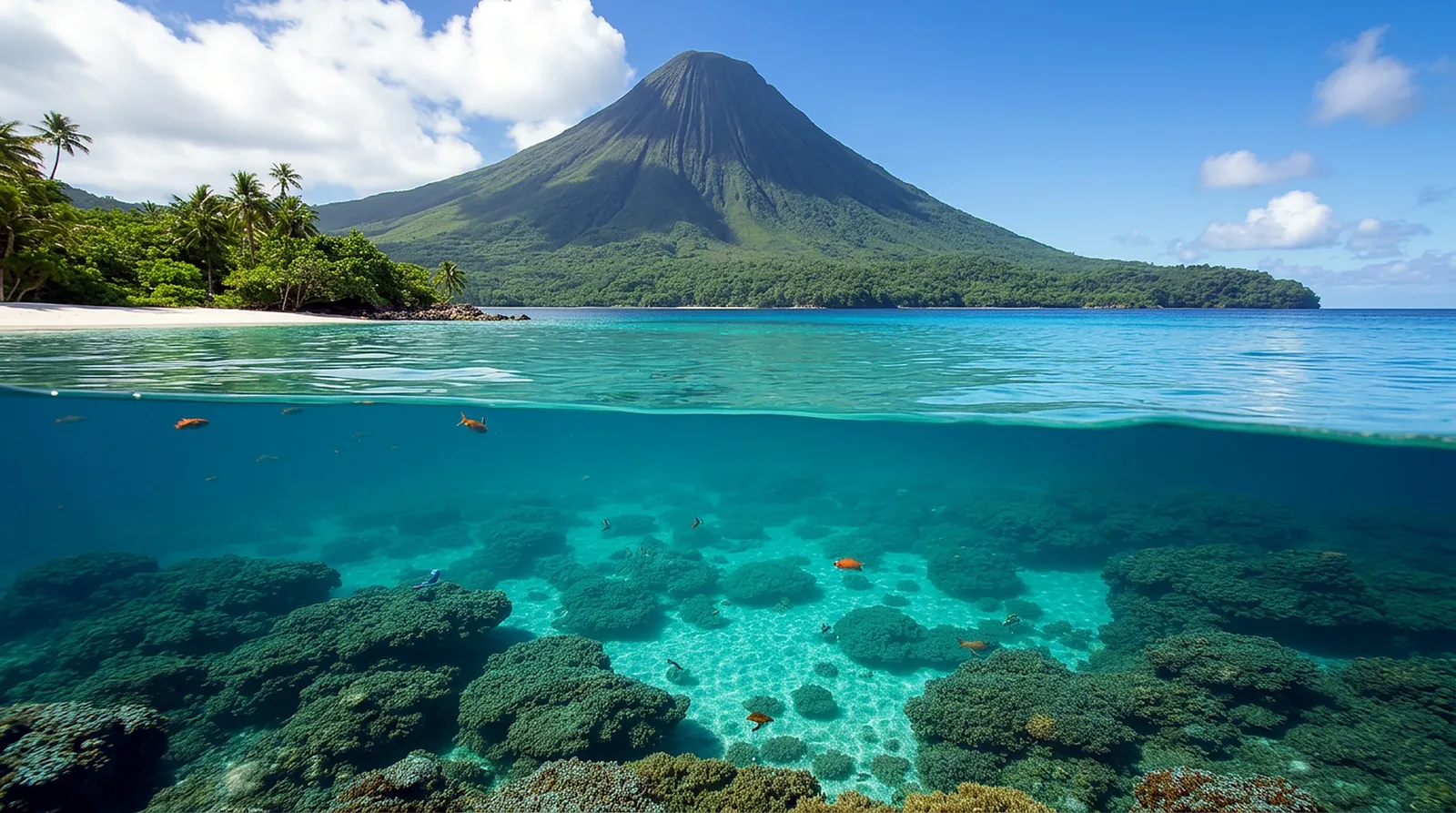
Untouched reefs, WWII wrecks and a slice of the Coral Triangle that few divers ever see.
The Solomon Islands stretch across 1,500 km of the western Pacific and host extraordinary biodiversity — over 480 coral species and 1,000+ reef-fish species. Liveaboards typically combine the Florida Islands, Russell Islands, Mary Island, Marovo Lagoon and Munda — mixing pristine reefs, WWII iron-bottom wrecks and exceptional muck diving in a setting that feels genuinely remote.
Diving is good year-round. The dry season (April–November) offers calmer seas and visibility of 20–30 m. The wet season (December–March) brings warmer water (28–30 °C), occasional rain and sometimes the best macro action. Cyclone risk is low but not zero.
Honiara International Airport (HIR) on Guadalcanal is the main gateway, with connections from Brisbane, Nadi (Fiji), Port Moresby and Auckland. From Honiara, internal flights with Solomon Airlines reach Munda, Gizo and Seghe.
Honiara is the main embarkation port for most liveaboards covering the Russell Islands, Florida Islands and Mary Island. Western Province itineraries may embark from Munda or Gizo.
Bonegi I & II off Guadalcanal are accessible WWII Japanese transport wrecks (Kinugawa Maru and Hirokawa Maru). Mary Island (Mborokua) is a remote pinnacle famous for barracuda and bumphead parrotfish. Marovo Lagoon — the world's largest saltwater lagoon — and the Russell Islands offer pristine reefs and caverns. Munda is the gateway to crystal-clear lagoons.
Bring a 3 mm wetsuit, a reef hook for current dives, a torch and macro lenses. English is the official language alongside Pijin. Cash is needed outside Honiara — bring small Solomon dollar notes for villages.
Currency is the Solomon Islands dollar (SBD); USD is accepted at major hotels. Power is 240 V (Type I plugs, Australian). Solomons are on UTC+11. Mobile coverage is limited away from Honiara.
Some dive sites have strong currents and surge — keep groups close and follow guides. Malaria is present, especially on Guadalcanal — consult your doctor about prophylaxis. Decompression chambers are limited; remote-evacuation dive insurance is essential. Internet on liveaboards is minimal.
Compare every liveaboard, every itinerary, every cabin — book direct with the operator at the best price.