
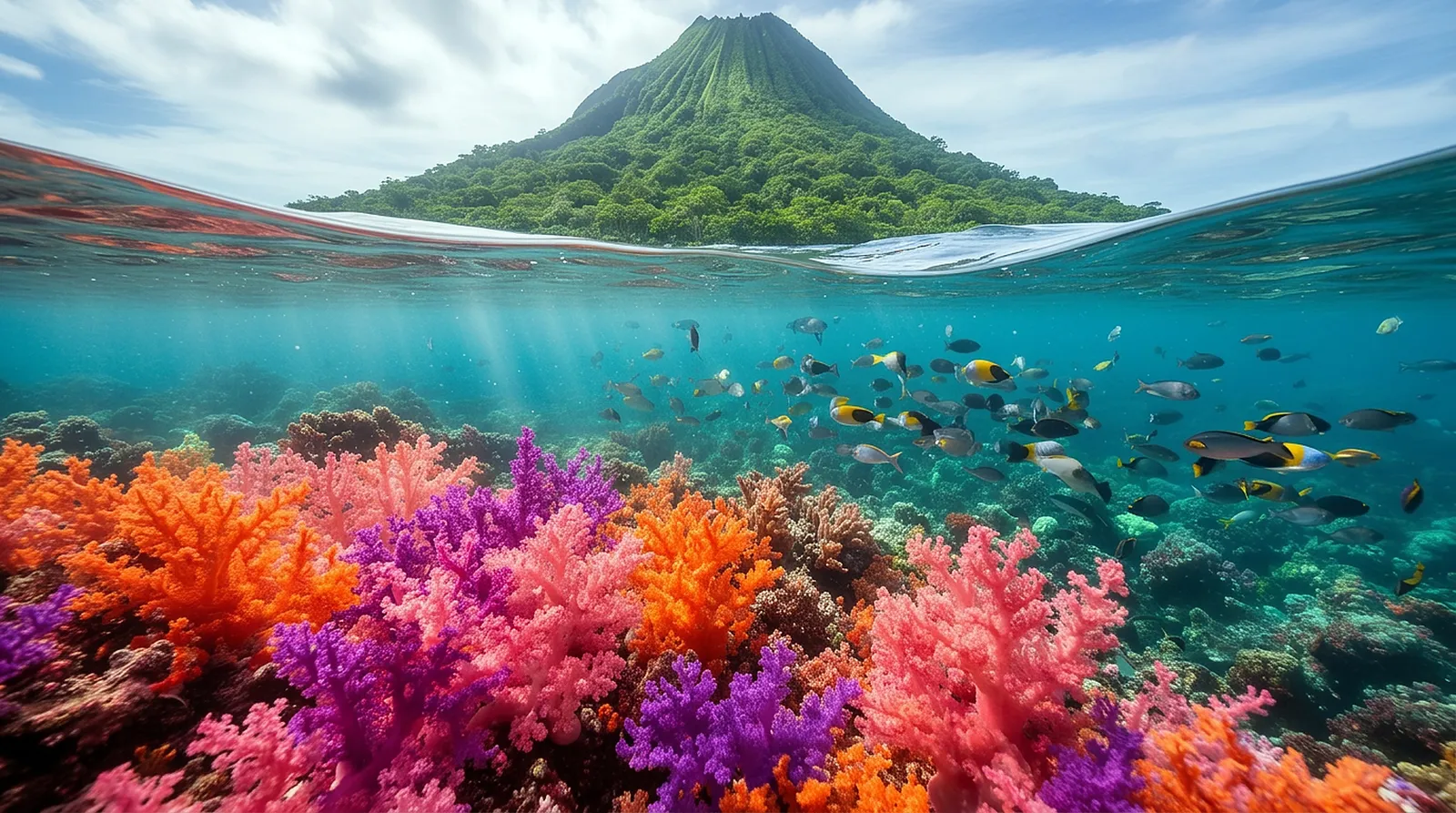
The frontier of the Coral Triangle — wartime wrecks, pristine reefs and species found nowhere else.
Papua New Guinea (PNG) sits at the eastern edge of the Coral Triangle and offers some of the most pristine and biologically diverse diving on Earth. Liveaboards explore Milne Bay, Kimbe Bay, the Witu Islands, the Bismarck Sea and Kavieng — areas that combine WWII wrecks, vibrant fringing reefs, blackwater diving and a remarkable concentration of macro critters.
Diving is excellent year-round, but the two main seasons matter for itineraries. May–November (south-east trades) suits Milne Bay and the southern Coral Sea. November–April (north-west monsoon) is best for Kimbe Bay, Witu Islands and Kavieng. Water temperatures range 27–30 °C throughout the year.
Most international flights connect through Port Moresby (POM). Air Niugini and PNG Air operate domestic legs to Alotau (Milne Bay), Hoskins (Kimbe Bay), Kavieng (New Ireland) and Rabaul (East New Britain). Visa-on-arrival is available for many nationalities.
Embarkation ports vary by itinerary: Alotau (Milne Bay & southern), Hoskins (Kimbe & Witu Islands), Kavieng (New Ireland) and Rabaul (Bismarck Sea). Internal flight times are 1–2 h.
Milne Bay is famous for muck and macro at sites like Dinah's Beach, with rare ghost pipefish and rhinopias. Kimbe Bay hosts dozens of pristine seamounts including Bradford Shoals. Kavieng's Albatross Passage delivers schooling pelagics. The Bismarck Sea hides extraordinary WWII wrecks: B-17 Black Jack (45 m), the Sanko Maru and dozens of fighters and bombers.
PNG is a remote, frontier destination — pack everything you need (spares, batteries, prescription medication). Bring a 3 mm wetsuit, a torch and macro photography gear. English is widely spoken alongside Tok Pisin.
Currency is the kina (PGK); USD/AUD often accepted at resorts. Power is 240 V (Type I plugs, Australian). PNG is on UTC+10. Cash is essential outside major towns. Internet is limited on most liveaboards.
Some sites have strong currents — drift-diving experience is helpful. Malaria is present at land bases, particularly in coastal areas; consult your doctor about prophylaxis. Decompression chambers are limited; comprehensive dive insurance covering remote evacuation (DAN World) is essential. Crime in Port Moresby is a concern — use only pre-arranged airport transfers.
Compare every liveaboard, every itinerary, every cabin — book direct with the operator at the best price.