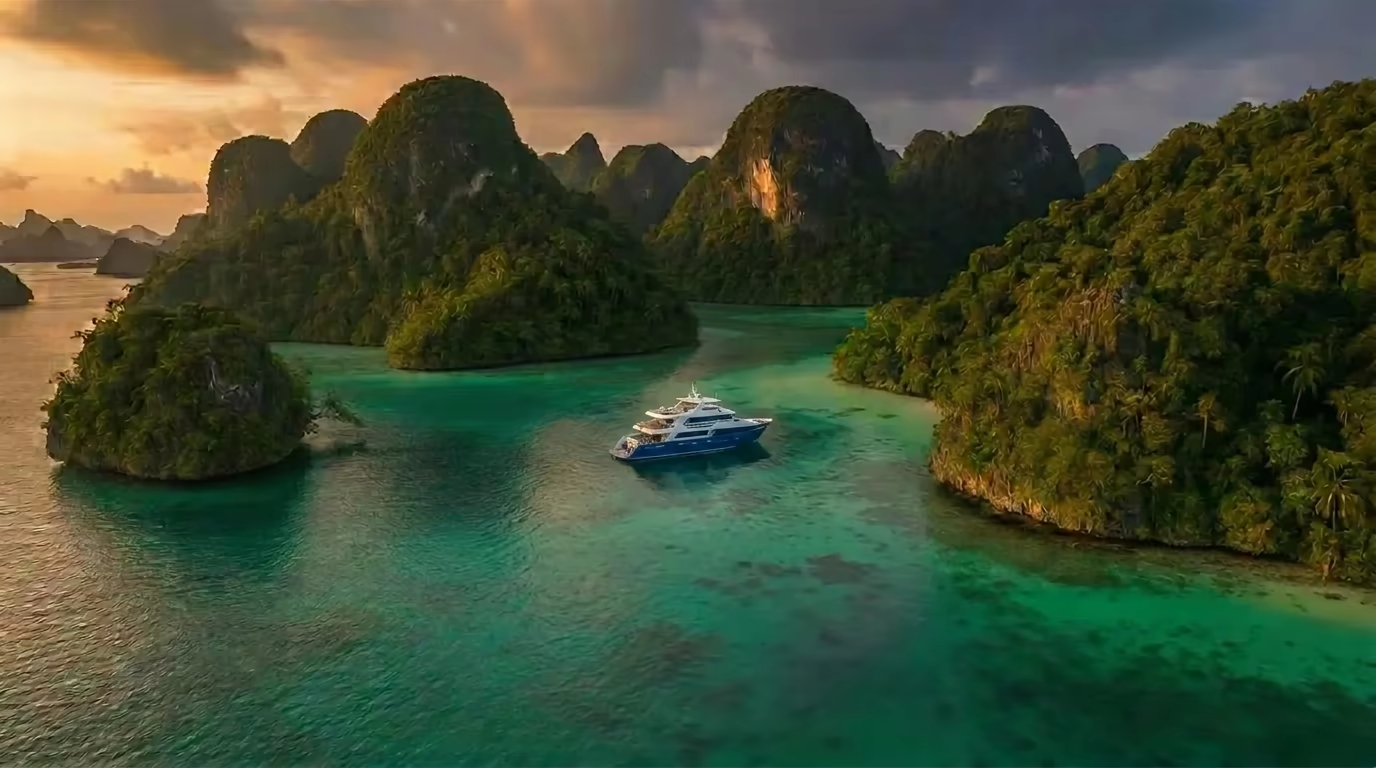
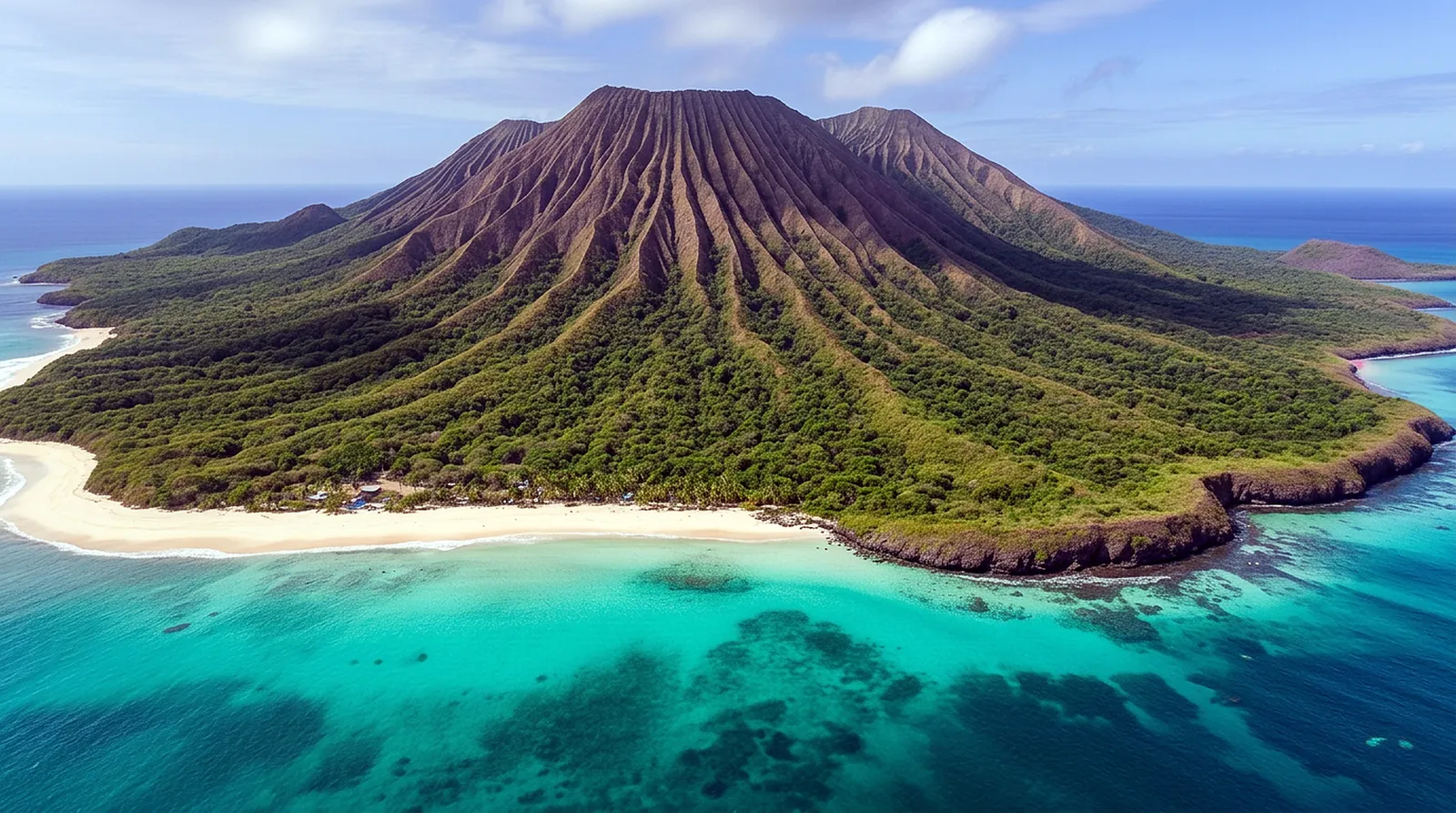
Manta dives, drift diving and dragons in Indonesia's adventure park
Komodo National Park sits in the Lesser Sunda Islands of Indonesia, a UNESCO World Heritage area centered on Komodo Island and famous for its land dragons and its underwater current. The park is a meeting point of the Pacific and Indian Oceans, and that geography drives everything: powerful tidal currents flush nutrient-rich water through narrow channels, fueling some of the world's most spectacular reef life. Komodo divides cleanly into a warm tropical north (calm sites with massive schools of fish, white-tip and grey reef sharks, dawn dives at Castle Rock and Crystal Rock) and a cold, current-swept south (manta ray cleaning stations, black sand muck dives, rhinopias and frogfish in 22°C upwellings). A Komodo liveaboard offers one of the most varied diving experiences in Asia, paired with topside excursions to see the Komodo dragons themselves.
The classic Komodo season is April to November — the dry season when southern sites open up, currents are predictable, and visibility on the south side reaches 25-30 m. Manta aggregations at Karang Makassar and Mawan peak from July to October when nutrients are at their highest. December to March is the wet season: monsoon swell closes most southern sites and visibility drops, but the north (Gili Lawa, Castle Rock, Crystal Rock) remains diveable and significantly less crowded. The shoulder months of April-May and October-November offer the best balance of conditions and animal activity. Note that Komodo's signature southern dives are weather-dependent even in the dry season — operators move flexibly between north and south based on daily conditions.
Almost every Komodo liveaboard embarks from Labuan Bajo (LBJ) on the western tip of Flores. LBJ is reached by 90-minute flights from Bali (Denpasar, DPS) or Jakarta (CGK), with Garuda, Lion Air, Citilink and Wings Air offering multiple daily flights. LBJ now also has direct international flights from Singapore. Indonesian visas on arrival are $35, valid 30 days. Plan a buffer night in Bali and another in LBJ if possible — domestic flights can be delayed and missing your liveaboard is expensive. LBJ has grown rapidly in the past decade from a sleepy fishing village to a small tourist town with several quality hotels, restaurants and dive shops.
Labuan Bajo (LBJ) is the sole gateway. The harbor is a working port with a small marina district; embarkation is typically by tender from the dock to the moored Phinisi schooner. Some longer itineraries combining Komodo with the Banda Sea or Alor disembark in Maumere (MOF) or Ambon (AMQ) — confirm your return airport before booking onward flights.
Komodo splits into a north and a south. Northern sites (Gili Lawa Laut, Castle Rock, Crystal Rock, Shotgun, The Cauldron) are the warm-water reefs — 27-29°C, dawn dives that produce a wall of trevally, schooling jacks, white-tip and grey reef sharks, and dramatic current-driven action through narrow passages. Castle Rock and Crystal Rock are particular favorites: a pinnacle dive at slack tide turning into a current-swept drift past hundreds of fish. Southern sites (Manta Alley, Cannibal Rock, Three Sisters, Yellow Wall, Horseshoe Bay) are the cold, nutrient-rich black-sand and coral dives — rhinopias, frogfish, pygmy seahorses, coleman shrimp and ornate ghost pipefish in macro paradise, plus reliable manta encounters at Manta Alley and the open-ocean cleaning station of Mawan. Topside, the park's Komodo dragons (Varanus komodoensis) can be visited at Komodo and Rinca islands — most liveaboards include this excursion.
Komodo combines warm and cold water in a single trip — bring a 5-7 mm wetsuit and hood for the south, a 3 mm shorty for the north. Tipping is generous: $200-400 per guest per week on Phinisi-class boats, paid in cash at the end. Park fees are significant: roughly $45-75 per person for the full Komodo National Park entrance fee, valid for the duration of the trip, plus daily diving fees and ranger fees — totaling around $200-300 per guest depending on trip length. Most operators include some fees and exclude others; confirm before booking. Currents are powerful — bring a reef hook, surface marker buoy and dive computer. Nitrox is standard on most premium boats. Indonesian rupiah is the local currency but USD is widely accepted.
Komodo is one of Indonesia's premier liveaboard destinations and books out 6-12 months in advance for peak season (July-October). Hyperbaric chamber is in Denpasar (Bali); evacuation from Komodo takes 4-6 hours. Wi-Fi on most boats is via Starlink. Power is European two-pin, 220V. Most liveaboards run 3-4 dives per day with the famous dawn dive at Castle Rock or Crystal Rock as a highlight. Topside excursions to see Komodo dragons (Komodo or Rinca islands) and to hike Padar Island for its iconic three-bay viewpoint are usually included. Indonesian Muslim culture is dominant on Flores but boats serve alcohol freely.
Komodo currents are powerful and unpredictable — Castle Rock, Crystal Rock and the Cauldron are not beginner sites. Most operators require Advanced Open Water plus 50+ logged dives, with strong-current dives often restricted to divers with 100+. Negative entries and reef hooks are standard. The cold upwellings in the south can be a shock — water can drop to 20-22°C, sometimes lower; bring proper exposure protection. Park fees and surcharges add $200-300 per guest above the headline price. Domestic flights to LBJ are reliable but volatile in monsoon season — buffer days are wise. Komodo is generally very safe; the dragons are managed by park rangers and visitors stay together in groups during land excursions.
Compare every liveaboard, every itinerary, every cabin — book direct with the operator at the best price.