
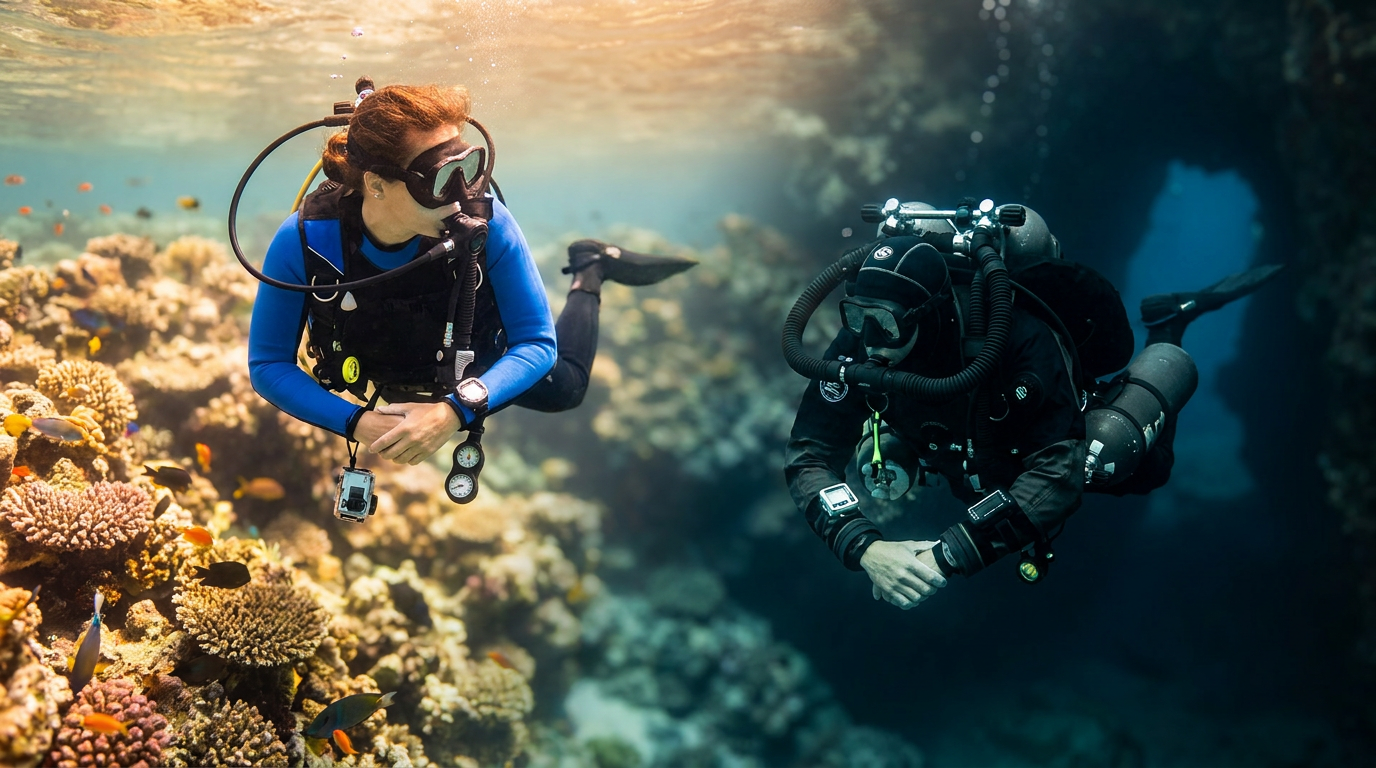
Recreational diving — the boundaries
• Maximum depth: 40m (130ft)
• No mandatory decompression stops — always within NDL
• Single tank of air or Nitrox
• Direct ascent to surface always possible
Technical diving — what changes
• Depths of 50–100m+ become accessible
• Mandatory decompression stops on every dive
• Multiple gas mixes (typically air/Nitrox/Trimix)
• Twin tanks or sidemount, plus stage bottles for deco gas
• Redundant regulators, lights and gauges
Why divers cross over
The most common reasons to take tech training:
• Wreck diving — the best wrecks (HMHS Britannic, Truk's deeper hulls, Bikini Atoll fleet) sit between 40–60m
• Cave & cavern — overhead environments require technical training regardless of depth
• Cold water research — marine biology and survey work below 30m
• Photography — pristine deep reefs and walls beyond recreational limits
Training pathway
• Tec 40 / Intro to Tech — first staged deco dives, 4–5 days
• Tec 45 — extended range to 45m, 4 days
• Tec 50 / Helitrox — Trimix introduced, 4 days
• Trimix / Advanced Trimix — to 100m+, 6–8 days
Major agencies: TDI, IANTD, GUE, PADI TecRec. Total path: 18–25 days of training spread over 1–2 years.
Cost reality check
Going from recreational AOW to certified Trimix diver typically costs $4,000–$8,000 in training, plus another $4,000–$7,000 for personal gear (twin tanks, regulators, harness, deco bottles, computer, dry suit). Annual maintenance, gas fills and travel push real costs higher.
Which liveaboards offer technical diving
Dedicated tech liveaboards run in the Red Sea, Truk Lagoon, Bikini Atoll, the Philippines (Coron) and Sicily. Most offer Trimix fills, deco bottle staging, in-water deco support and an experienced tech-only crew.
Frequently Asked Questions
Do I need technical training to go on a liveaboard?
No. The vast majority of liveaboard diving is purely recreational. Tech training is only needed if you specifically want to access deep wrecks or push past 40m.
How long does it take to become a tech diver?
From Open Water to certified Trimix diver typically takes 18–24 months including the recommended logged dives between courses (50 dives between most levels).
Is technical diving more dangerous?
It carries higher consequences for any mistake (no direct ascent), but well-trained tech divers have an excellent safety record. The training emphasises planning, redundancy and discipline above all else.
Can I dive both tech and recreational on the same trip?
Yes. Many divers do recreational morning dives and one tech dive per day. Operators just need advance notice for the gas planning.
Plan your next dive trip
Browse hand-picked liveaboards worldwide and book with expert support.
See liveaboardsRelated Searches
Popular searches related to this guide