
The standard dive medical questionnaire (RSTC)
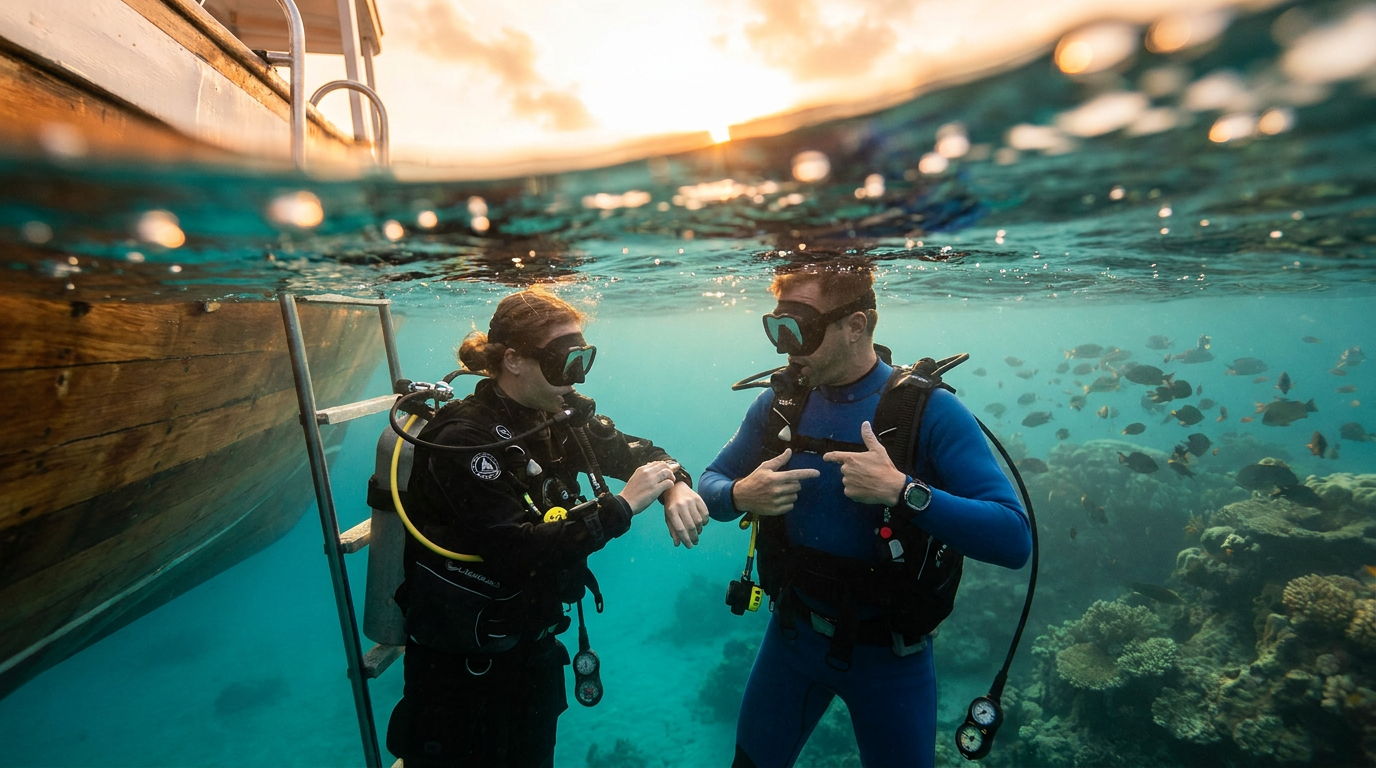
Most liveaboards use the RSTC (Recreational Scuba Training Council) Medical Statement, which is the same form PADI, SSI and most agencies use. It asks about: heart and circulatory conditions, lung conditions (especially asthma and pneumothorax), ear and sinus problems, neurological issues (epilepsy, recent concussion), diabetes, pregnancy, recent surgery, and current medications. Tick "yes" on any item and you need a doctor's sign-off on the medical clearance form.
Conditions that absolutely need a dive doctor
Get a dive medical (not a regular GP check) before booking if you have: a history of pneumothorax (collapsed lung) — often disqualifying, asthma — case by case, controlled mild asthma is sometimes cleared, epilepsy or seizures — usually disqualifying for safety reasons, diabetes — divable but needs a clearance and a plan, heart conditions — cardiac stress test usually required, recent surgery (especially abdominal or chest) — minimum 6–12 weeks, ear surgery — case by case, pregnancy — diving is not allowed during pregnancy, full stop.
Where to get a dive medical
Book a doctor certified in dive medicine — not a regular GP. Look for: DAN-listed doctors (DAN keeps a global referral list), HSE-approved medical examiners (UK standard), AMA-approved diving doctors (Australia), MEDSUBHYP-trained doctors (Europe). A proper dive medical includes lung function tests (spirometry), an ECG if you're over 40, an ear and sinus check, and a review of your full medical history. Cost: 80–250 EUR. Validity: usually 12 months for recreational, 6 months for technical or commercial.
The "boarding refusal" risk
If you tick "yes" on the medical and don't have a dive doctor's clearance, the operator can — and will — refuse boarding. No refund. This is most common in: Egypt (very strict on the medical), the Maldives (some operators very strict), Indonesia (medium), and Galapagos (strict because of remoteness). Always carry both the operator's waiver AND the dive doctor's signed clearance form.
Age, fitness, and chronic conditions
There is no upper age limit for diving — many liveaboard divers are in their 60s and 70s and dive perfectly safely. Doctors will however look more carefully at cardiovascular fitness over 50. General rule: if you can comfortably climb 4 flights of stairs without getting out of breath, you're likely fit enough for recreational diving. If you can't, get a check-up before booking. Common chronic conditions like high blood pressure, mild diabetes and hypothyroidism are usually divable when controlled.
Frequently Asked Questions
Do I need a doctor's note to go on a liveaboard?
Only if you tick "yes" on any item of the medical declaration form. If you tick "no" to everything, your signature alone is usually enough.
Can I dive with asthma?
Sometimes — controlled, mild, exercise-induced asthma is often cleared by a dive doctor. Severe or unstable asthma is usually a no. Always get a proper dive medical before booking, not a regular GP appointment.
How long is a dive medical valid?
Recreational dive medicals are typically valid for 12 months. For technical or commercial diving the validity drops to 6 months.
Find your next liveaboard trip
Once your medical is cleared, browse liveaboards by destination, dates and budget on Blue Rides.
Browse LiveaboardsRelated Searches
Popular searches related to this guide