
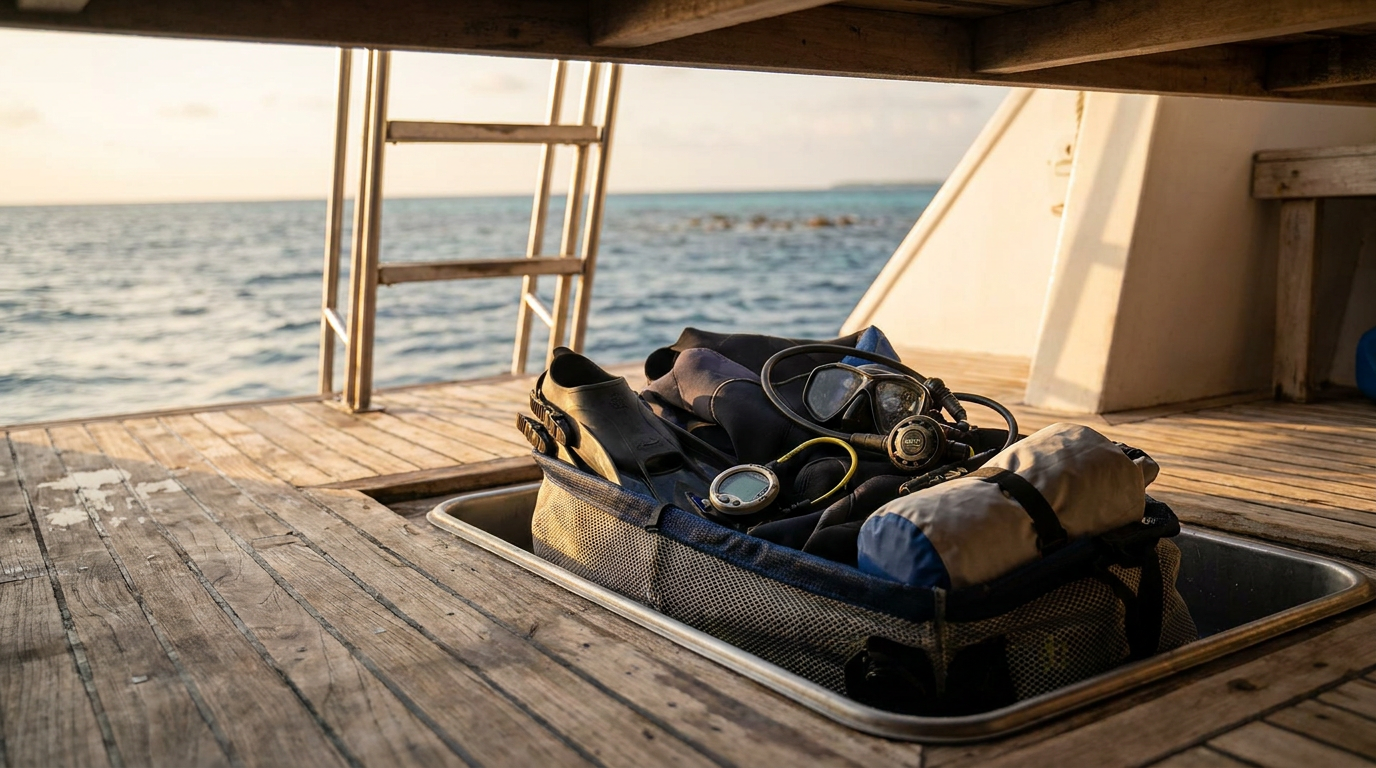
Dive gear: what to bring, what to rent
Bring your own: mask (fit is too personal to rent), dive computer (you trust your numbers), wetsuit (fit again), gloves and hood for cold-water trips, dive logbook, certification cards. Rent on the boat or at the destination: BCD and regulator (most divers rent unless they dive 50+ days a year), tanks (always provided), weights (always provided), fins (rentable, but bring your own if you're fussy). Always confirm rental availability and price BEFORE the trip — some boats only have limited sizes.
Clothing for a tropical liveaboard
Less than you think. For 7 days you actually need: 4–5 t-shirts (rashguards count), 2 pairs of board shorts / quick-dry shorts, 1 pair of long pants for evening / cooler nights, 1 light hoodie or fleece (boat AC + windy upper deck), 5–7 changes of underwear, 2 swimsuits (one wet, one dry), 1 pair of flip-flops, 1 pair of light sneakers (rare destinations require closed-toe for shore excursions), 1 sunhat, 1 pair of polarised sunglasses. Skip: anything formal, more than 1 jacket, jeans (heavy and slow to dry).
Electronics and chargers
Bring: dive computer + spare battery, GoPro / underwater camera + 2x batteries + 2x SD cards, phone + charger, laptop or tablet (optional, for photo backup), universal travel adapter (UK / EU / US sockets vary by region — Maldives is mostly UK, Egypt mostly EU, Indonesia mostly EU, US destinations US), powerbank (10,000+ mAh), waterproof phone pouch, headlamp or small dive torch (also useful at night on deck). Most boats have shared charging stations in the salon — DON'T plug things into your cabin overnight unsupervised.
Toiletries and meds (the small stuff)
Reef-safe sunscreen (banned in many destinations if not reef-safe), after-sun lotion, lip balm with SPF, ear-drying drops (Swimmers Ear / Auralgan style — non-negotiable), seasickness meds (see our guide), painkillers (paracetamol + ibuprofen), antihistamines, anti-diarrhoea tablets, plasters / band-aids, antiseptic cream, hand sanitiser, biodegradable soap and shampoo (small bottles — most liveaboards provide), microfibre towel (in addition to the boat-supplied towel), insect repellent for shore stops, prescription medications in original packaging.
Documents and money
Passport (valid 6+ months past return date), visas if required, dive certification cards (digital + physical backup), dive insurance card and emergency hotline, travel insurance documents, dive logbook, printed boarding pass for outbound flight (some airlines / countries are picky), 200–500 USD in cash for tips and incidentals (small bills), credit card with no foreign transaction fees, photocopy of passport stored separately. Email yourself a backup of all documents before flying.
Common items people forget
Mesh dive bag (your wet gear has to live somewhere), defog spray (or baby shampoo), spare mask strap, spare fin strap, save-a-dive kit (o-rings, mouthpiece, cable ties), reusable water bottle, pen (for customs forms and the dive logbook), Save-a-Dive Kit, dry bag for shore excursions, kindle / book for surface intervals, plug adapter, backup pair of glasses if you wear them.
Frequently Asked Questions
How much luggage can I bring on a liveaboard?
Cabins are tiny — most operators recommend a soft duffel or rolling soft bag under 23kg. Hard suitcases are awkward to store. Your airline luggage limit (usually 23–32kg) is almost always more than you need.
Do I need to bring my own BCD and regulator?
No, most divers rent on board. Bring your own only if you dive frequently or have a specific setup. Always confirm rental availability and your size BEFORE booking.
What should I NOT bring on a liveaboard?
Hard suitcases (no storage), more than 2 pairs of shoes, formal wear, jeans, hairdryers (most boats provide), large bath towels (provided), and anything fragile. Cabins are very small.
Now find your liveaboard
Bag packed? Browse our liveaboard fleet by destination, dates and budget.
Browse LiveaboardsRelated Searches
Popular searches related to this guide