
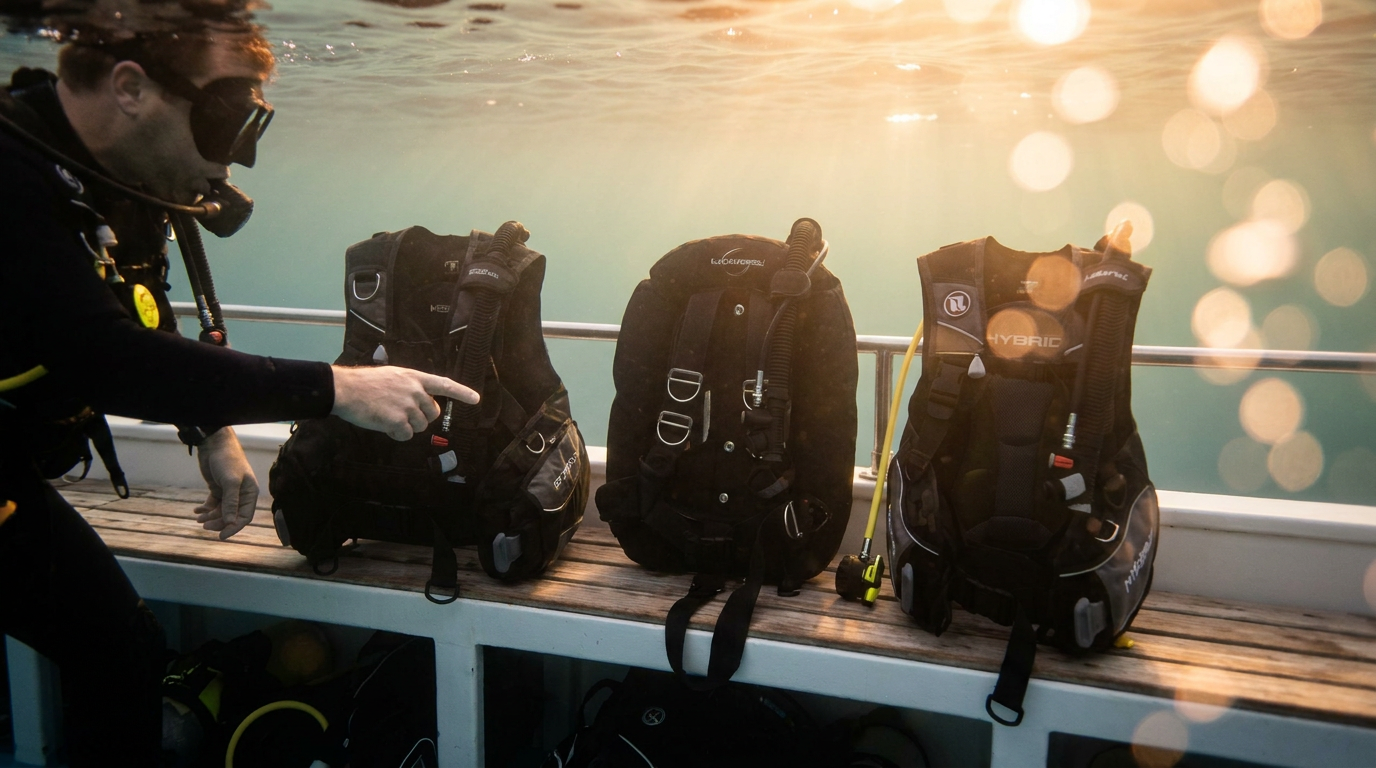
The three BCD styles
• Jacket BCD — air bladder wraps around your torso. Stable on the surface, easy to learn, popular with rentals. Examples: Cressi Start Pro, Mares Journey.
• Back-inflate (wing) — bladder sits behind your back. Streamlined, horizontal trim underwater, less restrictive on the chest. Examples: Scubapro Hydros Pro, Aqualung Outlaw.
• Hybrid — back-inflated with limited side bladders for surface stability. The current sweet spot for most liveaboard travellers. Examples: Mares Hybrid Pure, Aqualung Axiom.
Why most liveaboard divers choose back-inflate or hybrid
• Better horizontal trim underwater — easier on your back over four dives a day
• Less drag in current — important in Komodo, Galápagos, Cocos
• More chest space for cameras, lights, gauges
• Typically lighter for travel (2.5–3.0 kg vs 3.5–4.5 kg for jacket)
Features worth paying for
• Modular weight pockets — drop your weights independently of the BCD if you need to bail out
• Trim pockets — small extra weight pockets near the tank that help you achieve perfect horizontal trim
• Stainless or titanium D-rings — hold up to saltwater for years
• Integrated knife or shears mount — useful for line entanglement
• Travel weight under 3 kg — matters when liveaboards charge $5–$15/kg overweight on transit flights
Sizing matters more than brand
A BCD that fits poorly will rub, ride up underwater and ruin your dive. The chest strap should sit just under the collarbone; the cummerbund should snug without pinching; the shoulder straps should not pull when you're vertical with a full tank. Try-dive in a pool before any major purchase.
Travel BCDs vs everyday BCDs
If liveaboards are 80% of your diving, prioritise a travel BCD: 2.0–2.7 kg, foldable, often with mesh shoulders. Examples: Scubapro Litehawk, Mares Journey 2.0, Zeagle Express Tech. You sacrifice a small amount of lift capacity (typically 16 kg vs 22 kg), which only matters for cold-water dry-suit diving.
Frequently Asked Questions
Can I bring my own BCD on a liveaboard?
Yes — every liveaboard accommodates personal BCDs. Most provide cylinders with both DIN and Yoke valves; just confirm before flying.
How much weight should I buy?
Lift capacity should be 16–22 kg (35–48 lb) for warm-water diving, 22–30 kg (48–66 lb) for cold-water dry-suit. More is unnecessary.
Do liveaboards rent BCDs?
Yes — typically $10–$15 per day, often included with full gear rental at $25–$40/day.
How long does a BCD last?
10–15 years with proper rinsing and annual inflator/dump valve service. The bladder is the main wear point.
Plan your next dive trip
Browse hand-picked liveaboards worldwide and book with expert support.
See liveaboardsRelated Searches
Popular searches related to this guide