
Fuel and energy: the biggest impact
A liveaboard burns 200–500 litres of diesel a day. Look for: solar panels (reduces generator use), modern engines (lower emissions per nm), routes that minimize sailing time. Newer boats (built post-2015) typically have ~40% better fuel economy.
Plastic-free or plastic-light?
Reusable water bottles for guests (not a single bottle of bottled water on board): essential. Refillable shampoo dispensers: good. Plastic straws / plastic cutlery / individual plastic snack packets: red flags. Ask the operator directly — most have a sustainability page on their site.
Reef-safe diving practices
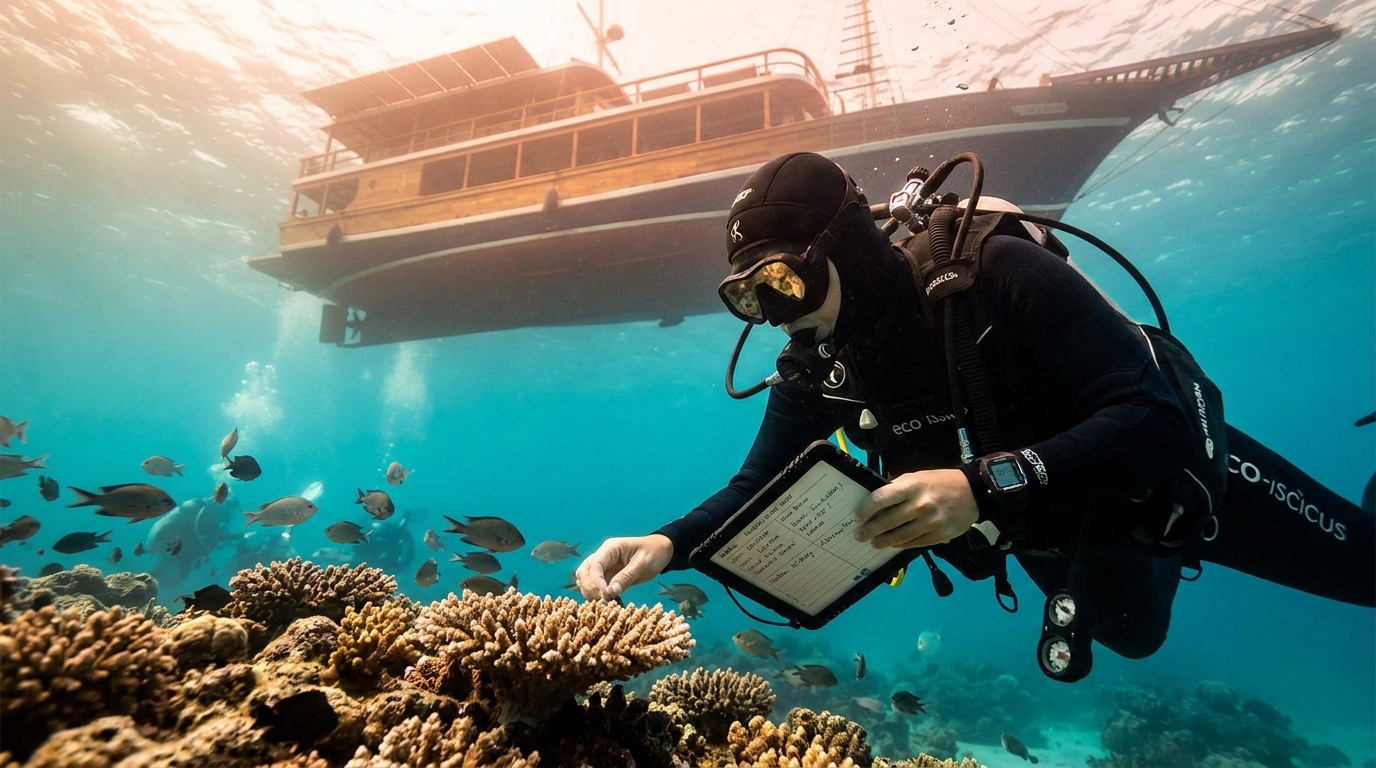
Briefings that emphasise no-touch, no-kneeling, no-fin-on-coral. Mooring buoys (not anchoring on reef). Crew that corrects bad behaviour. Operators that ban gloves on coral reefs. If a boat doesn't talk about this on day 1, they probably don't enforce it.
Marine park fees: where the money goes
Fees in Galápagos, Komodo, Maldives, Egypt fund park rangers and reef protection. Ask the operator if there are any additional voluntary contributions to local conservation NGOs. Many top-tier boats donate per-guest amounts to projects like Manta Trust, MarAlliance, Reef Check.
Certifications worth checking
Green Fins (UN-backed): real, audited. PADI Eco Center: meaningful for resorts, less so for boats. Anything self-declared (e.g., 'eco-platinum award'): ignore. Travelife / Earth Check: rare on liveaboards but legitimate.
Local economy and crew welfare
Crew should be majority local nationals (not all expats). Fair wages and tip distribution policies should be transparent. Sourcing food from local fishermen and markets (not imported supplies) supports the community where you're diving.
Frequently Asked Questions
Are old boats less eco-friendly?
Generally yes — older engines burn more fuel. But well-maintained 20-year-old boats with retrofitted solar can rival new builds.
Should I avoid liveaboards entirely for environmental reasons?
If you're consistent on land too. A week on a liveaboard = roughly the carbon footprint of a long-haul flight.
Reef-safe sunscreen — required?
Required by law in some destinations (Hawaii, Mexico). Always pack mineral-only, regardless of the destination.
What's wrong with feeding fish?
Disrupts ecosystems, makes fish dependent, attracts predators to safe areas. Reputable operators ban it.
Carbon offset — is it worth it?
Pay it through verified projects (Gold Standard, Climate Active). It doesn't undo the impact, but it's better than nothing.
Find sustainable operators
Browse liveaboards with strong eco credentials and local impact.
Browse eco liveaboardsRelated Searches
Popular searches related to this guide