
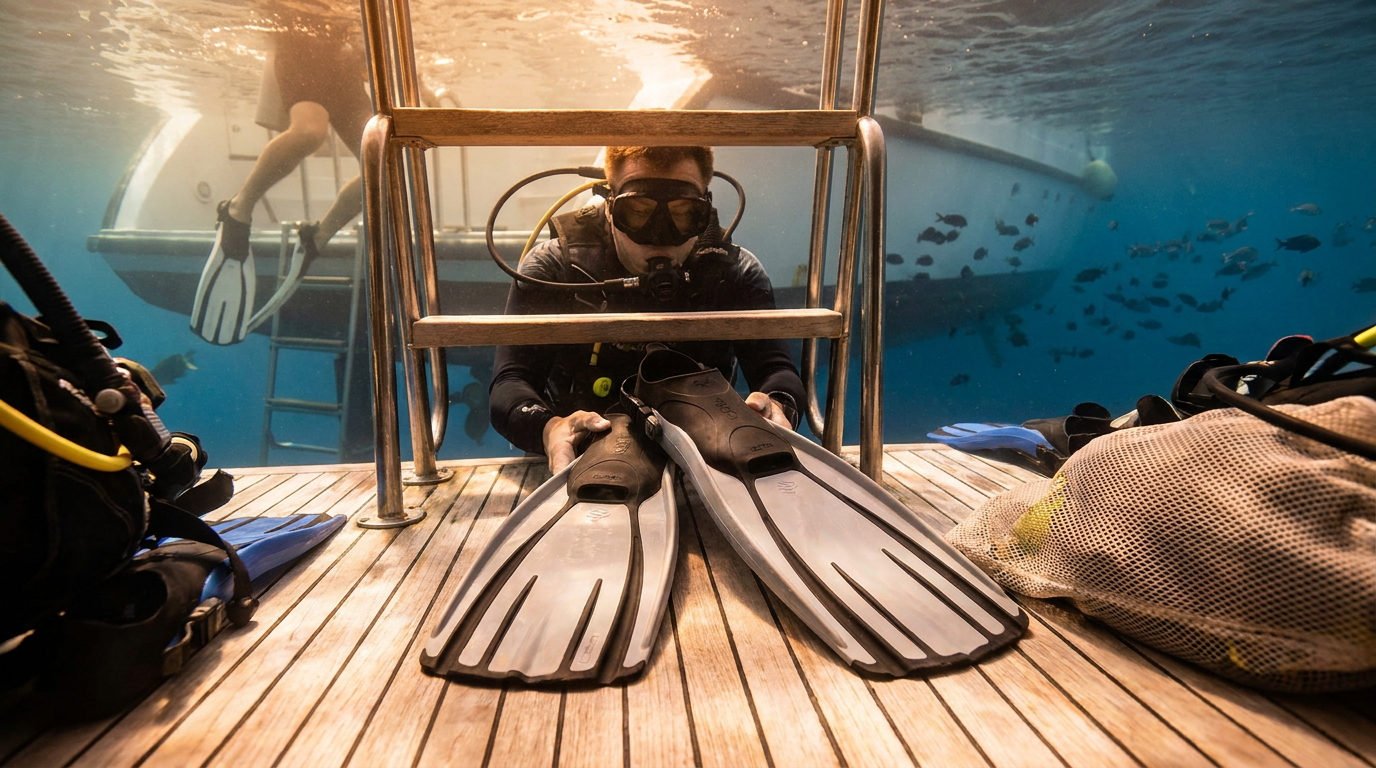
Open-heel vs full-foot — which is right for you?
Open-heel fins use an adjustable strap and require dive boots — warmer, more durable, easier to walk on rough boat decks, and the standard for cold water and tech diving. Full-foot fins slip on barefoot, are lighter for travel, and cost less; they're popular for warm-water tropical liveaboards (Maldives, Caribbean, Indonesia). For most liveaboard divers, open-heel + 3mm boots is the all-rounder.
Paddle vs split blade — the long-standing debate
Paddle blades give you maximum thrust per kick — essential for current, drift dives, and getting back to the boat against wind. Split blades reduce effort and ankle fatigue, ideal for relaxed reef dives and divers prone to cramps. Hybrid designs (channel, vented) try to do both. Honest answer: if you dive a lot of current (Maldives channels, Galápagos, Komodo), buy paddles. Otherwise either works.
Stiffness: matching the fin to your strength
A stiff fin gives more thrust but eats your legs on long dives. Soft fins are forgiving but sluggish in current. As a rule: stronger / heavier divers + current = stiff. Smaller / less powerful divers + reef diving = medium. If you're between sizes, go softer — leg fatigue ruins more dives than slow kicks do.
Foot pocket fit — the only thing that really matters
A perfect blade with a bad pocket gives you blisters and cramps. Try fins on with the boots/socks you'll dive in. Your foot should feel snug, not crushed. Toe should not push the front of the pocket. Heel strap (open-heel) should be replaceable with a spring strap — cheaper than buying new fins later.
Top picks by category
Travel / warm water full-foot: Cressi Reaction Pro, Mares Avanti Quattro+. Open-heel paddle: ScubaPro Jet Sport, Mares Avanti Quattro+, Apeks RK3 HD. Open-heel split: Atomic Aquatics Split Fin, ScubaPro Twin Jet Max. Tech / cold water: Hollis F1 / F2, Apeks RK3. All these survive 500+ dives if rinsed after every trip.
Travel weight & packing
Full-foot fins weigh 1.0–1.5 kg per pair, open-heel 1.5–2.5 kg. Heavy fins (Hollis F1, ScubaPro Jet Fin) destroy your luggage allowance — pack them in checked bags, never carry-on. Spring straps add 200g and never fail; replace plastic buckles before they snap mid-trip. Shorter travel fins (e.g. ScubaPro GO Travel) save 30% weight at the cost of some thrust.
Frequently Asked Questions
Can I rent fins on a liveaboard?
Yes, most boats have a fin selection — but sizes are limited and fit is hit-or-miss. Bring your own if you have wide or narrow feet.
Are split fins really easier on the legs?
Yes, by 20–30% in lab tests. They lose some thrust in strong current, but for most reef diving they're fine and reduce cramps.
Do I need spring straps?
Highly recommended for open-heel. They're faster on/off, don't snap, and replace once forever. Worth $40 of the $400 fin price.
Should I buy fins matched to my BCD/wetsuit?
Colour-coordinated kit looks great. Performance-wise, no — buy the best fin for your kicking style, regardless of brand.
How long should good fins last?
10+ years of recreational diving. Foot pockets crack from UV before blades wear out — store out of sunlight, rinse after every dive day.
Find the right liveaboard for your kit
Browse trips by destination, current strength, and dive style.
Browse liveaboardsRelated Searches
Popular searches related to this guide